
Last updated November 17, 2026
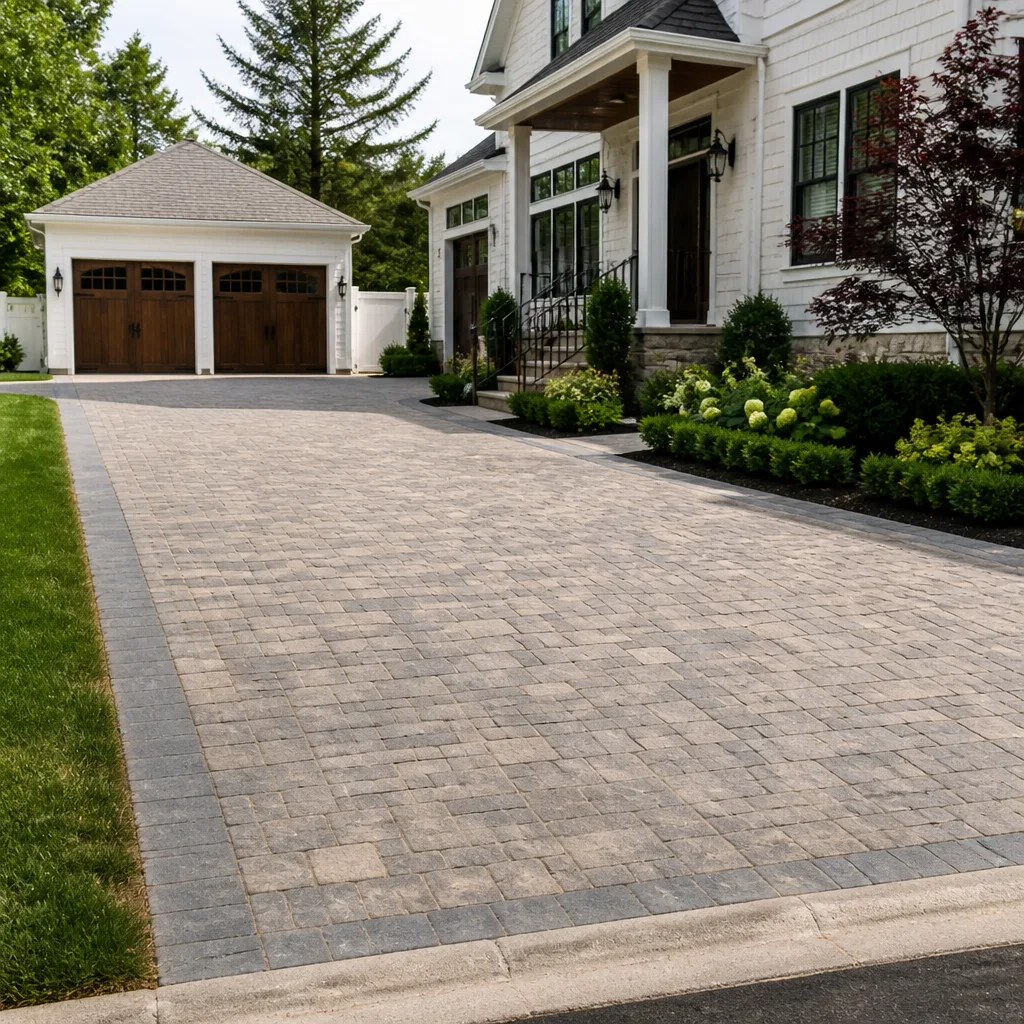 Driveway & pavers
 Kitchen remodeling
 Bathroom remodeling
 Home additions & ADU
 Roofing
 Windows & doors
 Fence
Free written scope consultation - allowances, timeline, and change-order rules on paper before a single trade is scheduled
Driveway & Pavers Troubleshooting: Common Problems and How to Fix Them
A single sunken paver looks like a $50 fix. If it sank because the base washed out underneath, you may be looking at pulling a 10-foot section and starting over. Knowing the difference before you call a contractor protects your wallet. Most paver trouble in Lancaster isn’t the paver’s fault at all: it’s what’s underneath. The block is just the messenger. In this guide we’ll show you how to read the pattern of a problem, tell base failure from surface wear, run two simple tests with a garden hose, and understand what Lancaster’s wind, sun, and caliche soil actually do to a driveway over time.
Quick Answer
Most driveway and paver problems in Lancaster trace back to base failure, not the pavers themselves. Isolated sinking, loose sand, or one tipped block usually points to a small surface issue you can fix on your own. Widespread settling, waves, or problems spreading from the edges or garage apron mean the compacted base underneath has failed, and that’s a repair a contractor needs to handle. The pattern tells you which one you’re looking at.
Styles & brands we work with
- Kitchen remodeling
- Bathroom remodeling
- Home additions & ADU
- Roofing
- Windows & doors
- Driveway & pavers
- Fence
Table of Contents
- Base Failure vs. Surface Erosion: Reading the Pattern
- Why Pavers Near the Garage Apron Fail First
- Where Lancaster Joint Sand Goes (Hint: Wind, Not Rain)
- Efflorescence vs. UV Fade vs. Oil Stains
- The Two-Step Garden Hose Drainage Test
- Cracks, Heaves, and the Caliche Problem
- Weeds, Ant Mounds, and What They Reveal
Base Failure vs. Surface Erosion: Reading the Pattern
Here’s the rule we keep coming back to: the shape of the problem tells you where the problem lives. Surface erosion makes small, scattered symptoms. Base failure makes connected ones.
Surface erosion is what happens when the joint sand between pavers gets displaced and the bedding layer beneath the blocks loosens up in one spot. You’ll see a single paver dip maybe a quarter inch, or a couple of blocks shift slightly near a downspout. It’s local. It doesn’t spread. In our experience across Lancaster, these are usually one-hour fixes: lift the block, top off the bedding, re-set it, sweep new polymeric sand into the joints.
Base failure is different. Look for these signs:
- Waves or ripples running across several rows of pavers, not one dip in one spot
- Settling along an edge or seam that keeps getting worse after you re-sand it
- Pavers that rock when you step on them across a wide area, not just one block
- Joint gaps that open up in a line running parallel to the driveway’s edge or the garage
- Reappearing problems in the same spot within a few months of a fix
When you see two or more of these, the compacted gravel base (usually 4 to 6 inches of crushed aggregate, sometimes more depending on soil) has lost its density. That can happen from poor initial compaction, water intrusion, or soil movement underneath. Fixing it means pulling pavers, re-grading, re-compacting in lifts, and re-setting the block. That’s a full-section repair, not a $50 patch.
Why Pavers Near the Garage Apron Fail First
Walk out to almost any paver driveway in Lancaster built in the last fifteen years and look at the row of pavers closest to the garage. Odds are that’s where the first tip, crack, or sink shows up. There’s a reason.
The garage apron is the transition zone. But the picture gets more complicated. The concrete slab of the garage doesn’t move. Everything around it does, at least a little. If the original installation didn’t cut the pavers tight against the slab with a proper edge restraint or didn’t compact the base to full depth at that transition, the pavers right there carry load unevenly. Over a winter or two of thermal expansion and contraction, they tip.
A few things this tells you about the original install:
- Was there a proper edge restraint? A visible plastic or aluminum edge held down with spikes should run along the apron. No restraint means the pavers have nothing to push against and they walk.
- Was the base compacted at the transition? If the pavers tip toward the garage, the base under them settled after installation. That’s a compaction issue, not a paver issue.
- Was the cut clean? Ragged cuts at the apron suggest the installer rushed the finish, and rushed installations usually have other shortcuts too.
The same location often shows evidence of whether the driveway drainage was planned correctly. Water that sheets off the garage roof and hits the apron without a channel drain or proper slope is going to find its way under the pavers eventually. When we look at a failing apron in a Lancaster neighborhood, we’re checking the downspouts, the roof pitch, and the driveway slope together because they’re all part of the same story.
If you’re seeing apron failure on a driveway you’re already frustrated with, our team handles Driveway & Pavers in Lancaster as one of our main trades, and we can tell you in a free walk-through whether the apron needs a spot repair or a wider fix.
Where Lancaster Joint Sand Goes (Hint: Wind, Not Rain)
Homeowners across the country blame rain for disappearing joint sand. In Lancaster, it’s almost always wind. Our spring wind events (the ones that send dust across the Antelope Valley and knock patio umbrellas sideways) blow fine sand out of joints over a season. A single 40 mph afternoon can cost you a visible layer of sand across the whole driveway.
Once the sand is gone, the joints open up. Water gets in. Bedding loosens. Weeds find a foothold. And the pavers start to move against each other, which is where edge chipping begins. So joint sand isn’t cosmetic. It’s a structural piece of the system.
The proper fix is polymeric sand, not regular mason sand. Polymeric sand has a binder that activates when lightly misted with water and cures to a firm, slightly flexible joint. It holds up better in wind and it resists washout. Your installer sweeps it into the joints, compacts it in, tops it off, sweeps again, then mists. The driveway is usually fine to walk on within a few hours and drive on within 24.
How often should you re-sand? In Lancaster, expect every two to three years. Higher-wind areas like the west side of town or open lots facing the Antelope Valley can be closer to every 18 months. If the previous sand is completely gone down to the bedding, don’t just dump new sand in – a few of those pavers will need to come up first so the bedding can be topped off and re-compacted.
Efflorescence vs. UV Fade vs. Oil Stains
Three things look similar from twenty feet away and need completely different fixes. Getting the diagnosis wrong wastes money and can make the problem worse.
Efflorescence
A white, chalky, powdery haze on the paver surface. It’s salt drawn to the surface as moisture moves through the concrete paver. It’s not damage, it’s a symptom of moisture movement. On a newer driveway it can appear in the first couple of years. Scrubbing it with a stiff brush when it’s dry can spread it. The right approach is usually a diluted white vinegar wash or a proper efflorescence remover. If it reappears repeatedly, the source is water in the base or behind the pavers – fix the drainage, then treat the stain.
UV Fade
Color looking washed out or gray over time. Concrete pavers do fade slightly with sun exposure, but the effect is small on quality brands. Where you see faded pavers, it’s usually a premium product issue (lower-grade pigments) rather than sun damage. Belgard and Unilock pavers hold color better than builder-grade product, which matters in a high-UV climate like Lancaster. UV fade cannot be reversed – the pigment is in the paver, not on it. Sealing slows it a little but doesn’t bring color back.
Oil and Rust Stains
Localized dark spots, usually with a shape you can trace back to the source. Oil stains need a poultice: an absorbent powder (cat litter or diatomaceous earth) ground into the stain and left overnight, then swept up. Repeat as needed. Rust stains from lawn furniture or fertilizer need a dedicated rust remover – and be careful, because muriatic acid will etch concrete pavers. Skip the acid.
The takeaway: efflorescence is fixable with patience. UV fade is permanent. Oil and rust are fixable if you catch them early and use the right product. If you’re unsure which of the three you’re looking at, wet a small area and watch what happens – efflorescence will disappear when wet and return when dry. Fade won’t change. Oil will darken.
The Two-Step Garden Hose Drainage Test
Before you call anyone, do this. It takes fifteen minutes and tells you more about your driveway’s health than a visual inspection ever will.
Step 1: The Sheet Test
- Set a garden hose to a moderate flow, no spray nozzle.
- Lay it at the highest point of the driveway and let water run for two to three minutes.
- Watch where the water goes. It should sheet toward a drain, a landscape edge, or a designated swale. It should not pool.
- Mark any low spot where water sits more than ten minutes with chalk or a landscape flag.
Step 2: The Refill Test
- Wait 24 hours, so the first test can drain or evaporate.
- Spot-water one flagged low area for one minute, then stop. Watch for ten minutes.
- If water disappears fast (under a minute) into the joints, you have an open-joint problem and a bad sand situation – re-sand first and retest.
- If water pools and doesn’t drain for twenty minutes or more, the base is saturated and likely sealed. That’s base failure waiting to happen. Get it looked at.
Do this test before the rainy season (late fall), before summer irrigation goes on, and any time you see a new dip. Finding a drainage problem early means fixing it with sand, a swale, or a channel drain instead of replacing a section of base. That’s real money.
If you’ve tested and suspect a drainage or base problem that’s beyond a spot repair, our crew can walk the whole system with you. Barrett & Sons Construction Lancaster home has more on how we work, and we don’t charge for the estimate.
Cracks, Heaves, and the Caliche Problem
A crack through a paver and a heave across a row of pavers are different problems with very different fixes. A crack is one paver failing. A heave is the ground pushing up under a whole area.
Individual cracks usually come from point loading (parking with a loaded trailer in the same spot) or edge chipping that runs through the block. Replacing one paver is straightforward – it comes up, a matching block goes back in, joint sand is restored. Unilock and Belgard both make it easier to source matching pavers years later, which is one of the reasons we specify their products.
Heaves are more serious. When pavers push up and form a small ridge across several rows, the ground underneath is moving. In Lancaster, a lot of that motion comes from expanding clay and caliche soil. Caliche is a cemented calcium carbonate layer that forms in arid climates. It’s common across parts of the Antelope Valley and it doesn’t drain or compact like normal soil. If the original installer laid pavers directly over a shallow caliche layer without breaking it up and bringing in proper base aggregate, heave is almost guaranteed within a few years.
Tree roots are the other common cause. Sycamores, cottonwoods, and ficus in older Lancaster neighborhoods push driveway edges up as roots expand. That’s a root problem, not a paver problem, and sometimes the fix is a root barrier or rerouted irrigation, not a new driveway.
If you’re seeing heaves, don’t try to shim the pavers flat. That’ll look fine for one season and then fail worse. The full depth of the affected area needs to come up, the caliche needs to be broken and removed, and proper compacted base needs to go back in. That’s the only fix that holds.
Weeds, Ant Mounds, and What They Reveal
Weeds growing out of joints are usually a sign of two things: missing joint sand, and poor initial compaction. Seeds need soil and depth. If weeds are sprouting through a paver driveway, there’s loose soil beneath the joints. That’s a signal.
Ant mounds are the more telling piece. Ants reveal where the bedding layer has opened up and where the joint sand has washed out. Fire ants in particular will build up small mounds between pavers in Lancaster yards that have shallow irrigation problems. Killing the ants with a granular bait helps, but the moles and ants keep coming back if the joint sand isn’t restored. Fix the sand, then treat the pests. In that order.
Pull weeds by hand or use a wire brush. Skip the pressure washer on paver joints – it blasts the sand out faster than the ants did. Skip the chemical weed killer if you have a modern polymeric joint, because some formulations degrade the binder.
Common Mistakes to Avoid
- Lifting one paver and dropping it straight back in. If the base under it failed, it’ll sink again within a month or two. Lift, check the base, top up the bedding, compact, then re-set.
- Pressure-washing the driveway to clean it. A common move in Lancaster after a dust storm. A pressure washer at the wrong PSI blows out the joint sand and exposes the bedding. If you must wash, use low pressure and re-sand afterward.
- Using regular mason sand instead of polymeric sand. Mason sand is cheaper but blow-away prone in our wind. Polymeric sand is the fix; anything else is a temporary patch.
- Sealing a wet driveway. Sealing traps moisture inside and drives up the risk of efflorescence and freeze-heave style damage. A Lancaster driveway should be bone dry and clean before any sealer goes down.
- Blaming the paver manufacturer for a base failure. The block did its job. If the base didn’t compact properly, no brand – Belgard, Unilock, or builders’-grade – will hold up.
- Skipping the permit on a full driveway replacement. Many Lancaster driveways interact with the sidewalk, the right-of-way, or drainage requirements. Unpermitted work can create headaches at resale. Every eligible job we take on has permits pulled and inspections signed.
- Ignoring a small crack in the garage apron for a season. That’s the exact spot where a $200 repair becomes a $2,000 section replacement. Catch it early.
See the difference
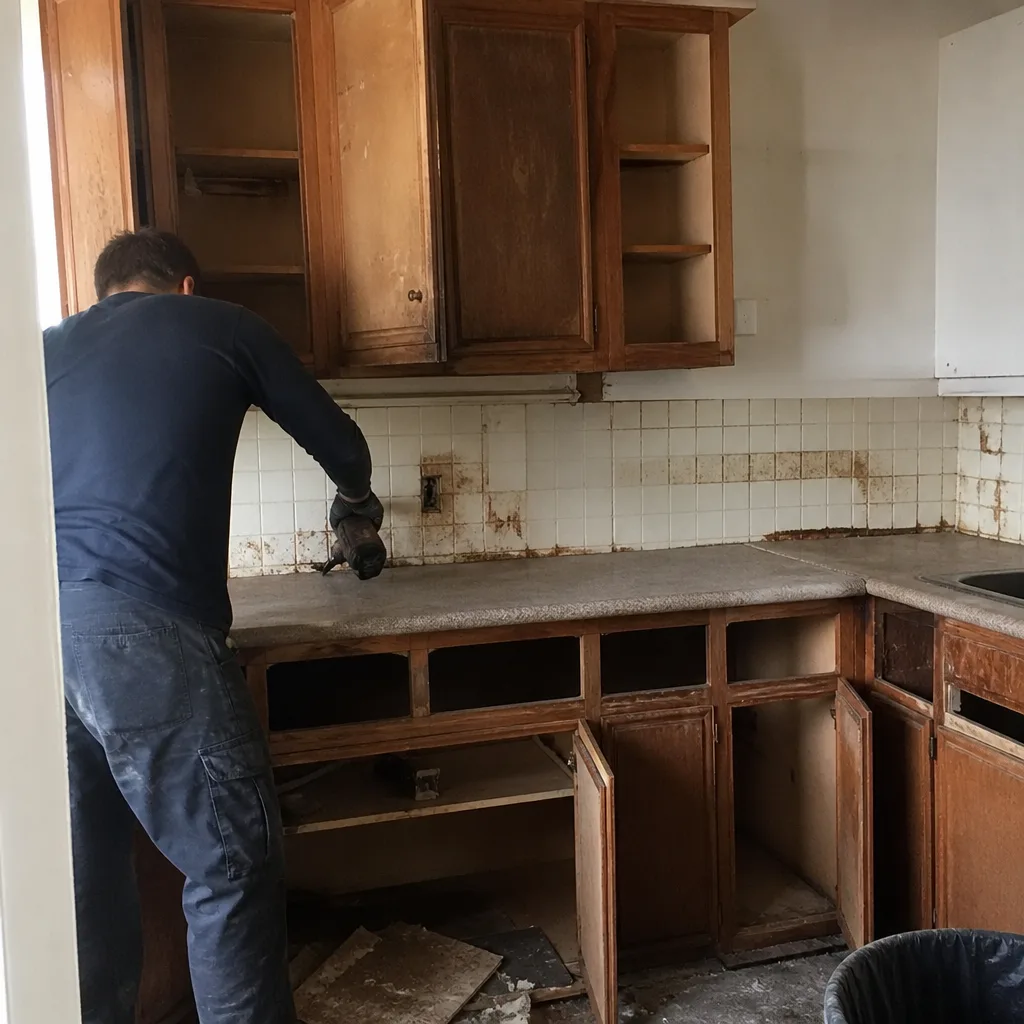 Before
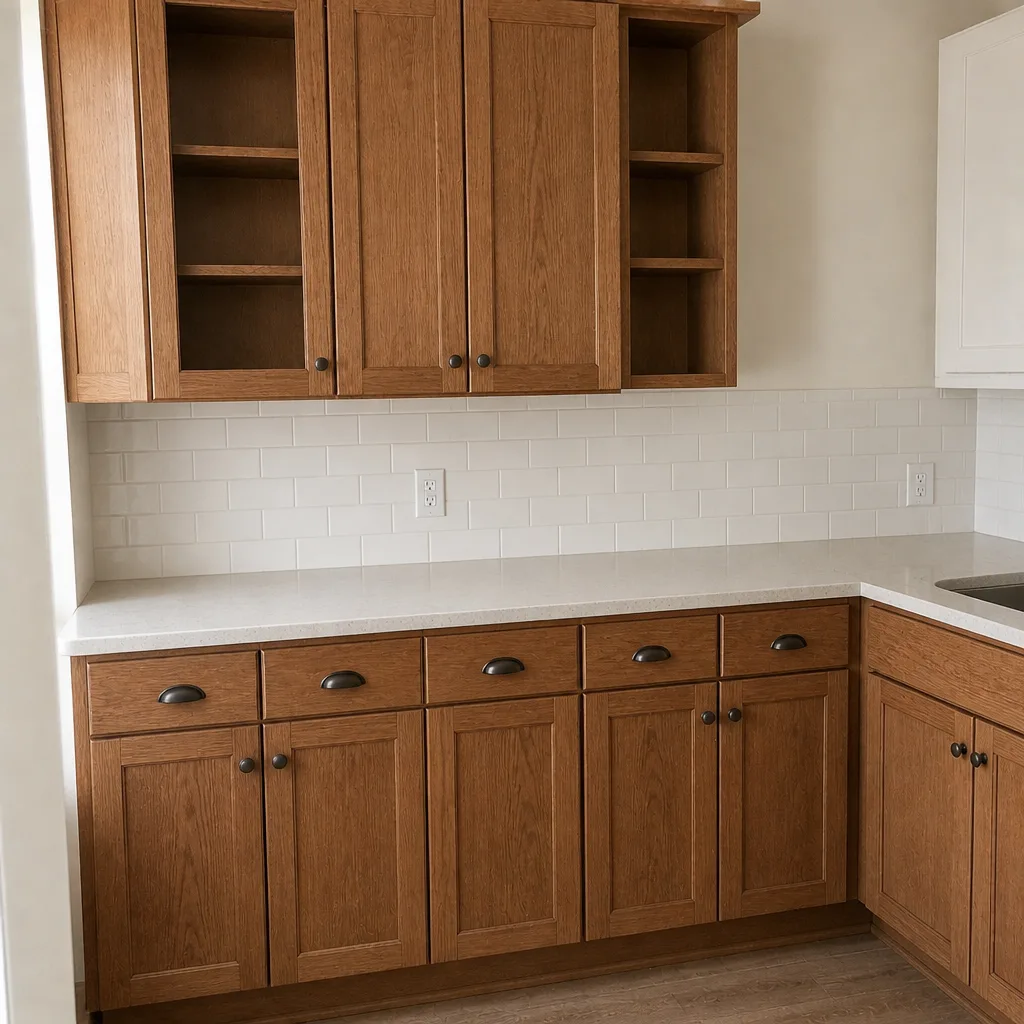 After
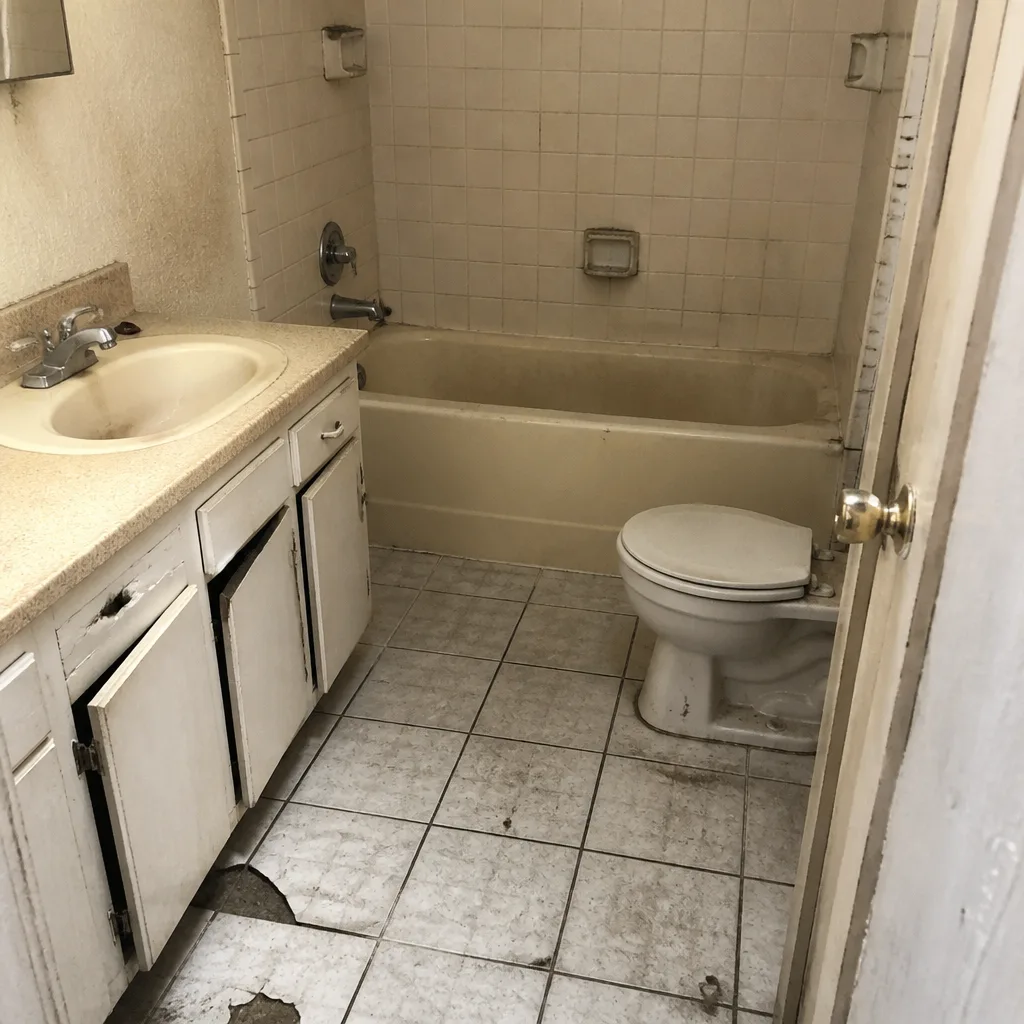 Before
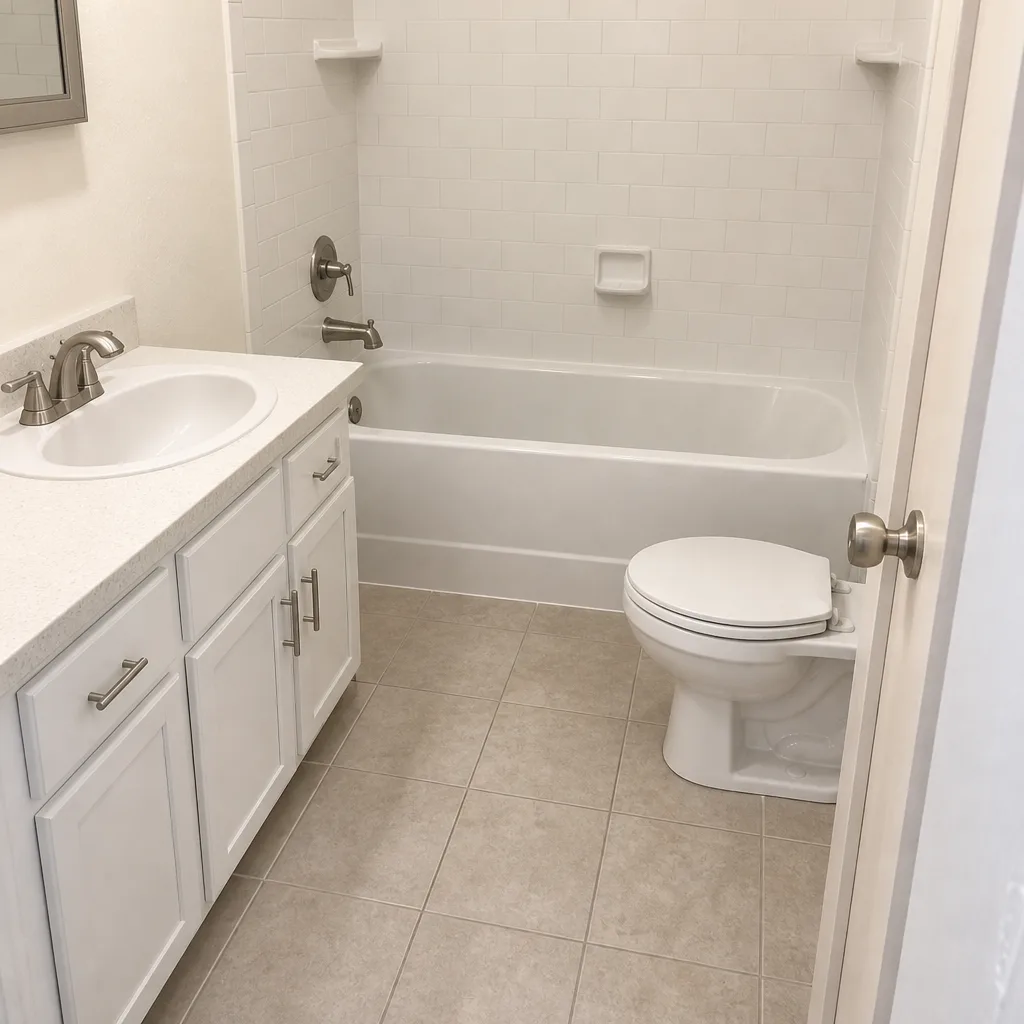 After
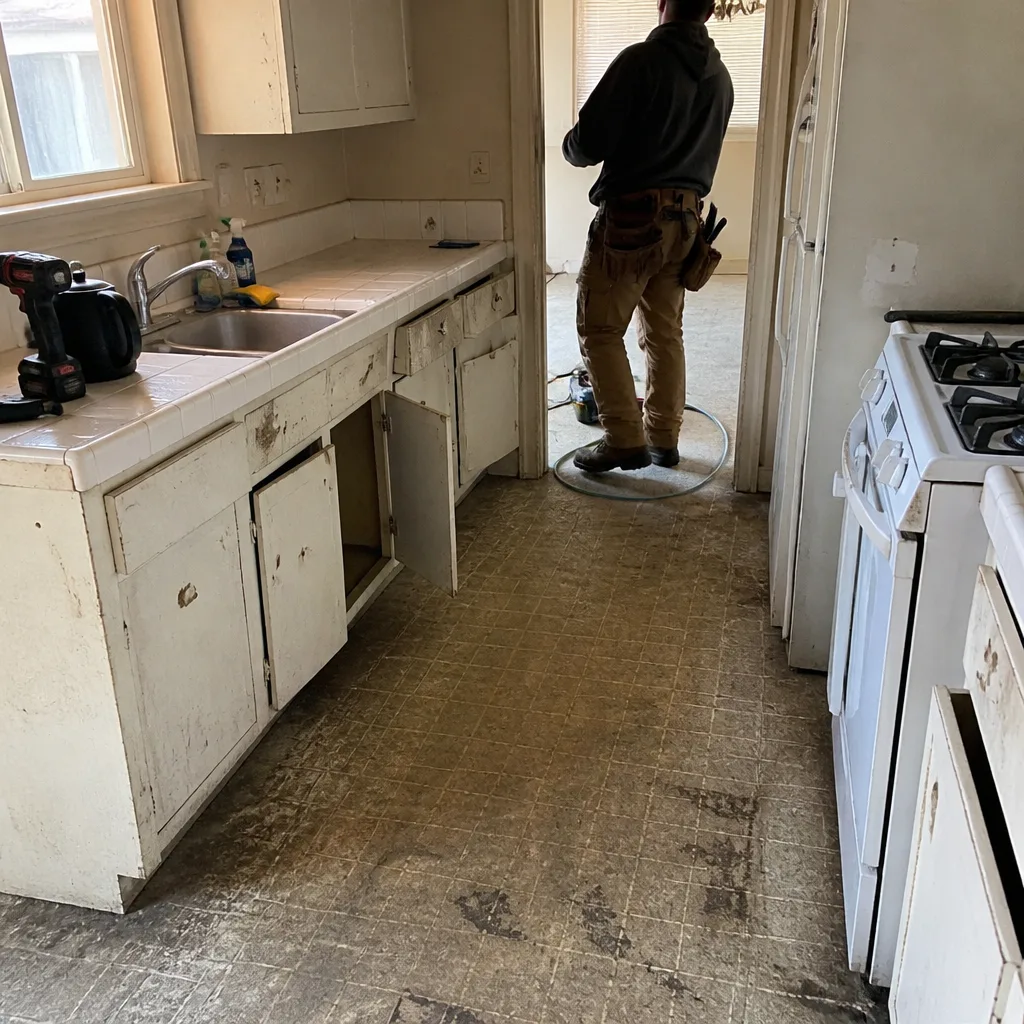 Before
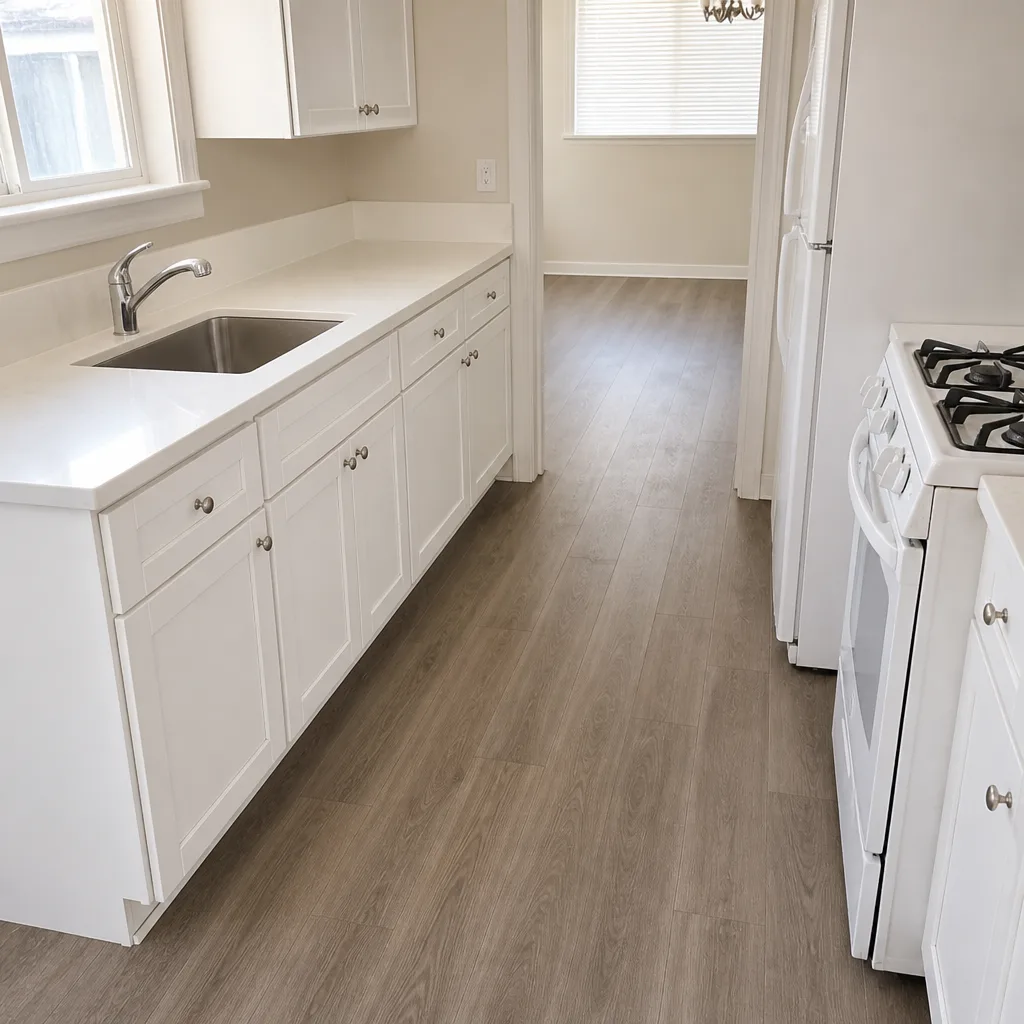 After
When to Call a Professional
Call a professional when: the sinking covers more than three contiguous pavers; the base under a lifted paver is mushy, loose, or missing entirely; water pools anywhere on the driveway for more than twenty minutes after rain; a heave has pushed pavers up across more than two rows; efflorescence returns repeatedly after treatment; or the garage apron has spread from one tipping block to a full row. Those are base problems, not surface problems, and they need excavation, re-grading, and compaction you can’t do by hand. Also call if you’re planning a full replacement – the base design, drainage, and slope matter more than the pavers you pick.
Barrett & Sons Construction Lancaster offers free estimates in Lancaster – call (888) 427-1810 and we’ll walk the whole driveway with you and put the diagnosis in a written estimate before any work happens.
Frequently Asked Questions
Spot repairs – lifting and re-setting a few pavers, re-sanding joints – usually run $150 to $450 depending on size. Section repairs involving the base typically run $1,200 to $3,800. Full driveway replacement runs higher. If you’re seeing multiple problem areas or the fix has been attempted before, the section repair is usually what you’re dealing with. Call (888) 427-1810 for an exact quote – estimates are free.
Uneven sinking almost always means the compacted base underneath has lost density in that area. It’s usually caused by inadequate initial compaction, water intrusion under the pavers, or soil movement. Re-sanding alone won’t fix it. Call (888) 427-1810 for a free walk-through.
Often yes, especially when the work touches the sidewalk, right-of-way, or drainage. Lancaster requirements vary by street and lot. Every eligible job includes permits pulled and inspections signed – it’s how we do it. Call (888) 427-1810 to talk through your specific property.
Every two to three years for most Lancaster driveways, and closer to every 18 months for wind-exposed properties on the west side of town. Waiting longer lets water get in and starts the base failure cycle. Call (888) 427-1810 for a site-specific recommendation.
Yes, if it’s a single paver and the base under it is firm and intact. Lift the paver, top off the bedding sand, compact lightly, re-set, and re-sand the joint. If the base is soft or the dip spreads to other pavers, that’s a base failure and needs a pro. Call (888) 427-1810 if you’re unsure which one you have.
Not without a written change order. Every scope, allowance, and price change we propose arrives in writing before any work happens – no surprise invoices at the end. If the walk-through turns up something unexpected, you’ll see the number before the crew touches the driveway. Call (888) 427-1810 to schedule the estimate.
The Bottom Line
Most paver trouble in Lancaster isn’t the paver’s fault. The block is the messenger, and the real story is usually underneath: a base that didn’t compact properly, water that wasn’t managed, or caliche that wasn’t dealt with during the original install. Read the pattern before you spend. Isolated sinking is often a spot fix. Waves, spreading edge failure, or apron tipping are base failures – and they get worse, not better, with time. The two-step hose test is the cheapest diagnostic you’ll ever run. When the diagnosis says base, get it looked at by someone who’ll write down what they find before work begins. Call (888) 427-1810 for a free estimate on your Lancaster driveway, and we’ll put the repair scope in writing before anyone picks up a shovel. Not sure you’re seeing driveway trouble at all? Our related guide on Fence Installation in Lancaster covers the same kind of base-and-drainage troubleshooting for fencing, and if you’re planning bigger changes, our Home Additions & ADU in Lancaster page walks through how driveways and hardscape get planned around major builds.
Written by the team at Barrett & Sons Construction Lancaster.