
Last updated November 17, 2026
 Bathroom remodeling
 Kitchen remodeling
 Home additions & ADU
 Roofing
 Windows & doors
 Driveway & pavers
 Fence
Free written scope consultation - allowances, timeline, and change-order rules on paper before a single trade is scheduled
Bathroom Remodeling Warning Signs Every Homeowner Should Know
If a floor tile rocks under your foot near the toilet, there’s a good chance the subfloor underneath has been taking on water. A contractor who walks your bathroom and doesn’t mention that is either not looking or not telling. The warning signs that sink a bathroom remodel almost always show up before you sign anything: a soft spot, a musty smell, a tile that gives, a line on a bid that just says “demo and rebuild.” This guide teaches you to read a bathroom in Lancaster before anyone else does, and to read a contractor’s paperwork the same way, so the surprises stay in the walls where they belong.
Quick Answer
The biggest bathroom remodeling warning signs are soft or rocking floor tiles, a musty smell that comes back after cleaning, water stains on the ceiling below, a bid with no written scope or permit mention, and any price quoted verbally “to get started.” Catching those signs before you sign a contract is the difference between a planned remodel and an emergency rebuild.
Styles & brands we work with
- Kitchen remodeling
- Bathroom remodeling
- Home additions & ADU
- Roofing
- Windows & doors
- Driveway & pavers
- Fence
Table of Contents
- The Five Physical Signs of Hidden Water Damage You Can Check Yourself
- Cosmetic Wear or Structural Trouble? How to Tell the Difference
- Warning Signs in the Bidding Process That Matter as Much as the Bathroom
- Lancaster Moisture: Why Slab Foundations Fail Differently Than Wood Subfloors
- What a Real Pre-Job Walkthrough Includes (and What Skipping One Costs You)
- Why “You Don’t Need a Permit” Is a Warning Sign, Not a Favor
- Warning Signs in the Budget: Allowances, Change Orders, and Surprise Invoices
- Warning Signs a Job Is About to Stall
The Five Physical Signs of Hidden Water Damage You Can Check Yourself
You don’t need a moisture meter to spot trouble. Before you call anyone for a bid on a remodel in Lancaster, walk your bathroom and check these five things. Each one takes under a minute and tells you more than most written estimates will.
- A floor tile that rocks near the toilet or tub. Put your weight on each tile and feel for movement at the edges. A soft give usually means the subfloor or the backer board has been wet. This is the single most reliable sign, and the one most often passed over.
- A musty smell that comes back after you clean. If the smell returns within a day or two of mopping, the moisture is coming from somewhere the mop can’t reach. It lives behind the tile, in the shower pan, or under the floor.
- Water staining or bubbling paint on the ceiling below. Go downstairs (or look up in the garage) directly under the bathroom and check for a ring, a stain, or paint that’s started to bubble. That ring is water finding a path.
- Grout that stays dark in patches. A dark grout line that stays dark after drying suggests moisture is being pulled from the back side, not the surface.
- Caulk that won’t stay put at the base of the shower or tub. If you’ve re-caulked the same joint twice in a year and it keeps pulling away, the joint is moving because something behind it is soft.
In our experience, a soft tile near the toilet is the most common single sign, and it’s the one most homeowners describe as “a little squeak.” Write down what you find. When you get a bid, you’ll know whether the contractor found the same things and whether their written scope names them.
Cosmetic Wear or Structural Trouble? How to Tell the Difference
A dated bathroom and a failing bathroom look a lot alike at a glance. Both have old tile, tired fixtures, and dated finishes. The difference is what’s under the surface. Here’s how to tell which one you’re looking at before you start getting bids.
- Cosmetic wear: discolored grout that scrubs clean, a chipped bathtub coating, worn cabinet doors, peeling paint on the walls above the tile. None of these point to structural trouble.
- Structural trouble: a floor that feels different in one spot than another, a door that no longer closes because the floor has shifted, cracks in the tile that run in a line (that pattern usually follows a joint or a seam under the floor), or a shower pan that flexes underfoot.
- The tell: cosmetic wear is even across the room. Structural trouble is local. If one tile sounds hollow when you tap it and the one next to it sounds solid, you’re over a soft spot.
This matters for more than budgeting. If the structural problems aren’t in the written scope, they become change orders mid-job, and a mid-job change order is when trust usually breaks. We’ve watched a $14,000 bathroom become a $22,000 bathroom because the subfloor under a tub wasn’t identified before demo. That’s a warning sign that shows up in a walkthrough or it doesn’t show up at all.
For homeowners thinking about a bigger change, the same logic applies to the rest of the house. If you’re considering Home Additions & ADU in Lancaster, ask the same questions about what’s under the floor.
Warning Signs in the Bidding Process That Matter as Much as the Bathroom
The bathroom tells you what’s wrong with the room. The bid tells you what’s wrong with the contractor. Same reading skill, different page. Watch for these.
- Verbal-only pricing. A number on the phone or a number on the back of a business card isn’t a quote. If it isn’t in writing on a real document, it isn’t real.
- No permit mentioned. In Lancaster, a bathroom remodel that moves plumbing, electrical, or a wall almost always needs a permit and an inspection. A contractor who doesn’t bring up permits at all is either not aware of the requirement or not planning to pull one.
- No written scope. A bid that says “full bathroom remodel” without listing what’s included, what’s excluded, and which brands are installed is not a bid. It’s a starting point for an argument.
- Allowances that aren’t on paper. If a bid shows a low number for tile or cabinets with no allowance written next to it, the low number is a placeholder. The real number arrives later.
- No license number on the document. Ask for it. Look it up. A contractor who won’t put a license number on the bid is telling you something.
- Pressure to sign. Any contractor who tells you the price changes if you don’t sign today is telling you how the change orders will go once you’ve paid a deposit.
Every scope, allowance, and price change should arrive in writing before work happens. That’s not a premium add-on; it’s what a fair bid is. Read the contract the way you’d read the bathroom: look for what’s missing.
Lancaster Moisture: Why Slab Foundations Fail Differently Than Wood Subfloors
Most bathrooms in Lancaster sit on a concrete slab, not a wood-framed subfloor over a crawl space. That changes where and how water damage develops, and it’s a detail many bids don’t reflect.
On a slab, water from a leaking shower pan or a failed supply line has nowhere to drain. It spreads sideways along the slab and finds the lowest point, then wicks up into the wood that sits on top of the concrete: the bottom plate of walls, the subfloor in any framed section, the framing behind the drywall. That’s why the soft spot shows up at the edges of the room, near the toilet, or on the bottom of the wall behind the vanity.
A few things you’ll see in Lancaster specifically that you don’t see in cooler, wetter climates:
- Dried-out grout and caulk joints. Lancaster’s dry summers pull moisture out of grout and sealant, and fail them faster than most climates. A cracked joint lets water in during a shower, and the slab keeps it from drying.
- Salt and mineral staining on outside walls. If you see white staining on the slab or on the foundation wall outside the bathroom, that’s mineral accumulation from slow water movement, often from a shower pan or supply line.
- Flexible shower pans. Many slab bathrooms use pans set directly on concrete. When the pan cracks, the water goes under the tile and onto the slab, and the tile above it starts to flex before it starts to look wrong.
If your bathroom sits over a crawl space or a second floor, the failure pattern reverses: water soaks into framing and shows up as a ceiling stain below before it ever shows up in the bathroom itself. Either way, the fix starts with the same thing, which is pulling the floor back and looking.
What a Real Pre-Job Walkthrough Includes (and What Skipping One Costs You)
A walkthrough is the step that either catches the warning signs or lets them slide into the job. Here’s what a real one looks like, and what we check on every walkthrough in Lancaster before a single line of a bid is written.
- Floor sounding. We tap every tile in the bathroom and listen for hollow spots. Hollow means the tile is lifted. Lifted means something under it is wrong.
- Access to below. If there’s a crawl space or a garage ceiling below the bathroom, we look. A stain that isn’t there means a bathroom that’s probably fine. A stain that is means we plan for it in the scope.
- Shower pan test. We fill the pan and watch for movement or weeping at the base. A pan that moves is a pan that’s going to be replaced, and the bid should say so.
- Supply line inspection. We trace the lines to the toilet, vanity, and shower. Old braided lines and failing shutoff valves get named in the scope instead of left in place to fail a year after the remodel.
- Exhaust and ventilation check. A bathroom without real ventilation traps moisture in the room. In Lancaster, that produces the same failure a leak would, only slower.
- Written scope and allowance review. We walk through every line of the bid with you and name every brand being installed. KraftMaid cabinetry, for example, is named in the scope, not implied by “premium cabinets.”
- Permit and inspection plan. We tell you what will be permitted, who pulls the permit, and when the inspection happens.
None of that is a premium step. It’s the minimum. If a contractor’s walkthrough is a five-minute look at the room and a business card, they’ve skipped every chance they had to find the problems, and the problems don’t disappear. They show up in the middle of the job.
Why “You Don’t Need a Permit” Is a Warning Sign, Not a Favor
The single most common warning sign we hear about is this: the last contractor told the homeowner permits were optional, and the homeowner believed it. In Lancaster, they usually aren’t optional. A bathroom remodel that moves plumbing, adds or relocates electrical, or changes a wall or window opening almost always requires a permit and at least one inspection.
Here’s the part homeowners don’t always hear. The permit inspector works for you, not for the contractor. The inspector’s job is to look at the work and confirm it’s safe and to code, and that’s your best protection on a job where the walls are closed up before anyone sees the rough-in. A contractor who wants to skip permits is asking you to give up that protection.
When you interview contractors, ask three questions and watch how the answers land:
- “Will you pull the permit on this job?” If the answer is “you don’t need one,” push back and check with the city yourself.
- “Will the inspection happen before the walls are closed?” A real answer is yes.
- “Will the permit number be on my contract?” It should be.
If you’re also looking at the outside of the house, the same thinking applies to Fence Installation in Lancaster and Driveway & Pavers in Lancaster, where permits and site prep matter more than most homeowners expect.
Warning Signs in the Budget: Allowances, Change Orders, and Surprise Invoices
Most of the pain in a bathroom remodel isn’t the price. It’s the price change. Watch for the budget problems in the bid and you’ll skip most of them.
- A low bid with no allowance detail. If tile is listed at $150 and the tile you’d actually choose costs $900, the bid is $750 light. That gap arrives later.
- No process for change orders. Every price change should be a written change order, signed before the work happens. If the contractor can’t describe how that works, there isn’t a process.
- Deposit requested before scope is finalized. If the scope isn’t signed, the deposit isn’t either.
- “We’ll figure it out as we go.” That’s how a $14,000 bathroom becomes $22,000, and it’s how trust between a homeowner and a contractor breaks.
An allowance that isn’t on paper is a surprise waiting for a date. Look at every allowance number on the bid and ask what brand and what grade it covers. If the contractor can’t answer, the allowance is too low to be real.
Warning Signs a Job Is About to Stall
The warning signs that the job is about to stall usually show up in the first two weeks. Watch for these.
- A crew that changes every visit. If the same crew isn’t on the job, no one owns the details. Background-checked crew members who carry the company name are a sign the job runs as a job, not a series of stops.
- Material arriving without a delivery schedule. A job built on “the tile comes when it comes” stalls for weeks with the bathroom torn apart.
- No named point of contact. If you don’t know who to call about a problem, you’ll hear about every problem late.
- Communication slips for a week. A contractor who stops answering calls mid-job has told you something. Believe it.
- No written warranty at the end. A job without a written promise to return if something goes wrong isn’t finished; it’s just stopped.
We back every completed job with a written 90-Day Done Right Promise. If something isn’t right, one call brings us back. That’s the kind of promise to ask every contractor about before you sign. If they don’t have one in writing, ask why.
Common Mistakes to Avoid
- Accepting a verbal-only price. A price on the phone is a placeholder. Get it in writing before you commit to anything, and if the contractor won’t put it in writing, walk away.
- Assuming permits are optional because you were told they are. A bathroom remodel that moves plumbing or electrical in Lancaster almost always needs a permit. Skipping one doesn’t save money; it costs money at resale and at inspection.
- Reading the bathroom but not the bid. The problems you find in the room are only half the picture. The other half is what the contractor put on paper, including what’s missing.
- Choosing on price alone in a remodel where the biggest cost is hidden. The lower bid usually means a shorter scope or lower allowances, and both show up as change orders later.
- Ignoring the small soft spot. A floor tile that rocks near the toilet is the earliest, cheapest point to fix a problem. Left alone, it turns into a subfloor rebuild and a much larger bill.
- Skipping the crawl space or the ceiling below. A ceiling stain below the bathroom tells you more about a shower pan than the pan itself does.
- Hiring without a warranty in writing. A verbal promise to “take care of you” isn’t a warranty. Ask what happens thirty days after the crew leaves.
See the difference
 Before
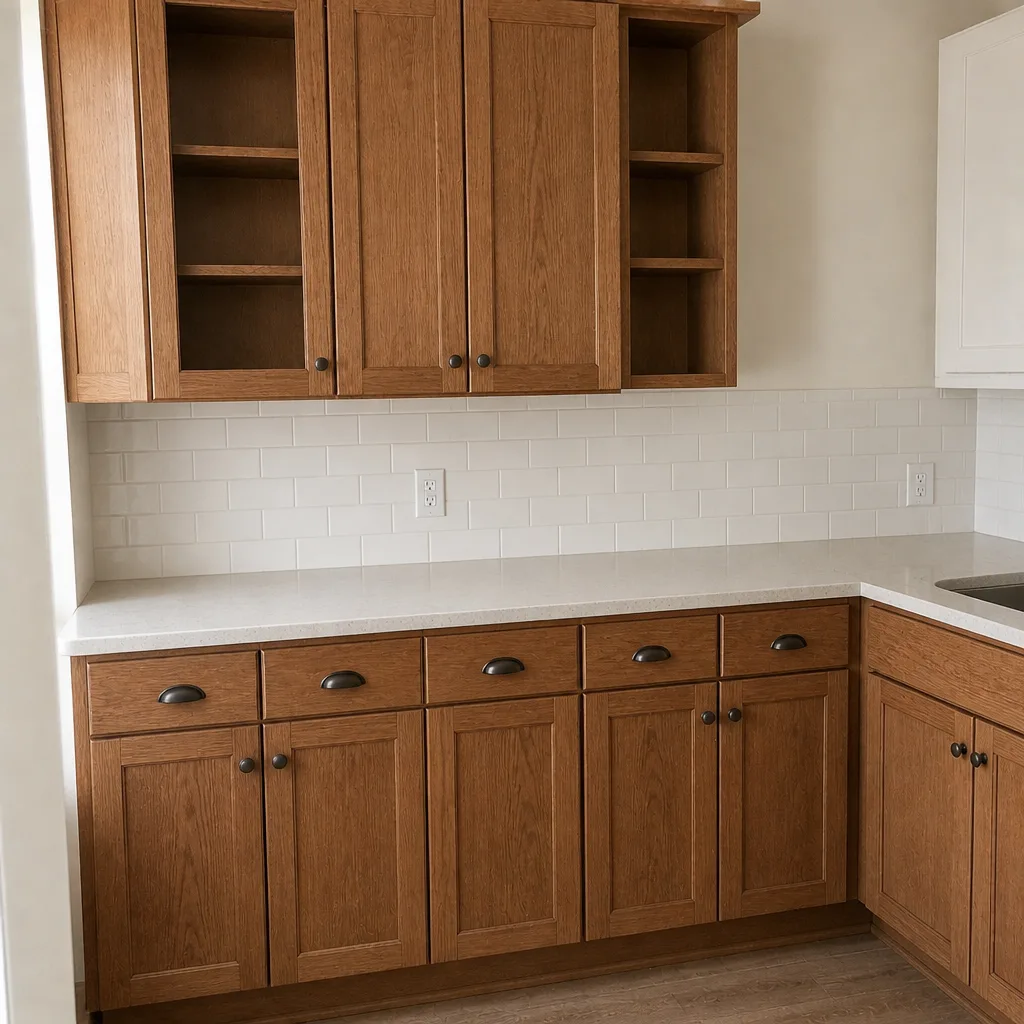 After
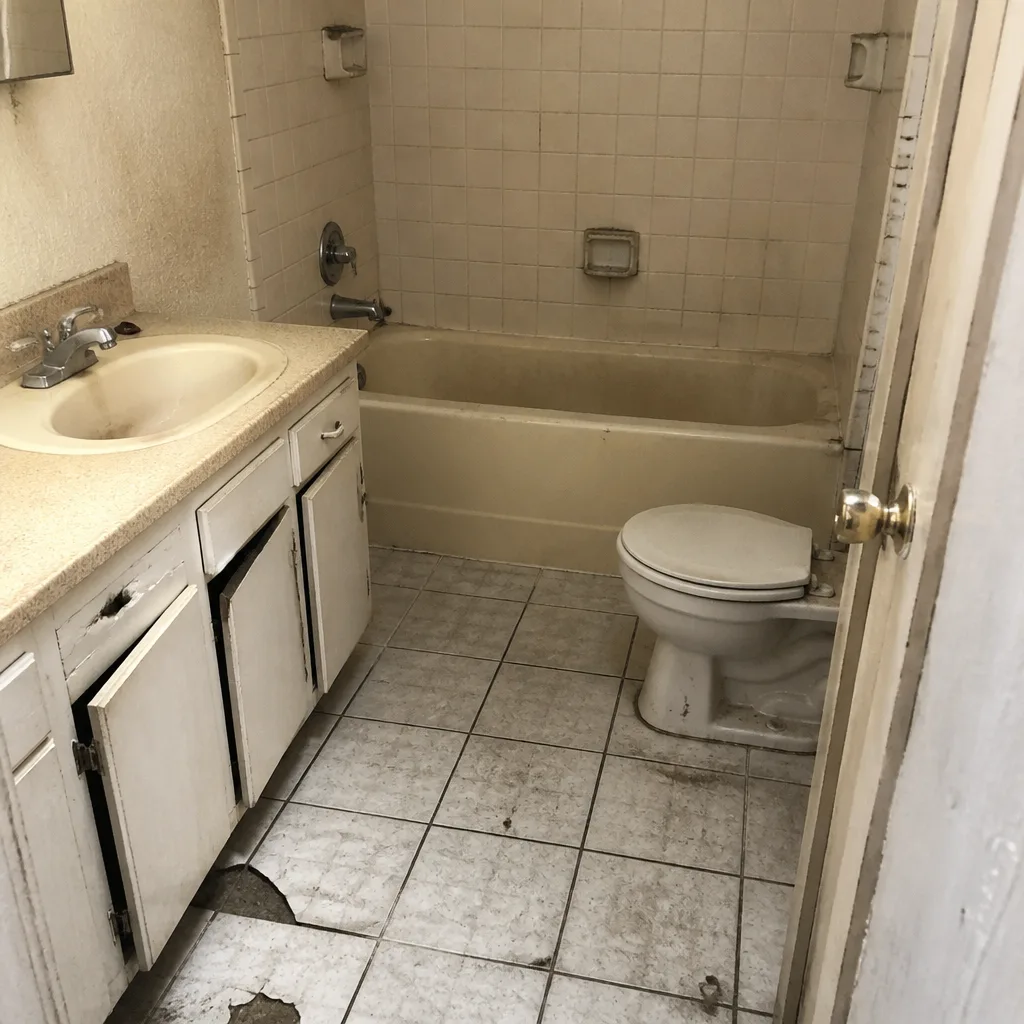 Before
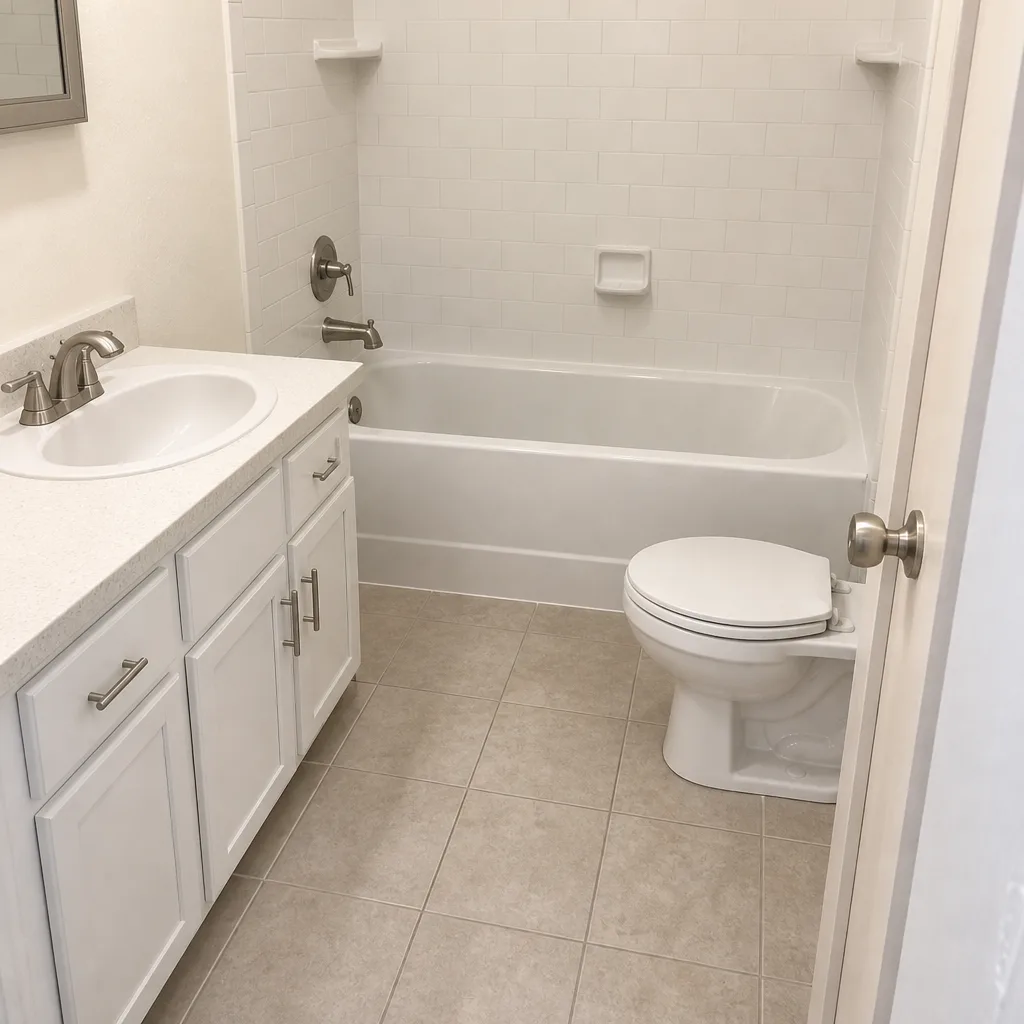 After
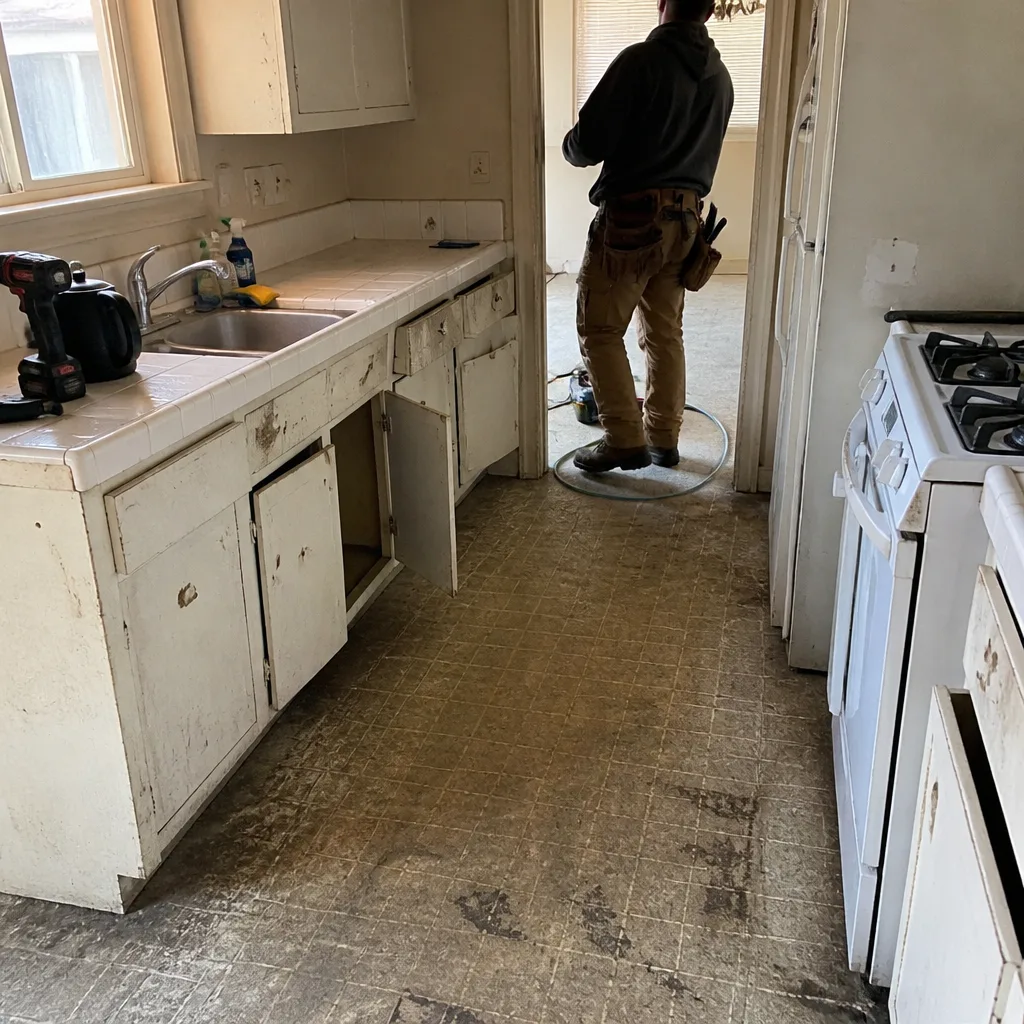 Before
 After
When to Call a Professional
Call a professional plumber or contractor the same day if you see water on the floor that isn’t coming from a visible fixture, if the ceiling below the bathroom shows active staining, if the shower pan flexes underfoot, or if the toilet has backed up and the water isn’t draining. Those are active-failure signs, not remodeling decisions, and waiting lets the damage spread into framing that hasn’t been touched yet. Call us for a walkthrough if you’ve found a soft tile, a musty smell that returns, or you’re planning a remodel and want a second set of eyes before you sign a contractor’s bid. Barrett & Sons Construction Lancaster offers free estimates in Lancaster and a free second opinion on any written estimate – call (888) 427-1810, and a live person will answer.
Frequently Asked Questions
The first sign is usually a floor tile that rocks or gives underfoot near the toilet or tub. It shows up before staining or smell does, and it tells you the subfloor has been wet. If you find one, get a walkthrough before you get bids.
Not always, but if the smell returns within a day or two of cleaning, yes. That pattern means moisture is being pulled from behind the tile or under the floor. A quick fix like a stronger cleaner doesn’t address it, and a remodel that ignores it will be back in the same state in a year.
In Lancaster, a bathroom remodel that moves plumbing, adds or relocates electrical, or changes a wall or window opening almost always requires a permit and an inspection. Confirm with the city before you sign. Any contractor who tells you permits are optional is telling you how they plan to work.
On a concrete slab, water from a failed pan has nowhere to drain, so it spreads sideways and wicks up into the wood sitting on the slab. That’s why the damage shows up at the edges of the room and behind the vanity rather than directly under the shower. A wood-framed subfloor over a crawl space usually shows the failure as a ceiling stain below.
Costs vary by what’s found. A soft tile that hasn’t reached the subfloor is a small repair, while a failed shower pan that’s soaked framing is a much larger job. The point of catching the sign before you sign is that the repair enters the written scope instead of arriving as a mid-job change order. Call (888) 427-1810 for an exact quote – estimates are free.
A written bid names the scope, the brands being installed, the allowances, and the permit plan. A verbal bid names a number. Only one of those is a contract you can hold a contractor to. If a contractor won’t put the scope in writing, they’ve given you your warning sign.
The Bottom Line
Most bathroom remodels go sideways because a warning sign got explained away. A soft tile, a smell that returns, a bid without a scope, a contractor who says permits are optional – each one is a chance to stop and look closer. Read the bathroom first, then read the bid with the same care. If the contractor found what you found and wrote it down, that’s a contractor worth talking to. If they found less than you did, that’s your answer. If you’re ready for a walkthrough that names what’s actually there, Barrett & Sons Construction Lancaster is one call away at (888) 427-1810, with a free estimate and a free second opinion on any written bid you already have. Look up Barrett & Sons Construction Lancaster home to see how we work – Tom Barrett publishes his name, his address, and his license number, and you’re welcome to check all three before you sign anything.
Written by the team at Barrett & Sons Construction Lancaster.