
Last updated November 17, 2026
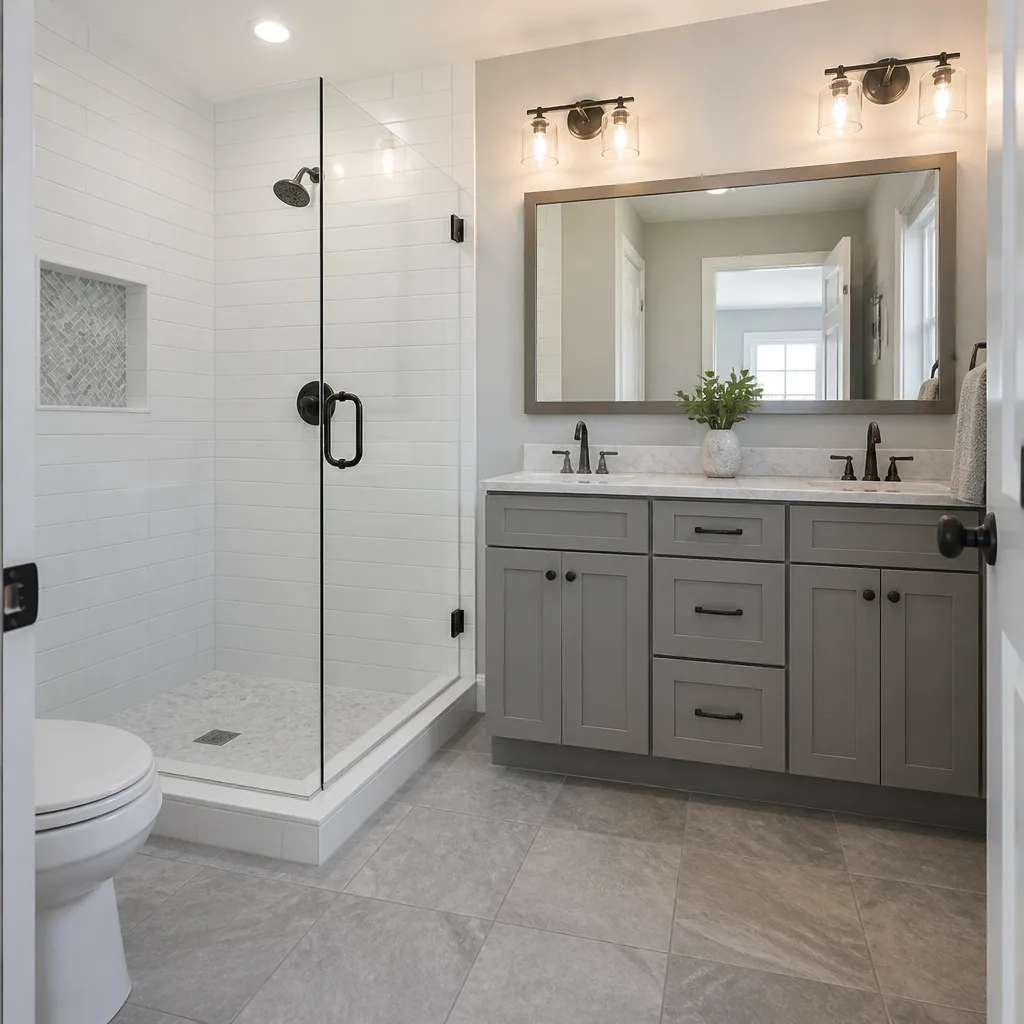 Bathroom remodeling
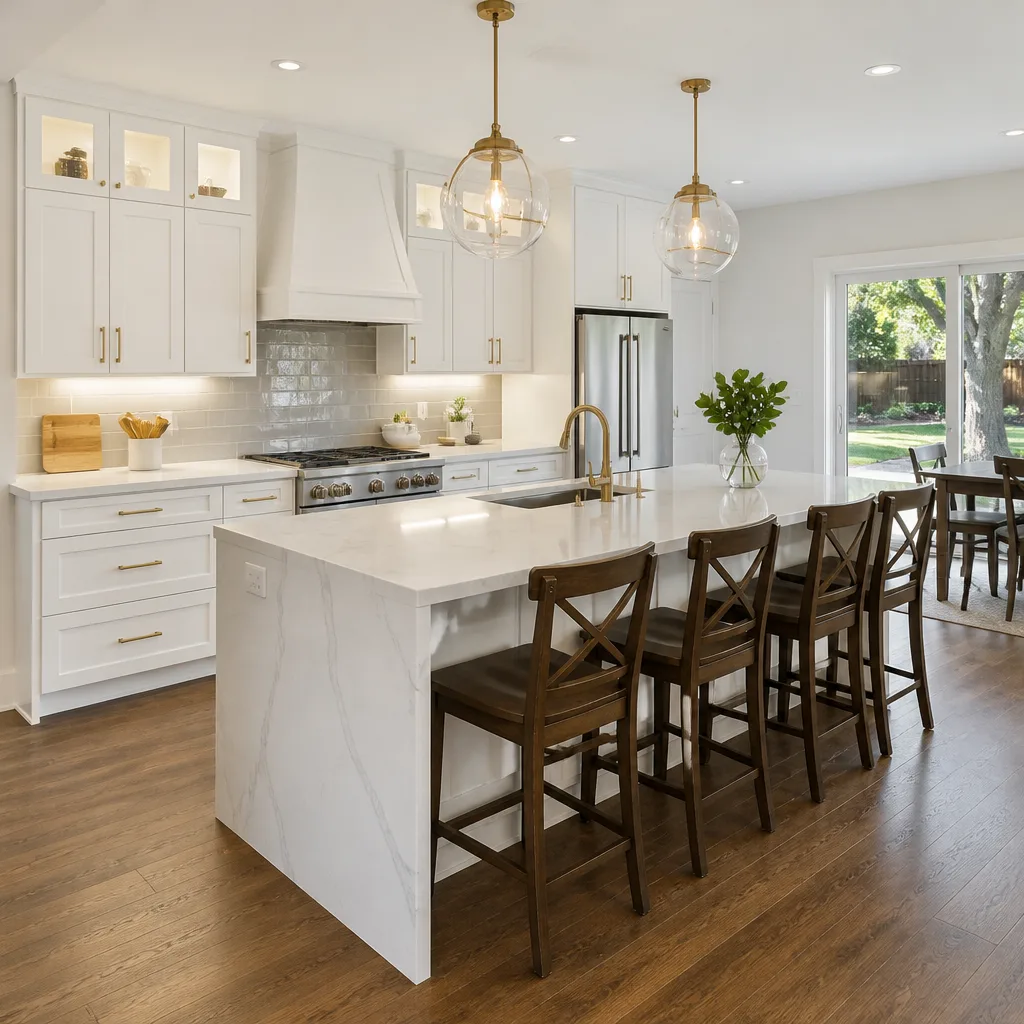 Kitchen remodeling
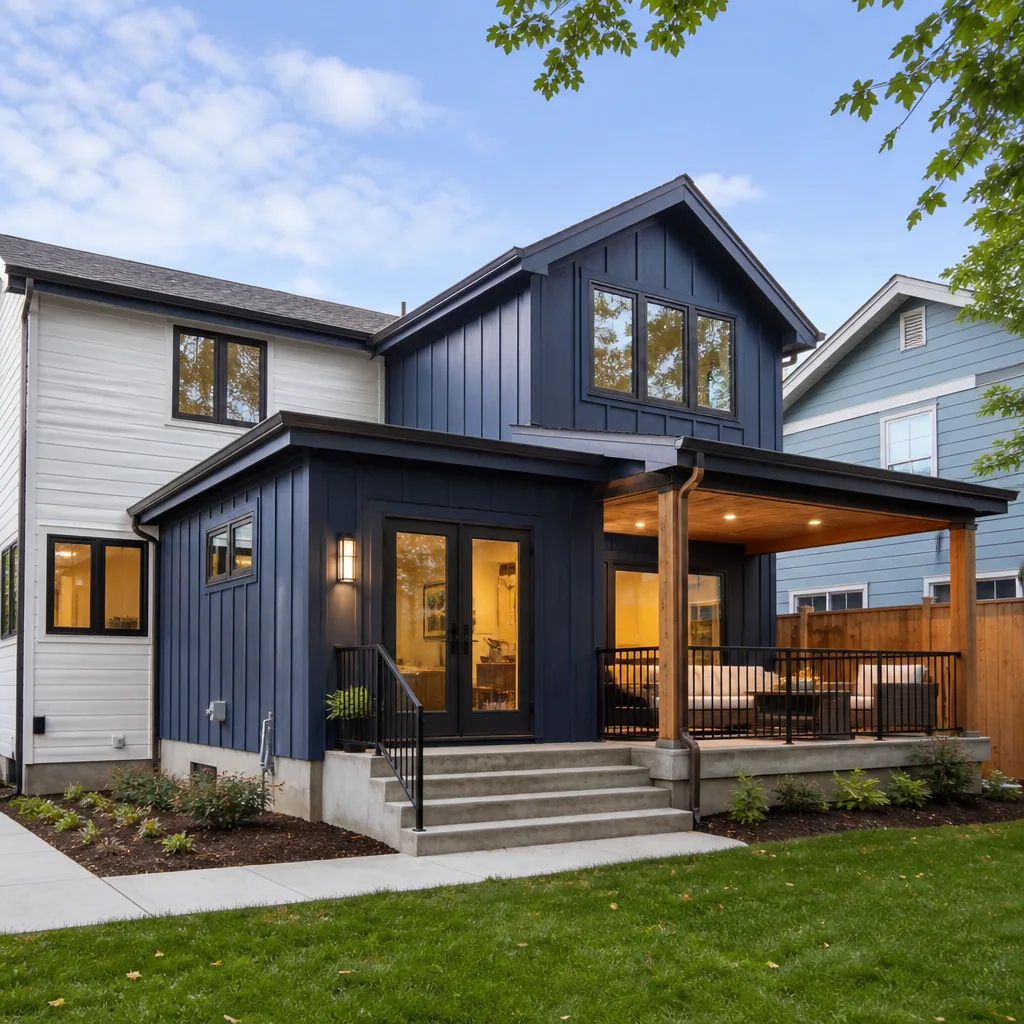 Home additions & ADU
 Roofing
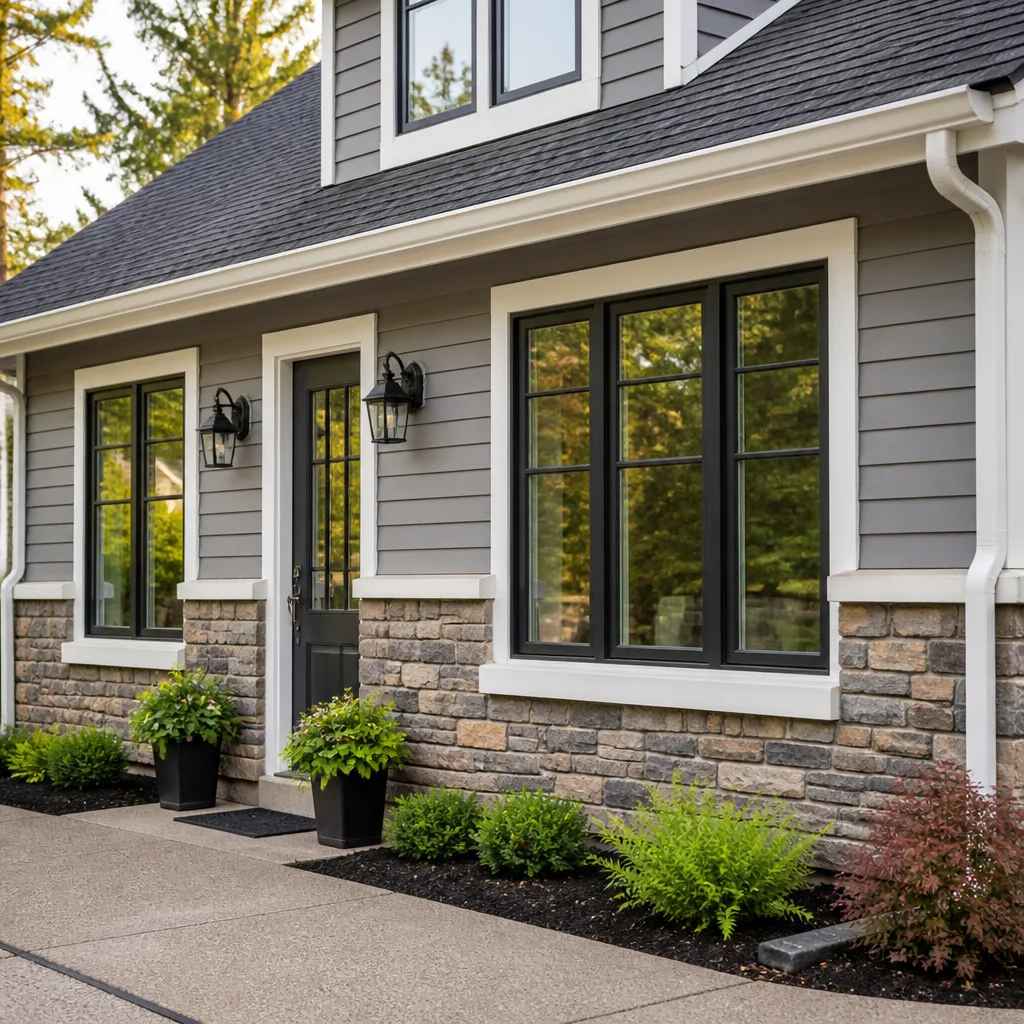 Windows & doors
 Driveway & pavers
 Fence
Free written scope consultation - allowances, timeline, and change-order rules on paper before a single trade is scheduled
The Complete Bathroom Remodeling Guide for Lancaster Homeowners
Lancaster’s water runs hard. Hardness here routinely climbs above 300 mg/L, and that single fact rearranges every decision in a bathroom remodel. The wrong grout, the wrong fixture finish, the wrong caulk will show visible damage inside two years. Most guides skip this. We’ve watched it play out in homes across the Antelope Valley, and it’s the difference between a bathroom that looks new in 2032 and one that’s already failing. This guide covers water chemistry, Lancaster permit triggers, layout choices that avoid moving the drain stack, ventilation in a desert climate, and a realistic timeline so your household isn’t washing up in the kitchen sink for a month. You’ll learn what to specify, what to skip, and where the real costs land.
Quick Answer
A bathroom remodel in Lancaster typically runs $12,000 to $32,000 for a full gut renovation, with cosmetic refreshes landing between $4,000 and $9,000. The work is permitted once you move plumbing, electrical, or walls, and it takes three to six weeks start to finish. Getting the material schedule right for Lancaster’s hard water matters as much as the layout.
Styles & brands we work with
- Kitchen remodeling
- Bathroom remodeling
- Home additions & ADU
- Roofing
- Windows & doors
- Driveway & pavers
- Fence
Table of Contents
- Lancaster’s Water Reality and What It Does to Your Bathroom
- Materials That Hold Up: Tile, Grout, Fixtures, and Caulk
- Permits in Lancaster: When a Refresh Becomes a Permitted Scope
- Layout Decisions That Add Function Without Moving the Drain Stack
- Ventilation in Lancaster’s Desert Climate
- How to Sequence the Remodel So You’re Not Without a Bathroom
- What a Lancaster Bathroom Remodel Costs, Line by Line
- Common Mistakes to Avoid
Lancaster’s Water Reality and What It Does to Your Bathroom
Lancaster draws most of its water from groundwater wells fed by the Antelope Valley aquifer. That water picks up calcium and magnesium on the way down, and by the time it reaches your showerhead it’s carrying enough mineral load to leave white scale deposits on any surface that stays wet. Chrome faucets fawn a chalky film within weeks. Cheap pressure-balanced valves start sticking. Grout lines in a shower go from crisp to crusty inside a year. This is not a maintenance problem you can scrub your way out of. It’s a specification problem.
Here’s how the hard water behaves in real Lancaster homes:
- Chrome finishes hold up better than most people expect, but only when the finish is a true multi-layer electroplated chrome. Discount-brand chrome pits through to the base metal, and once that happens the surface is gone.
- Brushed nickel and matte black hide water spots well on a day-to-day basis. The trade is that matte finishes can be harder to clean once scale does build up.
- Cementitious grout in a shower is the wrong call here. Even sealed, it needs resealing every year in Lancaster, and most homeowners don’t, so it goes gray and porous.
- Low-end fixtures from the big-box value aisle are usually the first thing to fail. The cartridges wear out from mineral buildup and start dripping or running cold at random.
We recommend a whole-house water softener or at least a point-of-use softener loop on the shower branch. It’s a $400 to $1,200 add-on depending on capacity, and it pays back over the years in fixture life. If a softener isn’t in the budget, plan around the hardness instead of fighting it. Every decision in the next section flows from this reality.
Materials That Hold Up: Tile, Grout, Fixtures, and Caulk
Material selection is where a Lancaster remodel either gets a twenty-year run or a five-year do-over. We sort choices into three categories: excellent in hard water, acceptable with maintenance, and don’t bother.
Grout and Tile
For showers, the safest call is epoxy grout. It doesn’t absorb water, so scale has nothing to grab. The installer has to work fast because it sets hard, so it’s a job for a crew with experience. Second choice is a high-performance cement grout with a penetrating sealer, resealed every eighteen months. Standard sanded grout in a wet area of a Lancaster home is asking for trouble.
On tile, large-format porcelain with narrow grout joints reduces the surface area that catches scale. Small mosaic tiles with wide grout lines look great in a showroom and turn into a scrubbing project within two years. Keep grout lines at 1/8 inch or smaller for showers.
Behind the tile, specify an uncoupling and waterproofing membrane. Schluter’s Kerdi system is the one our crews install most often because it decouples the tile from the substrate and keeps moisture away from the framing. It’s not glamorous, but it’s the single most important waterproofing layer in the room.
Fixtures and Plumbing
- Faucets and shower valves: Delta and American Standard both make solid mid-tier lines with replaceable ceramic cartridges. When a cartridge wears out from mineral load, you swap the part for under $40 instead of replacing the whole faucet. Toto makes excellent toilets with a smooth glaze that doesn’t hold mineral staining the way cheaper bowls do.
- Toilets: A one-piece design has fewer seams to catch scale. Verify a 1.28-gallon flush rating for Lancaster’s water-use norms.
- Showerheads: Easy-clean nozzles are not marketing fluff here. You will be soaking them in vinegar once a quarter, and rubber nozzles make that a five-minute job.
Caulk
Standard latex caulk is the wrong choice for a wet area in Lancaster. Specify 100% silicone caulk at the tub-to-tile and shower-to-tile transitions. It flexes with the frame and doesn’t turn black at the seams. It costs a few dollars more per tube and saves a much bigger repaint-and-recaulk job in three years.
Permits in Lancaster: When a Refresh Becomes a Permitted Scope
Here’s the rule we tell every homeowner: if you touch plumbing supply or drain lines, move electrical, add or remove a wall, or install a new tub or shower valve, you’re in permit territory. Paint, replace a vanity cabinet in the same location, swap a toilet on the same flange, or retile in place, and you’re generally not. The line matters because an unpermitted remodel creates problems at resale and can complicate an insurance claim.
Permitted work in Lancaster flows through the City of Lancaster’s building department and follows the California Building Code along with the California Plumbing and Electrical codes. Inspections are typically required at rough-in (before walls close) and at final. Skipping the rough-in is how homeowners end up tearing out fresh drywall to open up a wall so a plumbing inspector can see a connection.
What normally triggers a permit in a Lancaster bathroom:
- Relocating or replacing the drain stack, moving a toilet, or adding a second sink.
- Changing the tub to a shower or a shower to a tub-and-shower combo.
- Adding a GFCI circuit, an exhaust fan on a new switch, or a heated floor.
- Removing any wall, even what looks like a partition.
- Replacing a water heater as part of the remodel (separate permit).
The permit inspector works for the homeowner, not for us. That’s why we pull them on every eligible job. If a contractor tells you the permit is optional for a remodel at this scope, that’s a red flag. We’ve fixed enough of those situations to know what they cost down the road.
Layout Decisions That Add Function Without Moving the Drain Stack
Moving the drain stack is the single most expensive change in any bathroom remodel. The stack is the vertical pipe that carries waste down through the house, and relocating the toilet, tub, or main drain means cutting joists, rerouting under the subfloor, and paying a plumber to touch structural plumbing. In our experience, moving the drain adds $3,000 to $8,000 in excavation and plumbing cost alone, plus a full wall rebuild.
The better approach is to keep the wet wall (the wall all the plumbing runs to) where it is and rework the room’s function around it. Here’s how to add function without touching the stack:
- Swap tub depth for shower size. Removing a standard tub and installing a walk-in shower with a low curb often frees two feet of width without moving a single drain. You’re reusing the same rough-in.
- Convert a linen closet to a walk-in shower when the closet shares the wet wall. This is our favorite Lancaster conversion because the closet already backs up to the plumbing.
- Steal 18 inches from an adjacent hallway or bedroom to make room for a double vanity. Walls are cheaper to move than drains.
- Use a floating vanity to keep the floor clear. It reads larger without adding square footage.
- Stack storage vertically with a tall medicine cabinet or a built-in niche above the toilet, so you don’t lose floor space to a bulky freestanding unit.
Before you commit to a drain-relocation plan, ask what it costs to solve the same problem a different way. Nine times out of ten the wall and the stack can stay put, and the bathroom works better than the original.
Ventilation in Lancaster’s Desert Climate
Lancaster homes run sealed and air-conditioned through the summer. That’s the problem. The same tight envelope that keeps the heat out traps moisture from every shower, and in a desert your AC is running hard enough to cool the air and drop its relative humidity indoors. When you run hot water for fifteen minutes in a sealed house, the moisture has nowhere to go. Mildew arrives fast, especially in an interior bathroom with no window.
Exhaust fan selection matters more here than in humid climates, because homeowners don’t crack a window in July. The rules we use:
- Size the fan to the room. The baseline is one CFM per square foot of bathroom floor, with a minimum of 50 CFM. A 60-square-foot bathroom needs at least 60 CFM, and an 80-square-foot one needs 80. Undersized fans are the biggest ventilation mistake we see in Lancaster.
- Vent to the outside, not the attic. Fan exhaust must terminate at an exterior wall or roof cap. Dumping moisture into the attic in a desert climate still causes rot.
- Run the fan for at least 20 minutes after the shower. A timer switch on the wall does the work for you.
- Add a humidity sensor on interior bathrooms. If the room has no window, a sensor switch keeps the fan running until the air dries out.
An added benefit of good ventilation: it slows the scale buildup on the tile above the shower because moisture isn’t lingering. Two problems, one fix.
How to Sequence the Remodel So You’re Not Without a Bathroom
A bathroom remodel in Lancaster will interrupt household life. The question is how long and how badly. With the sequence below, most households have one functioning toilet and one shower for all but four or five days of the project. Plan for a three-to-six-week timeline for a full gut renovation, with cosmetic refreshes running one to two weeks.
Realistic timeline, demo to final tile:
- Week 0 – Pre-construction. Permits pulled, materials ordered, delivery dates confirmed. This is where 90% of delays originate. Do not schedule demolition until material is in hand.
- Day 1-2 – Demo. Tear-out, haul-away, and the point at which the drain rough-in gets opened up for inspection. This is the messiest, noisiest stretch.
- Day 3-5 – Rough-in. Plumbing, electrical, and exhaust fan work. Rough-in inspection. Backer board and waterproofing membrane go on. This is the four-to-five-day stretch where the household has no working bathroom.
- Week 2 – Tile and drywall. Waterproofing inspection, then tile floors and walls. Grout cures for 24-48 hours.
- Week 3 – Cabinets, countertop, fixtures. Vanity set, toilet set, faucet and shower trim install. The bathroom functionally works again.
- Week 4 – Final details and inspection. Caulking, painting, glass, final inspection.
The realistic planning move: book a hotel room or a neighbor’s shower for the rough-in days, not the whole project. Everything after tile dries can be worked around. If your house has two bathrooms, we often sequence the work so the second stays functional all the way to the last day.
What a Lancaster Bathroom Remodel Costs, Line by Line
Lancaster prices sit in the middle of the statewide range: labor is a bit lower than coastal cities, but hard-water-appropriate materials run slightly higher. Here’s what we see in the field for a standard five-by-eight-foot bathroom:
- Demo and haul-away: $800 – $1,800
- Plumbing rough-in (no stack move): $1,500 – $3,200
- Electrical (GFCI, exhaust fan, lighting): $900 – $2,200
- Drywall, waterproofing, backer board: $1,200 – $2,400
- Tile (walls and floor), installed: $3,000 – $7,000
- Vanity, countertop, mirror: $1,400 – $4,500
- Toilet and shower fixtures: $800 – $2,600
- Permit and inspection: $250 – $600
- Water softener loop (optional but recommended): $400 – $1,200
Total for a full gut: roughly $12,000 to $32,000 depending on finish level and whether the drain stack moves. A cosmetic refresh (paint, vanity, toilet, fixtures, no tile) runs $4,000 to $9,000.
Two things we insist on: written line-item quotes, and written change orders before any scope change. An allowance that isn’t on paper is a surprise waiting for a date. That’s why every Barrett & Sons estimate breaks out each line so you can compare.
Common Mistakes to Avoid
- Specifying standard sanded grout for a Lancaster shower. It goes porous inside two years in this water. Use epoxy grout, or budget an annual reseal.
- Choosing an undersized exhaust fan. A 50 CFM fan in an 80-square-foot Lancaster bathroom leaves moisture behind and invites mildew. Match CFM to room size.
- Moving the drain stack to chase a “perfect” layout. It adds $3,000 to $8,000 to the bill and delays the whole project. Work the layout around the wet wall first.
- Skipping the permit to save a few hundred dollars. It surfaces at resale, at insurance, and if a neighbor’s inspector gets nosy, at your front door. The permit is cheap; the tear-out isn’t.
- Choosing the cheapest chrome faucet because it looks fine. Hard water strips a cheap finish in a year. Delta and American Standard mid-tier lines cost a bit more and last a decade.
- Installing latex caulk in the shower. It turns black in a Lancaster bathroom within 18 months. Silicone only at the tub-to-tile transition.
- Starting demo before materials arrive. Backordered tile is the number one cause of a six-week job turning into ten. Order, confirm delivery, then schedule demo.
- Relying on a verbal price. Written scope, written allowances, written change orders. Ask for all three before you sign.
These are the same mistakes we see on repair calls across the Antelope Valley every month, and they’re avoidable with a specification plan on paper before demo day. If you’re also planning exterior work alongside the interior, our guide to Driveway & Pavers in Lancaster covers the site plan side.
See the difference
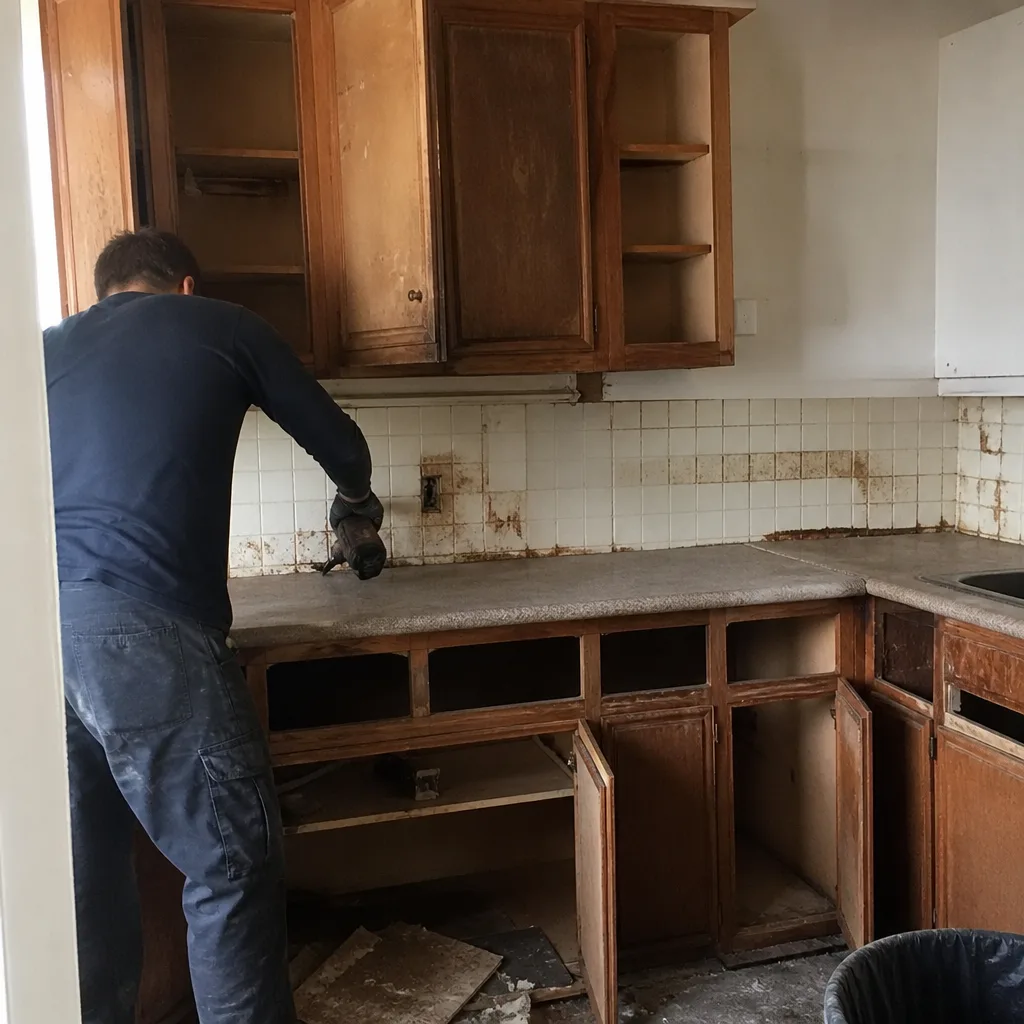 Before
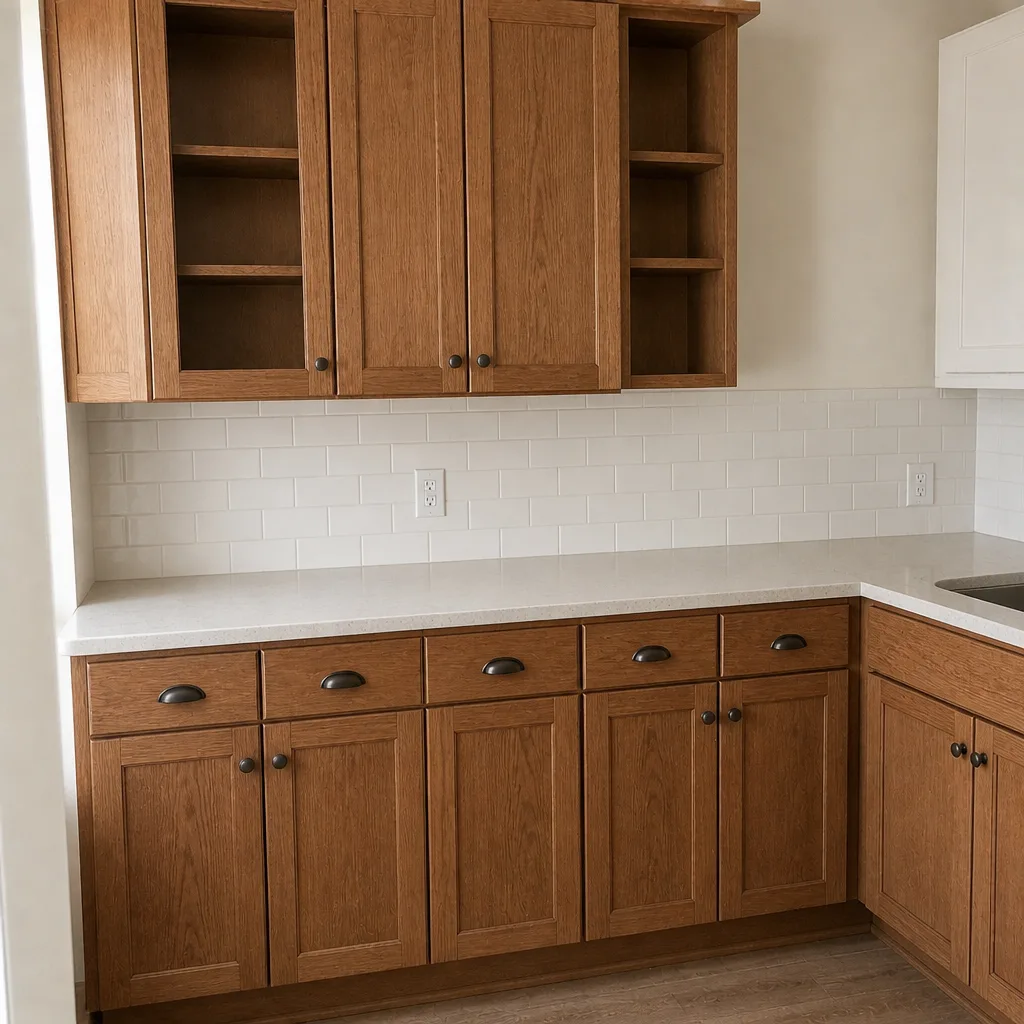 After
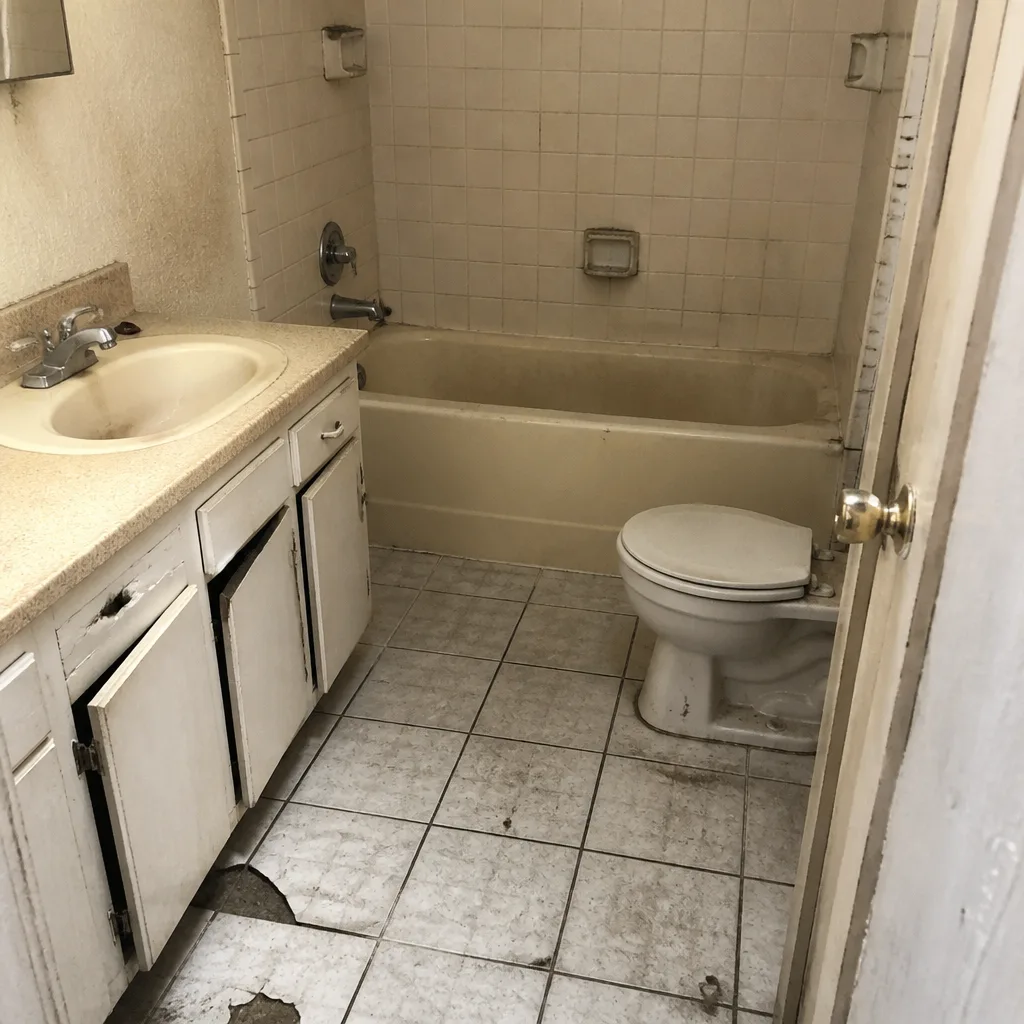 Before
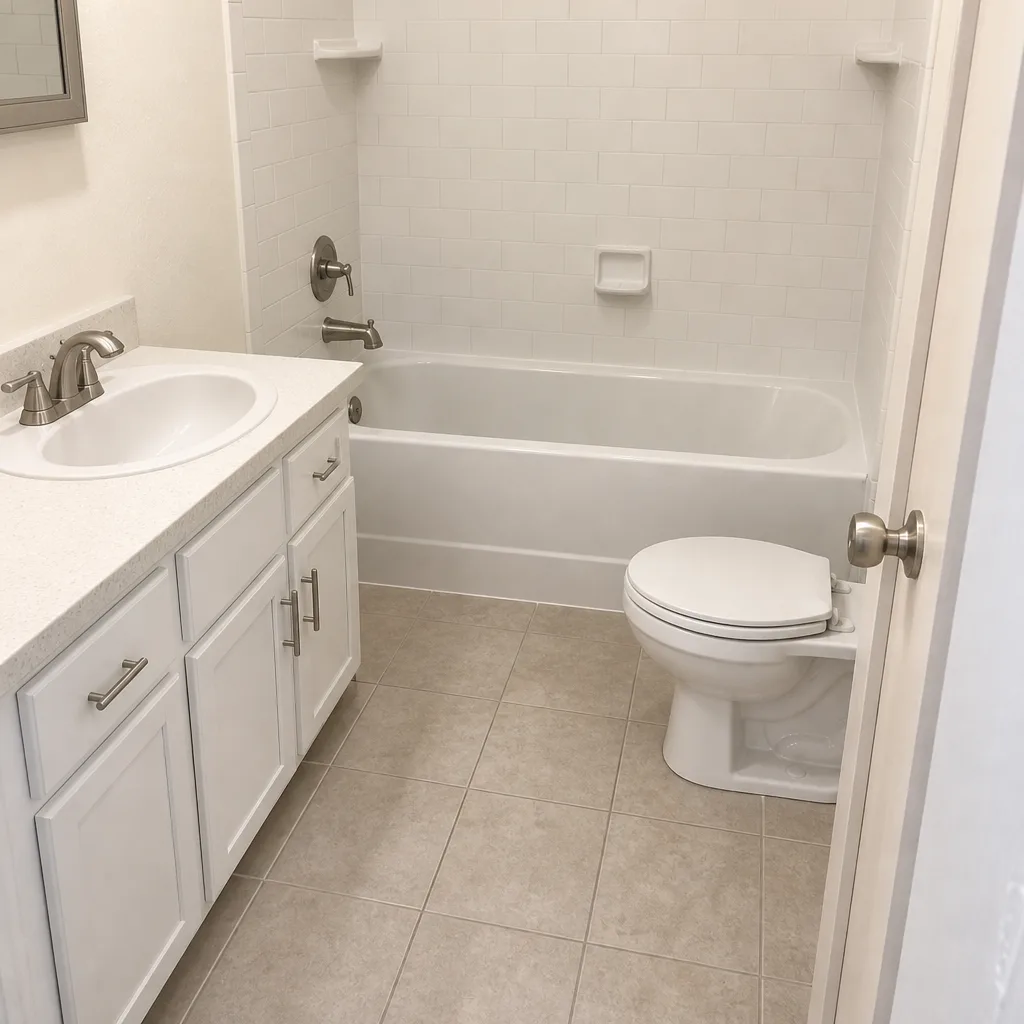 After
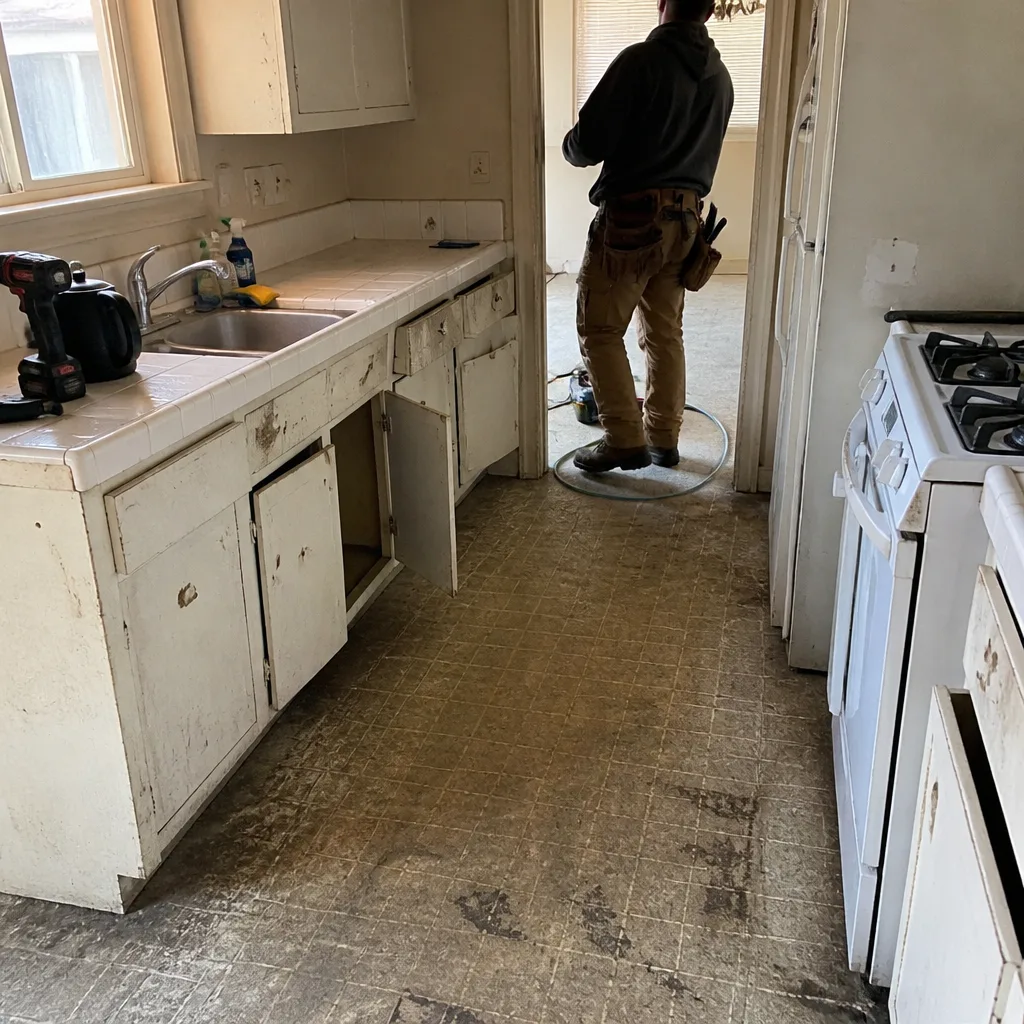 Before
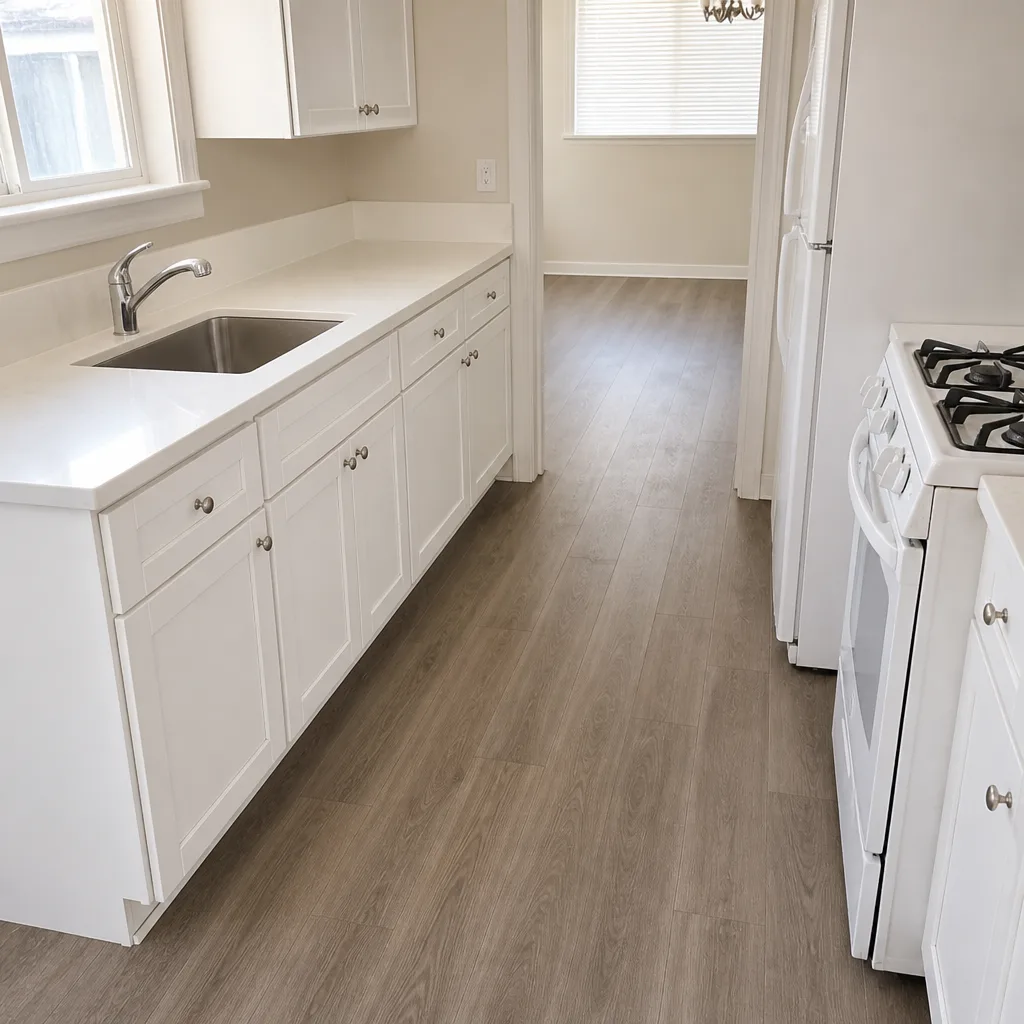 After
When to Call a Professional
Some bathroom work is realistically a homeowner project: swapping a faucet on an existing supply line, replacing a toilet on the same flange, repainting, or installing a new mirror. Anything beyond that in Lancaster needs a licensed contractor, and specifically anything that touches the drain stack, the electrical panel, the exhaust fan ducting, or the waterproofing behind tile. Waterproofing is the sneaky one; a bad membrane doesn’t show up for a year, and by then the damage is under the tile and in the framing. Getting the permit pulls and inspections right is also a professional job. Plumbing moved without a permit is the most common cause of failed resale inspections we hear about from neighbors. Barrett & Sons Construction Lancaster offers free estimates in Lancaster – call (888) 427-1810.
Frequently Asked Questions
A full gut bathroom remodel in Lancaster runs $12,000 to $32,000. A cosmetic refresh (paint, vanity, toilet, and fixtures, keeping tile in place) runs $4,000 to $9,000. The two big levers are whether the drain stack moves and how durable you want the tile and grout to be in Lancaster’s hard water. Call (888) 427-1810 for an exact quote – estimates are free.
Not without a written change order approving it first. Once the scope is signed off, every allowance is on paper, and any change to scope or price arrives in writing before work proceeds. If a contractor won’t commit to that in writing, walk away.
Yes, on every eligible job. Lancaster bathroom remodels that touch plumbing, electrical, or structural walls get a permit from the City of Lancaster, and the work gets inspections at rough-in and final. We’ve fixed enough unpermitted work to know it costs more to sort out later than to do it right the first time.
A full gut renovation runs three to six weeks from demo to final tile. A cosmetic refresh runs one to two weeks. The biggest cause of delay is material delivery, which is why we won’t schedule demo until tile and fixtures are physically on site.
Epoxy grout in showers, 100% silicone caulk at wet seams, and a schluter waterproofing membrane behind tile. For fixtures, Delta, American Standard, and Toto mid-tier lines have replaceable cartridges and finishes that survive the mineral load here. Add a water softener loop if the budget allows; it extends fixture life considerably.
Yes, and most of the time you should. Every layout change we recommend in this guide, including swapping a tub for a walk-in shower, adding a vanity, or converting a linen closet, can be done without touching the drain. Moving the stack adds $3,000 to $8,000 to the cost, and it’s rarely necessary for a better room.
The Bottom Line
The bathroom remodel that holds up in Lancaster is built around the water. Epoxy grout, silicone caulk, quality mid-tier fixtures with replaceable cartridges, and a properly sized exhaust fan will save you a redo five years down the line. Keep the drain stack where it is, pull the permit for anything structural or plumbing, and demand written scope, written allowances, and written change orders before you sign. Sequence the demo after material is on site, plan for four to five days without a working shower, and the rest becomes a manageable project. If you’re also thinking about the house at large, our Barrett & Sons Construction Lancaster home page and the Home Additions & ADU in Lancaster guide show how a bathroom remodel fits into a bigger plan.
When you’re ready to price the work, we’ll walk the bathroom with you, take measurements, and put the whole scope on paper. Every Barrett & Sons contract carries the 90-Day Done Right Promise in writing, and every price change arrives as a written change order before work proceeds. Barrett & Sons is owner-operated, and unlike a national chain, you’ll find the same crews on your job from demo to final walkthrough. Call us to schedule your free estimate at (888) 427-1810 – a live person answers 24 hours a day, and the estimates are free. If you’re comparing a written bid from another contractor, we’ll give you a free second opinion, no trip charge inside the county, and a permanent 10% Senior & Veteran discount applies to any job you book.
Written by the team at Barrett & Sons Construction Lancaster.