
Last updated November 17, 2026
 Driveway & pavers
 Kitchen remodeling
 Bathroom remodeling
 Home additions & ADU
 Roofing
 Windows & doors
 Fence
Free written scope consultation - allowances, timeline, and change-order rules on paper before a single trade is scheduled
The Complete Driveway & Pavers Guide for Lancaster Homeowners
Most paver guides are written for somewhere with rain. Lancaster gets about 7 inches a year, so the advice you’ll find online about “drainage first” and “moss control” barely applies here. What does apply is harder: winter nights that drop below freezing, summer afternoons that hit 100°F, relentless UV, and a layer of caliche under half the lots in the Antelope Valley that will wreck a base faster than any storm. This guide covers what actually matters for a driveway in Lancaster: soil prep, materials that survive the sun, HOA and City permit details, and how to read a quote without getting burned.
Quick Answer
A driveway paver project in Lancaster typically runs $12 to $22 per square foot installed, and the single biggest factor in whether it lasts is base preparation over caliche soil, not the paver you pick. Concrete pavers on a properly engineered, geotextile-separated base hold up best to Antelope Valley UV and freeze-thaw, and you should expect a City of Lancaster encroachment permit for any work touching the public right-of-way plus HOA architectural approval in most planned communities.
Styles & brands we work with
- Kitchen remodeling
- Bathroom remodeling
- Home additions & ADU
- Roofing
- Windows & doors
- Driveway & pavers
- Fence
Table of Contents
- Why Caliche Soil Changes Everything About Base Prep
- Which Paver Materials Survive Lancaster’s Sun and Temperature Swings
- Lancaster Permits and HOA Rules for Driveway Pavers
- The Right Drainage Slope for a Low-Rainfall, Flash-Flood Climate
- What Driveway Pavers Cost in Lancaster
- How to Compare Local and National Contractor Quotes
- What a Paver Project Actually Looks Like, Step by Step
- Keeping Pavers Looking Right in the High Desert
Why Caliche Soil Changes Everything About Base Prep
Caliche is a calcium carbonate layer that forms in arid soils, and it’s common across much of the Antelope Valley, particularly on the west side of Lancaster toward Quartz Hill and out along Avenue L. It’s hard. It doesn’t drain. And if a contractor lays base course over caliche without breaking it up and establishing proper drainage, water pools under the pavers, freezes on a January night, expands, and starts lifting the surface. We’ve seen new driveways in Lancaster with edge failure inside two seasons for exactly this reason.
The standard paver base everyone quotes – 4 inches of compacted Class II base over native soil – assumes the native soil drains. Over caliche it doesn’t. What a proper Lancaster base looks like:
- Excavation deep enough to remove compromised material. Typically 8 to 12 inches, more if the caliche is shallow and shattered.
- Caliche broken and removed, not just scraped. A plate compactor bouncing off a caliche shelf tells you it wasn’t prepped.
- Geotextile fabric over the subgrade. Keeps fines from pumping up into the base and keeps the base from migrating down. Cheap insurance on desert soils.
- 4 to 6 inches of compacted aggregate base, placed in lifts. Two-inch lifts compacted separately, not one thick pour of gravel.
- Edge restraint on every open side. Concrete or steel edge, pinned. A driveway without edge restraint spreads.
If a bid doesn’t mention caliche, subgrade prep, geotextile, or lift compaction, that’s the first question to ask. It’s also the reason a Lancaster paver driveway can cost more than the same square footage in a coastal city – the soil here does more work to fight you.
Which Paver Materials Survive Lancaster’s Sun and Temperature Swings
Lancaster’s climate is genuinely hard on hardscape. UV exposure here is severe year-round, and the daily temperature swing – a 40°F night and a 90°F afternoon is a normal March – works on any material that expands and contracts. Three common options, honestly compared:
Concrete pavers
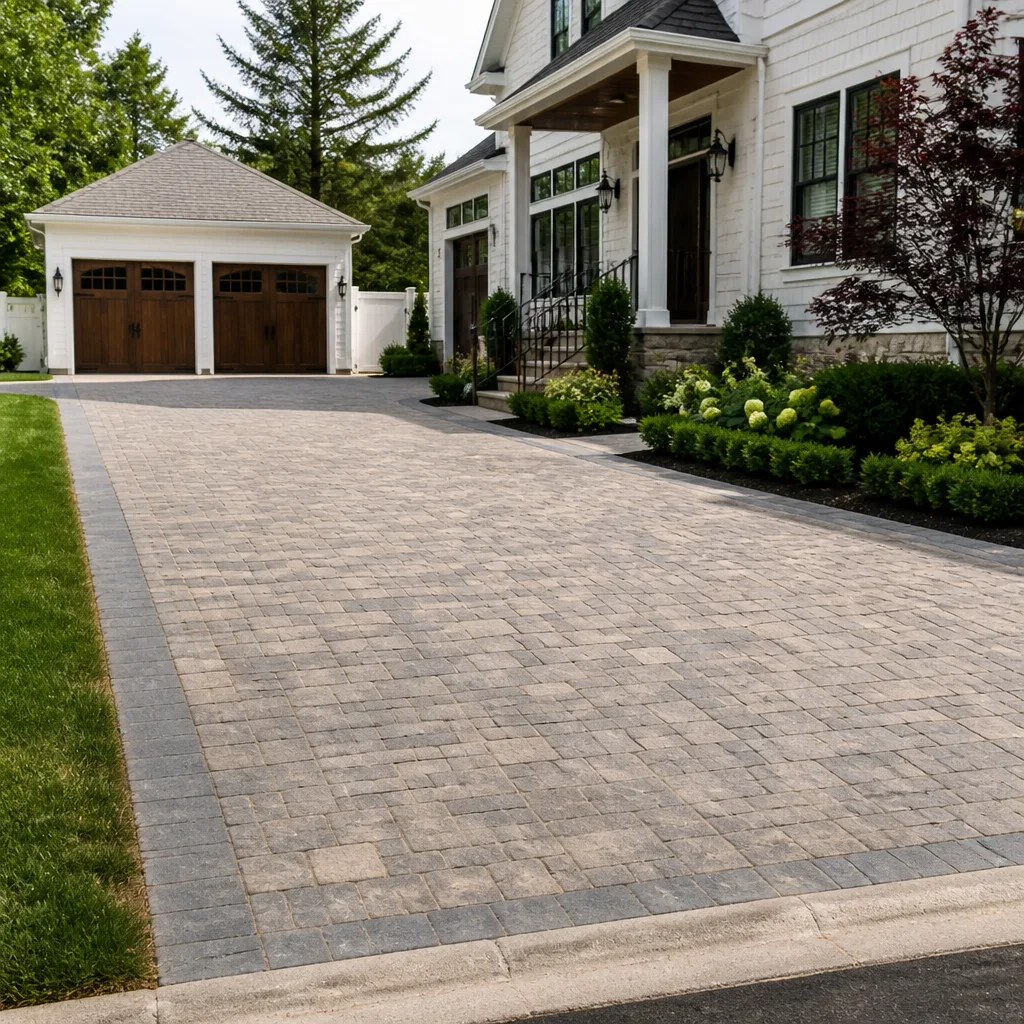
The best all-around choice for Antelope Valley driveways. Modern concrete pavers from Belgard and Techo-Bloc are manufactured to hold color under high UV, they’re rated for vehicle loads, and individual units can be lifted and reset if something shifts. They handle freeze-thaw well when installed over a proper base. Expect to spend $10 to $18 per square foot installed in Lancaster.
Travertine
Beautiful, cooler underfoot, and common on pool decks and patios. For a Lancaster driveway, we caution against it. Travertine is porous, softer than concrete, and doesn’t love being driven on. It also fades and pits faster under our UV load. If you love the look, use it on a front walkway and put concrete pavers on the driveway.
Clay brick
Genuine clay brick pavers are durable and hold color well, and the traditional look suits some of the older homes near downtown Lancaster. The catch is cost and availability – expect $18 to $28 per square foot installed, and fewer local installers keep experienced brick crews on staff. Brick also chips more than concrete pavers under dropped loads.
Whatever you choose, ask for the manufacturer name and the product line in writing. “Premium pavers” on a bid means nothing.
Lancaster Permits and HOA Rules for Driveway Pavers
Two separate approvals can apply to a Lancaster paver driveway, and skipping either one is a headache you’ll pay for later.
City of Lancaster permits
Resurfacing an existing driveway inside your property lines typically doesn’t require a building permit. But if the project widens the driveway, changes the curb cut, alters the apron between the sidewalk and the street, or touches the public right-of-way, you’ll need an encroachment permit from the City of Lancaster. That’s a real permit with an inspection, and it’s your protection – the inspector works for you, not for the contractor.
HOA architectural approval
Most planned communities in Lancaster – the tracts off Avenue J, the neighborhoods near the Antelope Valley Mall, and the newer developments on the east side – require architectural committee approval before any driveway material change. Paver color, pattern, and border style are usually restricted. Get written approval before the first load of base arrives. If a contractor tells you to “worry about the HOA later,” that’s a contractor who’s never had to tear out a driveway.
Eligible jobs of this kind should have permits pulled and inspections signed. Every price change should arrive as a written change order before work happens – the allowance that isn’t on paper is a surprise waiting for a date.
The Right Drainage Slope for a Low-Rainfall, Flash-Flood Climate
Seven inches of rain a year sounds forgiving. Then a single storm dumps two inches in an hour and the low corner of your driveway becomes a pond. Lancaster’s rainfall pattern is feast and famine, and flash flooding on side streets near Amargosa Creek and the washes is real.
The rule of thumb for a paver driveway is a slope of 1 to 2 percent away from the house and toward the street or a drainage point. That’s roughly 1/8 to 1/4 inch of fall per foot. A 40-foot driveway needs 5 to 10 inches of total fall – noticeable, but you’ll never feel it under the wheels.
Two Lancaster-specific details:
- Direct water to the street or a swale, never to the neighbor’s fence line. Grading onto a neighbor’s property is the fastest way to a dispute.
- Consider a channel drain at the garage apron. If your garage floor sits low relative to the driveway, a linear drain across the apron keeps minor flooding out of the garage during a heavy summer cell.
We see far more driveway failures from bad grading than from bad pavers in Lancaster. A base that doesn’t shed water will fail regardless of the material on top.
What Driveway Pavers Cost in Lancaster
Local pricing for driveway pavers in the Antelope Valley runs roughly $12 to $22 per square foot installed, all-in. Here’s how the line items break down on a typical Lancaster job, so you can see what’s inside the number:
- Demo and haul-off of existing surface: $1.50 to $3.50 per square foot
- Caliche removal and subgrade prep: $2 to $5 per square foot (this item is often missing from national quotes)
- Geotextile and compacted base: $2 to $4 per square foot
- Pavers and edge restraint: $5 to $10 per square foot, material-dependent
- Polymeric sand and final compaction: $1 to $2 per square foot
- Encroachment permit and inspection, if applicable: $200 to $600
A standard two-car driveway in Lancaster runs 400 to 600 square feet. Do the math on a mid-range concrete paver job and you’re looking at $6,000 to $11,000 for a full replacement including base. A resurface over a sound existing slab or base costs less. Get the number in writing, line by line, with allowances spelled out.
How to Compare Local and National Contractor Quotes
This is where Lancaster homeowners get hurt most often. A national outfit quotes one price on the phone and hands over a different invoice at the door. Here’s how to read past that.
- Ask for the base specification in writing. Depth, material, compaction method, geotextile, edge restraint. If it’s vague, so is the job.
- Ask about caliche. A local contractor will know what it is and how they handle it. A call-center rep won’t.
- Confirm permits in writing. Who pulls the encroachment permit? Who’s on the hook for the inspection?
- Get the HOA approval requirement named. A local crew knows your tract’s rules; a national one won’t.
- Demand written change orders. Scope in writing, allowances in writing, change orders in writing – before work happens.
- Look up the license. Ask anyone on your street, or look up the license number yourself. It’s public.
- Check the warranty in writing. What’s covered, for how long, and who answers the phone if something fails?
A local contractor who lives twenty minutes away has a reason to make it right. That’s the practical difference between a quote and a commitment. Learn more about Driveway & Pavers in Lancaster.
What a Paver Project Actually Looks Like, Step by Step
A typical Lancaster driveway paver project takes four to seven working days for the hardscape portion, depending on square footage and access. Here’s the sequence:
- Day 1: Demo existing surface, haul off debris, expose subgrade.
- Days 1-2: Break and remove caliche, grade to final drainage slope.
- Days 2-3: Lay geotextile, place and compact base in two-inch lifts, install edge restraint.
- Days 3-5: Set pavers in the agreed pattern, cut borders, install soldier course.
- Days 5-6: Sweep polymeric sand into joints, compact, cure.
- Day 7: Final walkthrough with the crew lead, written sign-off on the job.
Add time for permit approval if an encroachment permit is required – the City of Lancaster usually turns those around in one to two weeks. HOA approval can take longer; plan for it up front and don’t schedule the crew before you have the letter.
Keeping Pavers Looking Right in the High Desert
Paver maintenance in Lancaster is lighter than it is in wetter climates – no moss to fight, no constant weed pressure in the joints. What you do have to stay ahead of:
- Re-sand joints every 2 – 3 years. Polymeric sand degrades under UV; topping it off keeps pavers locked and keeps weeds out.
- Wash the surface twice a year. Desert dust settles deep and dulls color; a garden hose and a stiff broom restores it.
- Seal every 3 – 5 years if you want deeper color. A penetrating sealer helps against UV fade, but it’s optional and depends on the paver.
- Watch the edges. Any spreading at the border means the edge restraint has failed; get it reset before the whole driveway moves.
If you’re planning a larger improvement alongside the driveway, our guide to Home Additions & ADU in Lancaster covers how driveways, setbacks, and grading get coordinated with a building project.
Common Mistakes to Avoid
- Skipping caliche removal. Laying base over an unbroken caliche shelf guarantees edge failure within a few seasons. Insist on the spec in writing.
- Accepting a phone quote. National outfits quote one price and hand over another at the door. Get a written line-item estimate on site, after the soil is looked at.
- Forgetting the HOA. Tearing out a beautiful new driveway because the architectural committee didn’t approve the paver color is a real thing that happens in Lancaster tracts.
- No encroachment permit on a right-of-way change. Widening the apron without a City permit leaves you exposed if the inspector ever looks.
- Wrong drainage slope. Flat or back-pitched driveways pond during a flash flood and back up into the garage. 1 – 2 percent away from the house, always.
- No edge restraint. Pavers without pinned edge restraint spread outward under vehicle load. It’s the cheapest part of the job and the one most often cut.
- Hiring the cheapest bid. The line items that disappear from a cheap bid are exactly the ones that make the driveway last – base, geotextile, edge.
See the difference
 Before
 After
 Before
 After
 Before
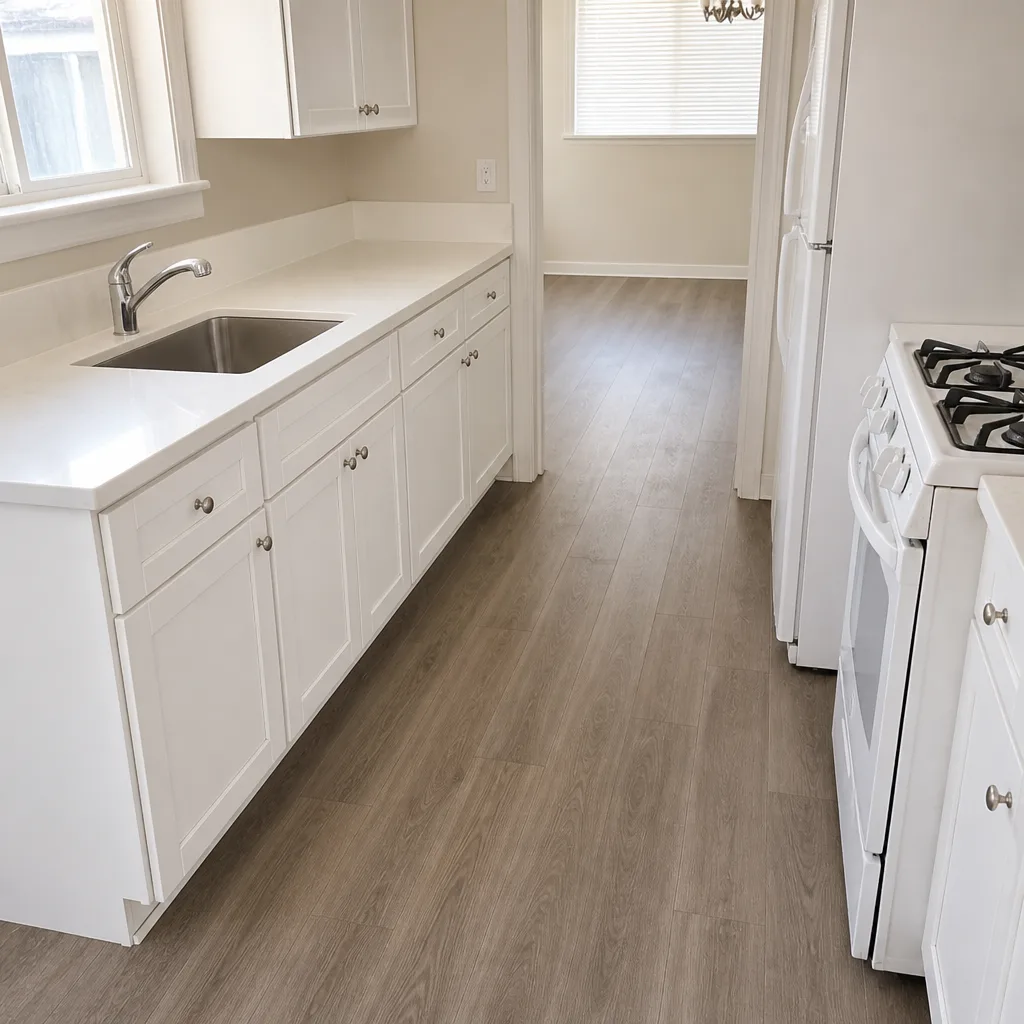 After
When to Call a Professional
Any driveway work that involves breaking out caliche, re-grading for drainage, changing the curb cut, or coordinating with an HOA is work for a licensed crew with a real base-prep process and permits pulled. A paver driveway is a 20-year investment – the wrong base costs you the whole job. Barrett & Sons Construction Lancaster offers free estimates in Lancaster – call (888) 427-1810. We’ll walk the site with you, look at the soil, and put every line item in writing before anything starts. Every completed job is backed by our written 90-Day Done Right Promise, and we answer the phone live, day or night.
Frequently Asked Questions
Driveway pavers in Lancaster typically cost $12 to $22 per square foot installed, including demolition, caliche prep, base, pavers, and edge restraint. A standard 400 – 600 square foot two-car driveway runs $6,000 to $11,000. Call (888) 427-1810 for an exact quote – estimates are free.
Caliche is a hard calcium carbonate soil layer common across the Antelope Valley that doesn’t drain. If it isn’t broken up and removed before base is laid, water pools under the pavers and freeze-thaw cycles crack the surface within a couple of seasons. Any contractor who doesn’t mention it in the quote hasn’t looked at your soil.
If the project stays inside your property lines and simply replaces existing surface, a building permit is usually not required. If you widen the driveway, change the apron or curb cut, or touch the public right-of-way, you need an encroachment permit from the City of Lancaster with an inspection. Most HOA tracts also require architectural approval. We pull permits and get inspections signed on every eligible job.
Concrete pavers from brands like Belgard or Techo-Bloc are the best all-around choice for Antelope Valley driveways. They hold color under severe UV, handle freeze-thaw over a proper base, and any single unit can be reset. Travertine and clay brick are beautiful but cost more and wear differently under our sun.
The on-site portion usually runs four to seven working days. Add one to two weeks for the City encroachment permit if required, and longer for HOA approval. We schedule the crew only after permits and HOA letters are in hand, so the timeline holds.
Not without your written approval. Every scope, every allowance, and every price change arrives as a written change order before work happens – no surprise invoices at the end. The allowance that isn’t on paper is a surprise waiting for a date.
The Bottom Line
A paver driveway in Lancaster is a 20-year decision, and the soil under it matters more than the pavers on top. Caliche removal, geotextile, compacted base in lifts, pinned edge restraint, and 1 – 2 percent drainage slope are the difference between a driveway that looks new for two decades and one that shifts inside two seasons. Concrete pavers on a properly engineered base are the smart choice here. Get a written line-item estimate, confirm permits and HOA approval up front, and hire a contractor whose name is on the truck and whose license you can look up. Our team at Barrett & Sons Construction Lancaster home is here for that conversation – and while you’re planning outdoor work, our Fence Installation in Lancaster guide covers how fencing and driveway grading interact.
Call (888) 427-1810 to schedule your free estimate. We walk the site, look at the soil, and put everything in writing before a shovel hits the ground. Free second opinion on any written estimate, no trip charge inside the county, and a permanent 10% Senior & Veteran discount.
Written by the team at Barrett & Sons Construction Lancaster.