
Last updated November 17, 2026
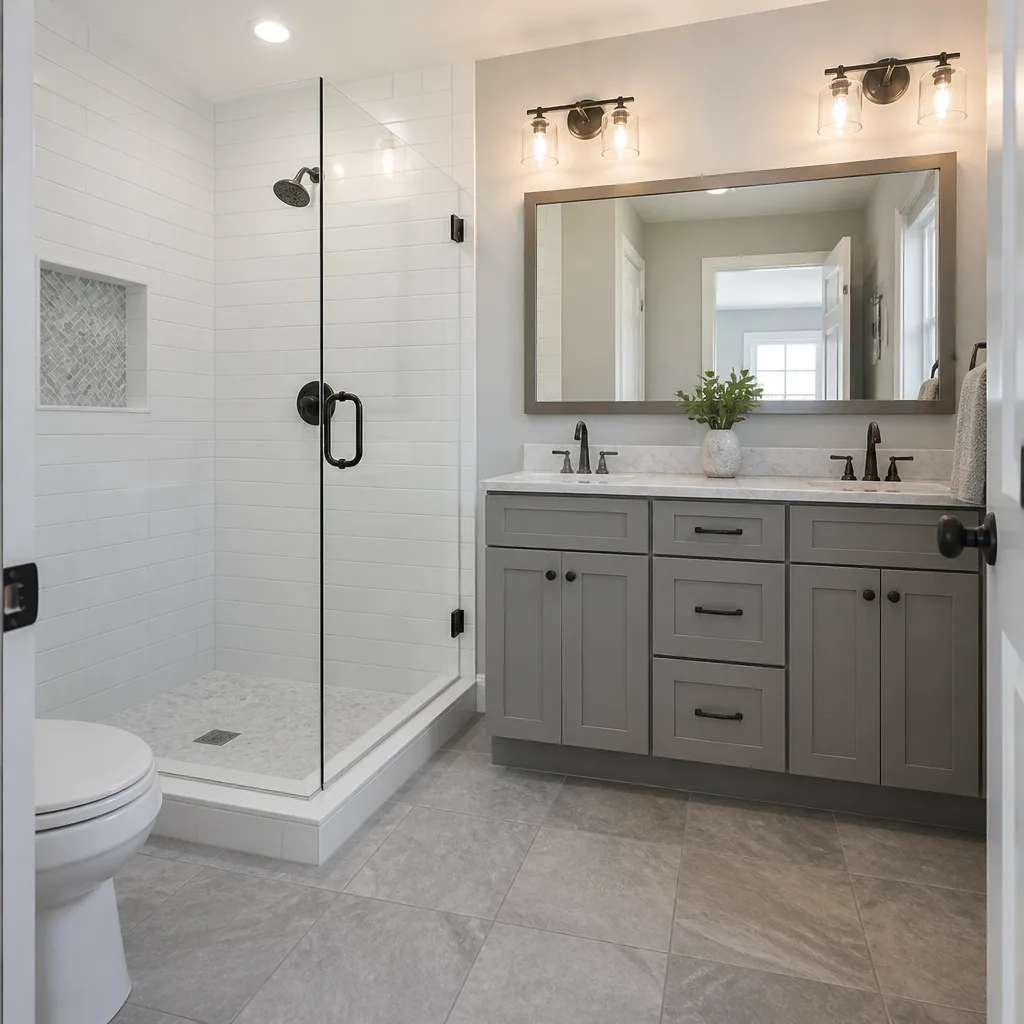 Bathroom remodeling
 Kitchen remodeling
 Home additions & ADU
 Roofing
 Windows & doors
 Driveway & pavers
 Fence
Free written scope consultation - allowances, timeline, and change-order rules on paper before a single trade is scheduled
DIY vs Professional Bathroom Remodeling: What’s Safe to Do Yourself
Painting a bathroom yourself saves real money. Rerouting a drain yourself, and getting it wrong, can cost more than the entire remodel would have. We’ve pulled apart “quick refresh” bathrooms in Lancaster where a homeowner’s weekend project was hiding a rotted subfloor and a slow leak that had been feeding mold for a year. This guide draws the line based on consequence, not skill level. You’ll learn which tasks are genuinely safe to take on, which ones trigger a permit or a licensed trade in Lancaster County, and how to hand a job off cleanly if you start it and decide to stop.
Quick Answer
Cosmetic, reversible work like painting, replacing a vanity top, swapping fixtures on existing supply lines, and installing accessories is safe to do yourself with basic prep. Waterproofing inside a shower or tub surround, rough plumbing, electrical circuits, and anything requiring a permit in Lancaster should go to a licensed professional. The real dividing line isn’t how hard a task looks. It’s how much damage an error causes once it’s sealed behind a wall.
Styles & brands we work with
- Kitchen remodeling
- Bathroom remodeling
- Home additions & ADU
- Roofing
- Windows & doors
- Driveway & pavers
- Fence
Table of Contents
- The Consequence Framework: How We Draw the Line
- Low-Consequence Tasks: What’s Genuinely DIY Territory
- High-Consequence Tasks: Where DIY Becomes a Gamble
- Lancaster County Permit Triggers Most Homeowners Miss
- What Hides Behind the Wall: Water Damage on “Just a Refresh” Jobs
- Three Jobs That Look Professional-Only But Aren’t
- How to Hand Off Cleanly After You Do Your Own Demo
- DIY Savings vs. the Cost of a Redo
The Consequence Framework: How We Draw the Line
Most DIY-versus-pro advice sorts tasks by difficulty. That’s the wrong sort. Difficulty is about whether you can do the work. Consequence is about what happens in two years if the work was slightly off. A tile set crooked is annoying. A shower pan with a pinhole in the liner is drywall rot, a sagging subfloor, and a repair bill that dwarfs the original job.
So we sort every task two ways. First, is it reversible? Paint can be repainted. A vanity top can be swapped. A shower membrane, once tiled over, cannot be inspected without tearing out the tile. Second, does a failure stay visible or does it hide? A wobbly faucet handle tells you immediately. A slow supply-line leak inside a wall tells you nothing until a baseboard swells.
That gives us three buckets.
- Reversible and visible: fully DIY-safe. Cosmetic work, fixtures on existing connections, accessories.
- Reversible but hidden: DIY with real caution and inspections. Demo, some tile work over sound backer.
- Irreversible and hidden: professional. Waterproofing, rough plumbing, rough electrical, structural changes.
In Lancaster, the climate sharpens this. Our dry summers and hard water mean supply lines draw more mineral stress than they would on the coast, and a leak that stays small takes longer to show up as a stain. That’s why we’re conservative on anything water-related in this valley.
Low-Consequence Tasks: What’s Genuinely DIY Territory
These are the tasks where the worst case is you redo them, not you rebuild a wall. If you’re handy with a roller and a wrench, take these on with confidence.
- Painting walls, ceiling, and trim. Good prep (filling, sanding, a coat of primer) does more for the final result than brush brand. Reversible in a single afternoon.
- Replacing a vanity top or faucet on existing plumbing. Assuming the shutoff valves work and the supply lines are already there, this is a swap, not a reroute.
- Swapping light fixtures and mirrors on existing wiring. Turn the breaker off, verify it’s off, and match the wiring. No new circuits.
- Installing towel bars, shelves, hooks, and a new toilet seat. Cosmetic, reversible, and forgiving.
- Replacing a showerhead or tub spout. Threaded fittings, no wall opened.
- Regrouting and resealing. Maintenance, not construction, and worth doing yearly in Lancaster’s hard-water conditions.
One caution worth repeating: whenever you take the cover off a switch or fixture, cut the breaker first and confirm it’s dead. Household voltage is not a test of nerve.
High-Consequence Tasks: Where DIY Becomes a Gamble
These are the tasks where a small error doesn’t surface for months, by which time it’s inside a wall or under a floor. They’re not always hard. They’re just unforgiving.
- Shower and tub waterproofing. The liner, the curb, the corners, the drain connection. One missed fold or a screw through the membrane and water travels into the framing. This is the single most common hidden failure we’ve corrected.
- Rough plumbing. Relocating a drain or supply line means slope, venting, and connections that hold under pressure. A soldered joint that looks fine can weep for a year.
- Electrical circuits. Adding a GFCI outlet, a heated towel bar, or a fan on a new circuit is licensed work in Lancaster. Bathroom circuits have specific code requirements for a reason.
- Structural changes. Removing a wall, moving a door, altering a floor system. Load path isn’t a guess-and-check discipline.
- Gas lines and ventilation tie-ins. Anything that carries gas or exits through the roof envelope.
Naming this clearly is what a real expert does: high-tension components and hidden water systems cause serious harm, injury, and mold whenever they’re done without training. The permit inspector’s job is to catch the mistakes that hide. He works for you, not for us, and that’s why we like him.
Lancaster County Permit Triggers Most Homeowners Miss
This is where a “simple refresh” becomes a licensed-trade job and a lot of homeowners don’t find out until they’re already in. In Lancaster, a cosmetic refresh (paint, top, fixtures) is generally permit-free. Once you touch the systems below, expect a permit and an inspection.
- Rough plumbing changes. Relocating or adding a drain, supply, or vent requires a plumbing permit and inspection.
- New or altered electrical circuits. Adding a circuit, moving a receptacle, or installing a fan on new wiring triggers an electrical permit.
- Waterproofing and shower pans. A re-tiled shower with a new pan typically requires inspection of the waterproofing before tile goes on. Tiling over an existing pan without pulling it is a common shortcut, and it’s the one that hides a failed liner.
- Structural work. Any wall removal, header, or floor alteration needs a permit and possibly engineering.
The permit triggers aren’t there to slow you down. They exist because the inspections catch things no one will see again for fifteen years. Every eligible Barrett & Sons job in Lancaster gets permits pulled and inspections signed, and we document the same clean change-order process on every one.
What Hides Behind the Wall: Water Damage on “Just a Refresh” Jobs
The call we get most often starts the same way: “I’m just going to update the tile.” Then demo starts, and the subfloor is soft under the toe of a boot. That’s not bad luck. That’s the pattern. In Lancaster homes, we regularly see the following when a refresh uncovers the wall.
- Rotted subfloor under the toilet. A failing wax ring has been letting water creep into the framing for years. The tile looked fine. The floor underneath was spongy.
- Failed shower pan liner. A short membrane at the curb lets water wick into the drywall and studs. By the time it shows, the repair is measured in feet, not inches.
- Old galvanized supply lines. In pre-1990 Lancaster properties these often have internal corrosion that reduces flow and eventually gives at a joint.
- Mold behind tile. The dry season here hides it; the winter rain finds it.
Here’s the honest cost side. A vanity swap is a few hundred dollars in materials. The redo of a bathroom where a DIY shower pan failed is usually several thousand dollars and weeks of work. That gap is the entire argument for drawing the line by consequence.
If you’re planning a larger project that connects to other parts of the home, our Home Additions & ADU in Lancaster guide covers how those permit requirements stack.
Three Jobs That Look Professional-Only But Aren’t
We say “call a pro” a lot in this guide. That’s not because homeowners should sit on their hands. Three common tasks are genuinely homeowner-appropriate with the right prep, and doing them yourself can save real money.
- Demo. Pulling tile, removing a vanity, taking out a tub surround, and hauling debris is unskilled labor that trades bill for and customers can do. Protect the rest of the house first: drop cloths, plastic over the doorways, and a plan for dust. Keep every demolished piece until final inspection.
- Painting and trim finishing. The single best DIY return in any bathroom remodel. Do it in the right order (after dust settles, before final fixtures).
- Accessory and hardware installation. Towel bars, mirror frames, hooks, cabinet pulls, and floor registers. Measure twice, drill once.
We’ve had Lancaster customers hand us a fully gutted bathroom they demoed themselves and save the labor cost on that phase. That’s a smart way to put your own effort into the job.
How to Hand Off Cleanly After You Do Your Own Demo
If you demo your own bathroom and then bring in a professional crew for the technical work, the handoff is what decides how smoothly the job goes. Do these steps and nothing gets argued about later.
- Photograph before you pull anything. Photos of the shutoff valves, the wiring at each fixture, and the drain connection under the floor. Your crew will need them.
- Cap and label. Cap every open supply line with a valve or a plug, and label what each one feeds. A two-line note saves hours.
- Write a scope sheet. List exactly what you removed, what remains, and what you’re handing over. In our experience, the jobs that go best have this on one page.
- Save the salvaged pieces. Old tile, the vanity top, the tub surround. Sometimes a customer wants to match a color or return something, and once it’s in the dumpster it’s gone.
- Flag anything suspicious. Soft subfloor, water staining, or a joint that looks wrong. Don’t cover it back up. Let the crew see it before reinstallation.
That clean handoff is the same discipline behind our written change orders: scope in writing, allowances in writing, changes in writing. Our crews, and their leads who’ve been with us for up to 28 years of experience, work best when the paperwork comes first.
DIY Savings vs. the Cost of a Redo
We won’t give you a single dollar figure for “a bathroom remodel” because that number changes with the size of the room and the condition behind the wall. But we can put the tradeoff in plain terms. DIY saves meaningfully on the tasks in the low-consequence bucket. The tasks in the high-consequence bucket are where a saved dollar turns into a paid dollar twice over.
- Painting and cosmetic finishes: real savings, low risk, worth your weekend.
- Demo and haul-away: real savings, low risk, requires care with dust and protection.
- Accessory install: real savings, low risk, cosmetic.
- Shower waterproofing: small savings vs. high risk of a several-thousand-dollar redo if the pan fails.
- Rough plumbing and electrical: risk of injury and code failures; a licensed crew and a permit avoid both.
If you’re also planning exterior work while the interior is torn up, our Fence Installation in Lancaster page covers the brands we use (Barrette, Master Halco, and Ameristar among them) so the timing lines up with the interior job.
Common Mistakes to Avoid
- Tiling over an old shower pan. It looks like a shortcut and it hides a failed liner. In Lancaster, we’ve corrected this more than any other single DIY error.
- Skipping the permit because “it’s just a refresh.” Once you touch rough plumbing or electrical, the permit is required and the inspection is your protection.
- Ignoring soft subfloor. If the floor gives under your boot during demo, stop. That’s a wax ring failure that’s been running for years.
- No dust containment. A little dust travels through the whole house. Plastic over doorways and a working fan matter more than most homeowners expect.
- Demolishing without photographing. You’ll need those photos at reinstall. Take them before you pull the first tile.
- Buying the vanity before the tape measure agrees with the door swing. Measure the clearance, not the wall width.
- Underestimating hard-water effects. Lancaster’s water wears on fixtures and grout. Budget for resealing and a periodic re-grout, or plan fixtures for it.
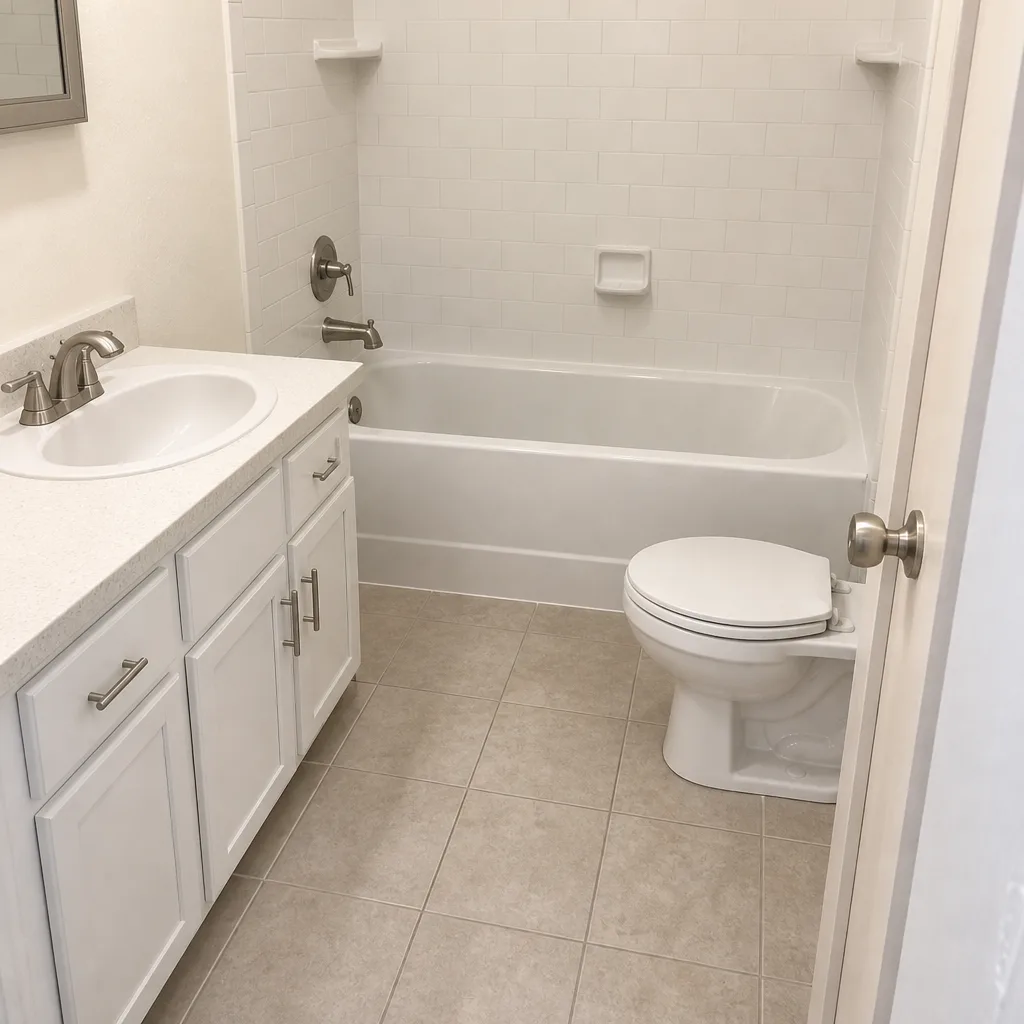
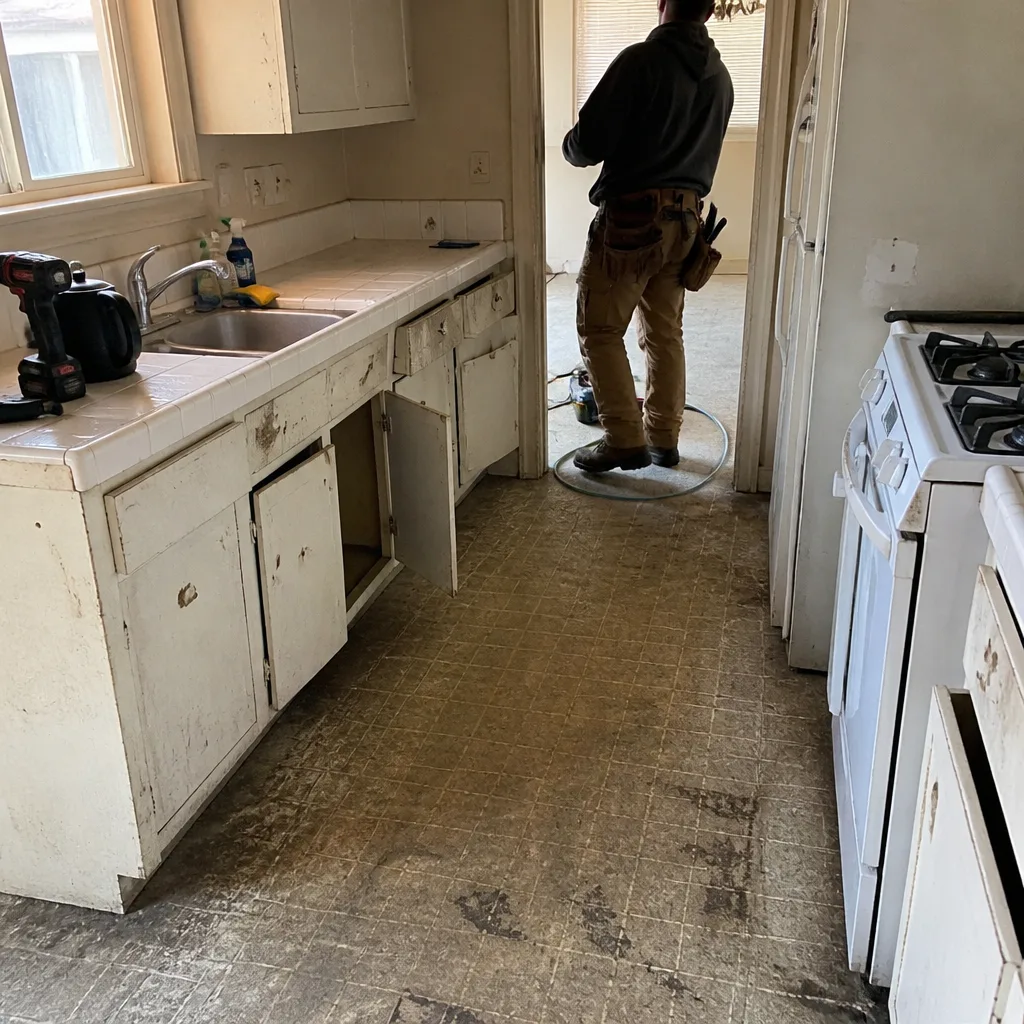
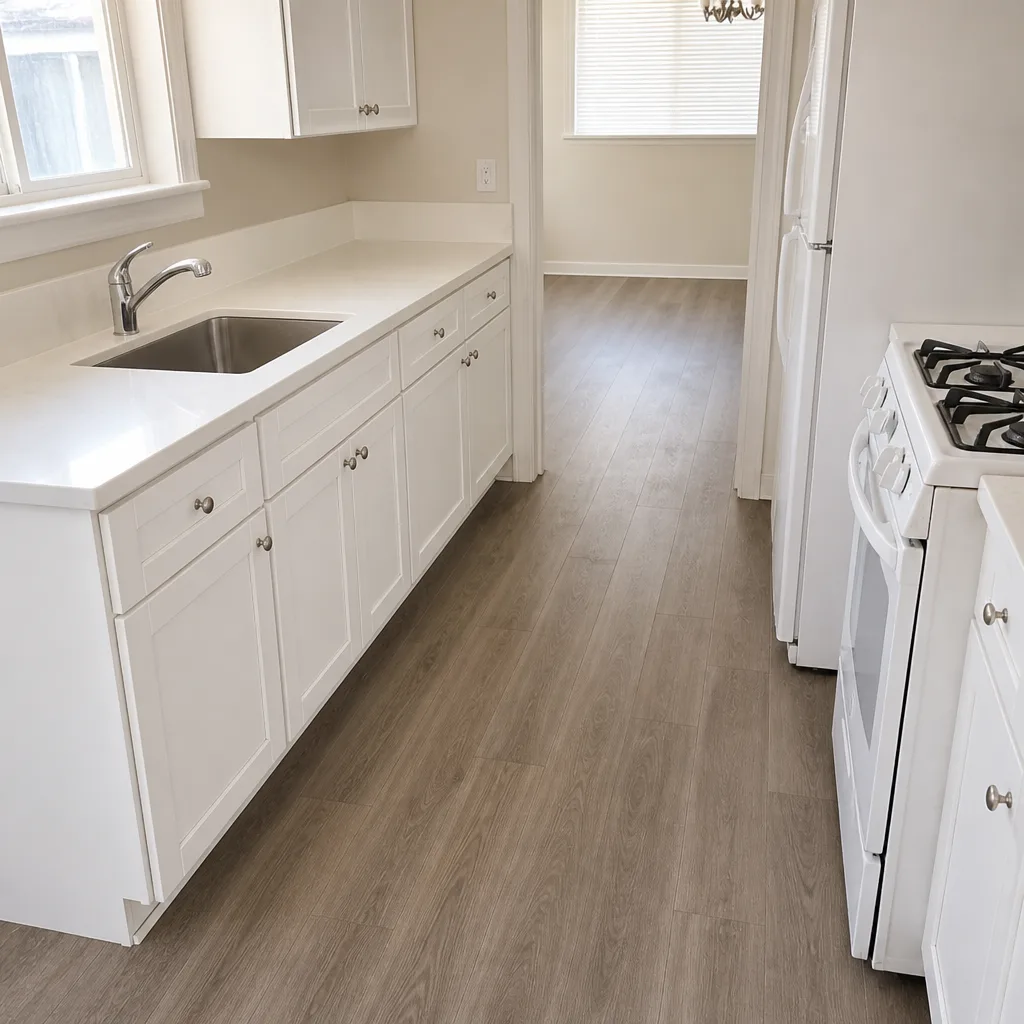
See the difference
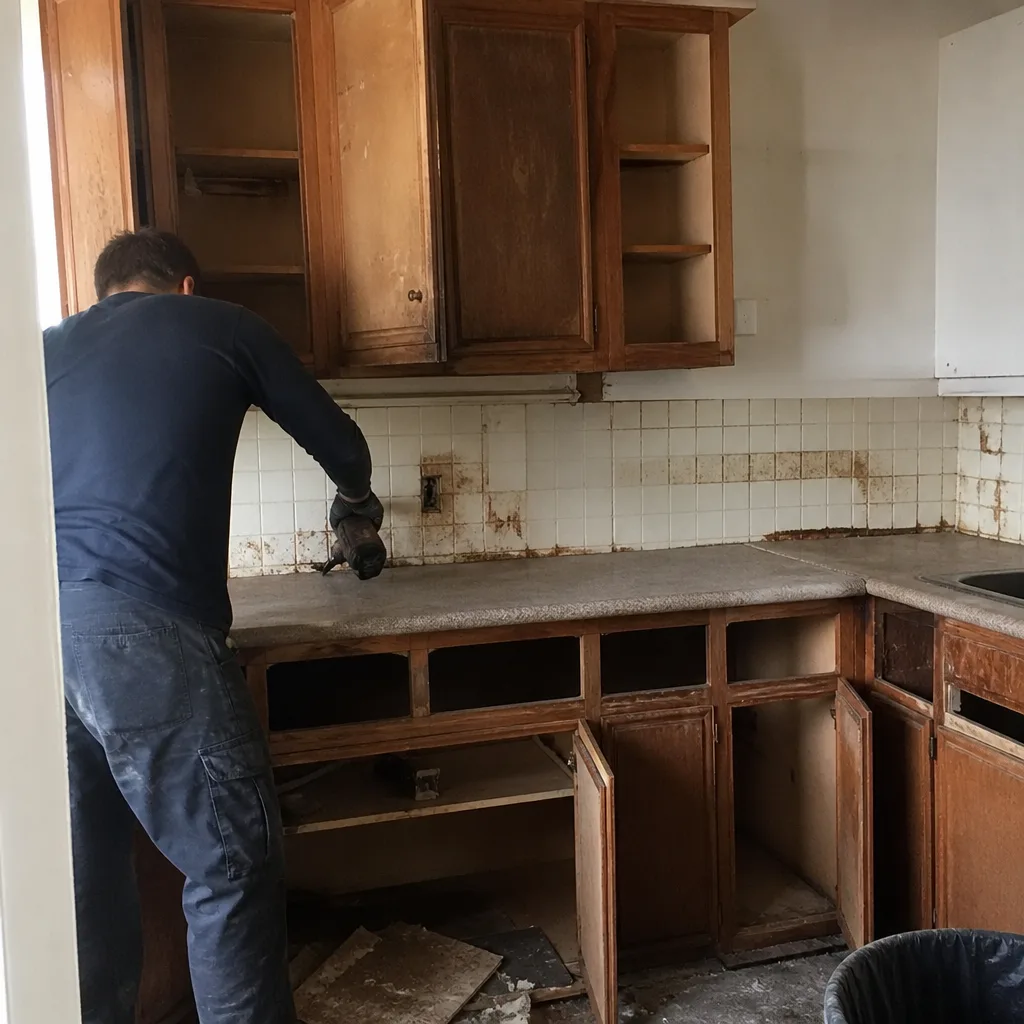 Before
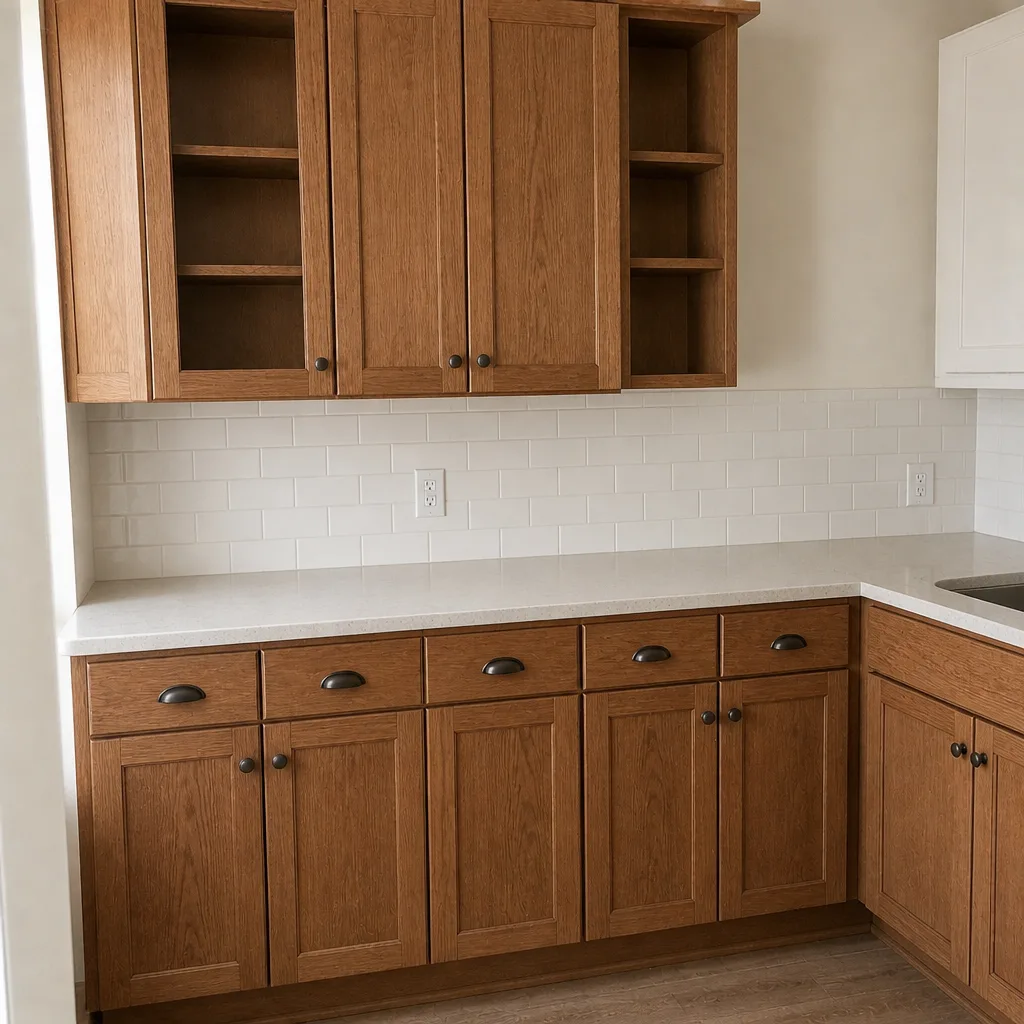 After
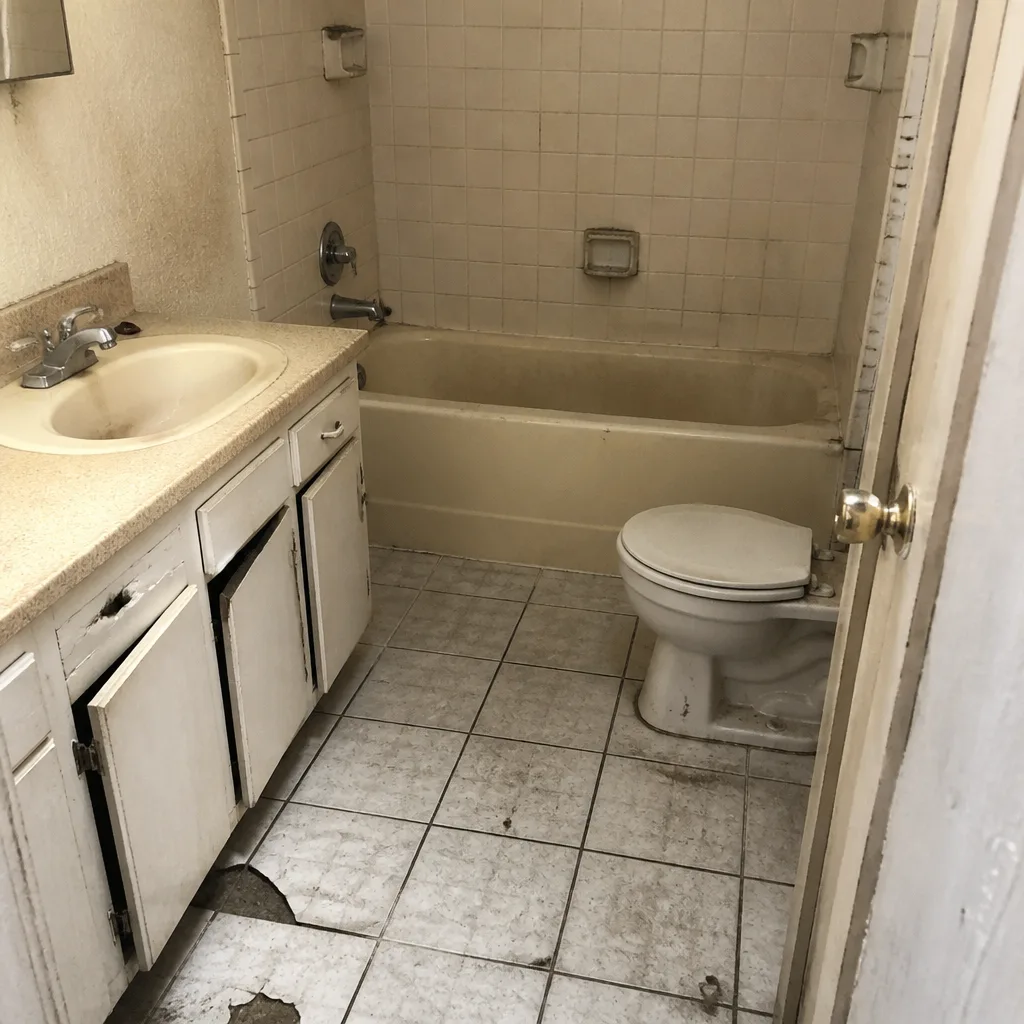 Before
 After
 Before
 After
When to Call a Professional
Call a professional the moment your project touches the hidden systems: waterproofing, rough plumbing, electrical circuits, structural work, or gas. Call us when a demo uncovers soft subfloor or a failed liner, or when the permit question is unclear and you’d rather not guess. And call when you’ve decided you want the job done once, inspected, and backed by a written guarantee.
Barrett & Sons Construction Lancaster offers free estimates in Lancaster. Call (888) 427-1810 and a live person will answer. We’re owner-operated, every price change arrives as a written change order before work starts, and every completed job is backed by the 90-Day Done Right Promise. You can look up our license number and our name before you sign anything.
Frequently Asked Questions
Yes. Demo is one of the most DIY-friendly parts of a bathroom remodel, and many Lancaster homeowners save the labor cost on that phase. Photograph everything before you pull it, cap and label the supply lines, and leave any suspicious subfloor or water staining exposed for the crew to see.
It’s technically possible and almost never wise. A new shower pan and waterproofing typically require inspection before tile goes back on, and tiling over the old pan hides a liner you can’t inspect. This is the most common DIY failure we correct. Call (888) 427-1810 for a free second opinion on any written estimate.
Usually not, as long as you’re swapping a fixture on existing plumbing and not changing the rough-in. The moment you relocate a drain or add a circuit, a permit and inspection are required. When the scope is unclear, ask before you start.
Hidden water damage. A leaking wax ring or failed shower liner can sit behind tile for years before it shows. By then the repair involves framing, subfloor, and mold, and it’s measured in thousands of dollars.
It depends on the size, the condition behind the wall, and the materials you choose. Because we don’t quote a phone number and then surprise you at the door, we give you a written, line-item estimate after we’ve seen the room. Free estimates are available: call (888) 427-1810.
Only with a written change order signed before any additional work happens. If demo uncovers rot or a failed liner, we document the change and the price before we proceed. An allowance that isn’t on paper is a surprise waiting for a date, so we don’t work that way.
The Bottom Line
The real question with DIY vs professional bathroom remodeling isn’t whether you can paint a wall. It’s what happens inside the wall if the waterproofing or plumbing is slightly off, and how long it takes you to find out. Take on the reversible, visible jobs (paint, demo, accessories, fixture swaps) and hand the hidden, unforgiving ones to a licensed crew with permits pulled. If you’re weighing driveways or exterior work alongside the bathroom project, our Driveway & Pavers in Lancaster guide covers what to expect there. And if you’re still gathering the big picture, start at the Barrett & Sons Construction Lancaster home page.
When the job is ready to go to a professional, call (888) 427-1810 for a free estimate. We answer with a live person, we publish our license number, and we put the 90-Day Done Right Promise in writing on every contract. Proudly serving our Lancaster-area neighbors for over 29 years, and we’ll be here when the job is done.
Written by the team at Barrett & Sons Construction Lancaster.