
Last updated November 17, 2026
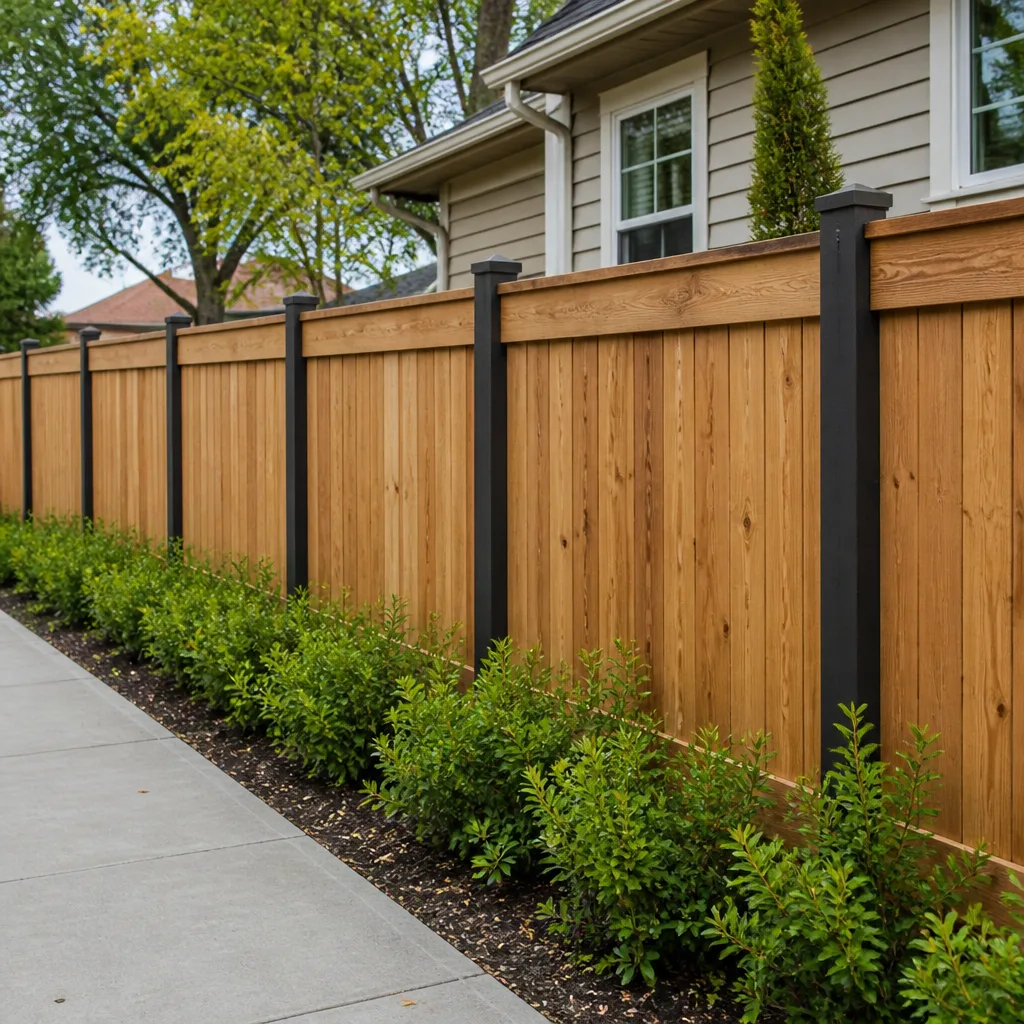 Fence
 Kitchen remodeling
 Bathroom remodeling
 Home additions & ADU
 Roofing
 Windows & doors
 Driveway & pavers
Free written scope consultation - allowances, timeline, and change-order rules on paper before a single trade is scheduled
How Long Does Fence Installation Take? Timelines and What to Expect
Most fence quotes name an install day but skip the 10 – 14 days of groundwork that has to happen before it. That gap is why so many homeowners feel like their contractor disappeared after signing. The truth is simpler and less sinister: the fence goes up fast, but utility marking, permit windows, material lead times, and concrete cure time set the real calendar. In this guide, we break the fence timeline into four phases, explain what slows each one down, and cover the factors specific to Lancaster that change the math. By the end, you’ll know what to ask for in writing before a single post hole gets dug.
Quick Answer
Most residential fence installations take 2 to 4 weeks from contract to finished gate, and the actual building usually takes only 1 to 3 days. The rest of the time goes to utility marking, permit approval if your city requires one, material delivery, and concrete cure. In Lancaster’s rocky high desert soil, plan on the longer end of that range for digging, especially on lots with caliche or decomposed granite.
Styles & brands we work with
- Kitchen remodeling
- Bathroom remodeling
- Home additions & ADU
- Roofing
- Windows & doors
- Driveway & pavers
- Fence
Table of Contents
- Phase 1: Utility Marking and Site Prep
- Phase 2: Permits and Inspection Windows
- Phase 3: Material Lead Time
- Phase 4: The Build Days
- Why Concrete Cure Time Is Non-Negotiable
- Lancaster-Specific Factors That Change the Timeline
- How Fence Material Changes the Timeline
- What You Should Have in Writing Before the Crew Shows Up
Phase 1: Utility Marking and Site Prep (Typically 2 – 5 Days)
Before a shovel touches the ground, the utilities need to be marked. In California, that means calling DigAlert (811), the free service that notifies gas, electric, water, sewer, and communications providers to mark their lines. State law requires it, and any contractor who skips it is putting your gas main and your budget in the same hole.
The DigAlert window runs about 2 business days for most utility companies to respond, but we’ve seen it stretch to 5 during busy spring and early summer. Here in Lancaster, the Antelope Valley wind makes the marking flags less reliable than out in calmer parts of the county, so a careful walk of the property line after marking is worth the ten minutes.
Site prep also includes:
- Confirming property lines against the recorded plat or a survey if the lines are in question
- Clearing shrubs, old posts, and anything that will be in the way of the new line
- Coordinating with neighbors when the fence sits on a shared line, which is common in established Lancaster neighborhoods like the ones off Avenue J and Quartz Hill
- Scheduling the concrete delivery or bag drop, which is its own calendar item
DigAlert and the utility marking are free. If a contractor asks you to pay for utility marking as a line item, ask why.
Phase 2: Permits and Inspection Windows (0 – 15 Days, Varies by City)
Not every fence needs a permit. In most Southern California jurisdictions, a fence under 6 feet tall on a residential lot does not require one. The rules change for anything over 6 feet, for fences on corner lots with sight-line requirements, for block walls, and for anything in a flood zone or a historic overlay. Our team pulls permits and schedules inspections on every eligible job, and we’ve seen enough to know the honest answer is: it depends on your specific lot and your specific city.
For a Lancaster residential fence under 6 feet, permit review is usually not required. Step up to a 7-foot privacy fence or a block wall, and you’re typically looking at a plan review window of 5 to 15 business days depending on the city counter’s backlog. Add another 3 to 7 business days for the inspection scheduling after the install.
Two things trip homeowners up here:
- Assuming your old contractor’s rule applies. What’s permit-exempt in Palmdale may not be in Lancaster, and vice versa. The permit counter in your specific city has the final word.
- Skipping the inspection to save a week. That’s not a shortcut. If the fence was supposed to be inspected and wasn’t, you may be required to tear it out to expose the footings. The permit inspector works for you, not the contractor. That’s a good thing.
If your job also includes hardscape or a driveway replacement, those timelines overlap with the fence schedule. See our Driveway & Pavers in Lancaster page for how those calendars fit together.
Phase 3: Material Lead Time (3 – 21 Days, Depends on Material and Brand)
Material lead time is the quiet variable that throws off the most timelines. A crew that shows up on day one to an empty material delivery isn’t installing a fence; they’re installing excuses.
Rough lead times from order to delivery:
- Pressure-treated pine: 3 – 7 days, usually stocked locally
- Cedar: 7 – 14 days, often shipped from northern California or the Pacific Northwest
- Vinyl (PVC): 5 – 10 days for standard colors, 2 – 3 weeks for premium brands or custom colors
- Chain link: 3 – 5 days for standard galvanized, 7 – 10 for vinyl-coated
- Block and masonry: 5 – 7 days for standard CMU, plus extra time if you’re matching an existing finish or using a premium landscape block system
- Ornamental iron and aluminum: 2 – 4 weeks for custom fabrication
Premium brands make a difference here. We install brand-name material you can look up, not mystery product off an unmarked truck, and we tell you the delivery date in writing before the job starts. If a fence part is back-ordered, you’ll know it before we pick up a shovel, not the morning of the install.
Phase 4: The Build Days (1 – 3 Days for Most Residential Fences)
Here’s the reassuring part: once the ground is prepped, the material is on site, and the permits are in hand, the build itself is quick. Most residential fences take 1 to 3 days.
The typical build sequence:
- Day 1 morning: Set corner and line posts in concrete, plumb-line strung, spacings marked.
- Day 1 afternoon to Day 2 morning: Concrete cures (see the next section – this step is not optional).
- Day 2: Attach rails and pickets or panels, hang the gate.
- Day 3: Final walk-through, hardware adjustment, clean-up, inspection sign-off where applicable.
Longer runs (400+ linear feet), sloped or terraced lots, and corner lots with multiple sides run to 3 days. A short 40-foot side yard fence can close out in a single day. In Lancaster, we routinely see 200 – 300 foot lots in the established neighborhoods, and those are usually a 2-day job when nothing unusual turns up.
Why Concrete Cure Time Is Non-Negotiable
Concrete needs 24 to 48 hours to set enough to hold a post against the pressure of an attached panel. Attaching panels to green concrete is one of the most common causes of fence failure we see on repair calls: the post leans, the panel sags, and the gate stops latching within a season. Wind load makes this worse in Lancaster. A high desert gust will find every post that wasn’t properly set.
What “cure” really means:
- 24 hours minimum before attaching rails and panels to a post in standard conditions
- 48 hours if the weather is cool, the mix is slow-setting, or the fence is tall and wind-exposed
- 7 days before a gate with heavy hardware is expected to hang true without adjustment
A crew that shows up and attaches panels the same day they set posts is telling you something about how the rest of the job will go. Ask any contractor you’re considering point-blank: “Will you attach the panels the same day you set the posts?” If the answer is yes, keep looking.
Lancaster-Specific Factors That Change the Timeline
The Antelope Valley is not Orange County, and the timeline reflects it. Three factors here cause crews from out of the area to underestimate jobs.
Rocky, high-desert soil. Lancaster sits on decomposed granite and caliche in many areas. Caliche is a cemented layer of calcium carbonate that can be six inches to several feet thick. Digging a post hole through it with a manual auger is not happening. We use mechanical augers or a mini-excavator, and we budget the extra time on the schedule. On lots with heavy caliche, one crew day that would normally set 20 posts may set 10 to 12.
Wind-load requirements. Lancaster’s average wind speeds are higher than most of the LA basin, and the Santa Ana wind events push them higher still. That means deeper posts and tighter spacing for tall fences and privacy fences. A 6-foot privacy fence built to inland wind exposure will routinely use posts set 30 inches or deeper in concrete, sometimes deeper on a wind-exposed line. That’s more holes, more concrete, more time.
Extreme summer heat. Concrete doesn’t cure the same way at 105°F as it does at 75°F. Crews working July through September in Lancaster either start early or lose a partial day to heat safety. That’s not slowness; that’s the honest schedule. You’ll see the same thing on our Fence Installation in Lancaster page where we list the season-by-season considerations.
If your project also includes a home addition or ADU with fencing at the end, the fence fits into a longer construction sequence. Our Home Additions & ADU in Lancaster page lays out how those schedules interlock.
How Fence Material Changes the Timeline from Start to Finished Gate
Different materials mean different build days once you’re on site.
- Wood (pine or cedar): 2 – 3 days install. Most flexible on design and the friendliest on budget. Cedar takes a slightly longer material lead time but the same install window.
- Vinyl: 1 – 2 days install. Panels are quick to hang once posts are set. The catch is cured time – vinyl panels put no weight on green concrete, but the posts still need a full set before the rails go on. Vinyl is the clean choice for Lancaster’s sun and dry air; it won’t warp or need annual staining.
- Block and masonry: 3 – 7 days install, plus a full cure before any cap or finish. Permit is more often required, and material lead time is longer. This is the most permanent fence in the Antelope Valley wind, and the timeline is honest about it.
- Chain link: 1 – 2 days install. The fastest from contract to finished gate, especially on larger commercial or acreage lots.
- Ornamental iron or aluminum: 2 – 4 days install, plus the 2 – 4 week fabrication window. Beautiful in the right application, not the fastest.
Where the material choice interacts with your windows and exterior upgrades (screened views, sightline decisions, exterior hardware), our team also installs Barrett & Sons Construction Lancaster projects that combine fencing with exterior improvements – brands like Andersen and Marvin for the windows that look out over the new fence line, and Therma-Tru or ViewLux for coordinated entry doors if you’re updating the whole exterior.
What You Should Have in Writing Before the Crew Shows Up
This is the section that saves you the most grief. Get all of it in writing, before day one.
- Scope of work – linear feet, height, material, gate count, hardware, stain or finish, old fence removal and haul-away if applicable.
- Material delivery date – a specific date, not “the week of.” If a part is back-ordered, that should be disclosed in writing.
- Utility marking completion date – the DigAlert ticket number confirms it was done.
- Permit status – either “permit not required for this scope per [city] planning” in writing, or the permit number once pulled.
- Inspection schedule – the target date for the inspection, if one is required.
- Start and completion dates – firm, not “sometime in the next two weeks.”
- Change order policy – the exact language on how any scope or price change will be handled. An allowance that isn’t on paper is a surprise waiting for a date.
- Warranty terms – workmanship warranty length and what it covers. At Barrett & Sons, every completed job is backed by a written 90-Day Done Right Promise – if something isn’t done right, one call brings us back to make it right.
Ask for a written line-item quote, and don’t sign until you have one. Compare the line items across bids, not the bottom line. A bid that hides the permit cost, the haul-away, and the gate hardware isn’t lower – it’s incomplete.
Common Mistakes to Avoid
- Skipping DigAlert to save two days. DigAlert is free, and cutting it out risks hitting a gas or electric line. Two days is not worth a Red Cross visit to your front yard.
- Attaching panels the same day the posts are set. It’s the most common cause of leaning fences we see on repair calls in Lancaster. The concrete needs 24 – 48 hours; insist on it.
- Assuming the fence is permit-exempt without checking. A 6-foot fence on a flat interior lot is usually exempt; a 7-foot fence on a corner lot in Lancaster may not be. Check your specific city’s rules, in writing.
- Ordering material after signing. If your quote doesn’t name a material delivery date, you don’t have a schedule – you have a hope. Premium fence materials often have real lead times.
- Ignoring caliche during the yard walk. Show your contractor the exact line before the bid, not after the auger hits rock. Caliche in parts of Lancaster can double the digging time on the schedule.
- Under-planning the gate. Gates are the last item built and the first to fail if poorly hung. Add a week to allow the concrete to cure fully before hanging heavy gate hardware.
- Not talking to the neighbor first. On a shared property line, a surprise fence crew on a Tuesday morning is a great way to start a decade-long neighbor dispute. Get their buy-in in writing before the crew shows up.
See the difference
 Before
 After
 Before
 After
 Before
 After
When to Call a Professional
Some fence work is well within a homeowner’s reach – a few replacement pickets, a resealed gate hinge, a stain refresh. The full install is a different animal. Call a licensed professional when the job involves utility lines anywhere near the excavation, caliche or dense rock, posts needing to be set in concrete to a wind-load requirement, a permit or inspection, or a block wall of any size. Digging post holes in Lancaster soil without the right equipment is a fast way to turn a weekend project into a two-month frustration. Barrett & Sons Construction Lancaster offers free estimates in Lancaster – call (888) 427-1810 and get the timeline in writing before you commit to anything.
Frequently Asked Questions
Most residential fence installations in Lancaster take 2 to 4 weeks from signed contract to finished gate, and 1 to 3 of those weeks is the groundwork (utility marking, permits if required, material delivery, concrete cure). The actual install usually takes 1 to 3 days. Rocky high desert soil can add a day or two to the digging schedule, especially on lots with caliche.
Yes, but only on short runs (under about 80 feet) with material already delivered and no permit required, and even then the panels typically go up on day two after the concrete has set overnight. If a contractor promises a complete fence in one day, ask how they’re handling concrete cure. Call (888) 427-1810 for a written timeline on your specific job.
For a residential fence under 6 feet tall on a standard lot, a permit is usually not required. Fences over 6 feet, corner-lot sightline situations, block walls, and anything in an overlay district can trigger the permit process. Always confirm in writing with your specific city before agreeing to a start date, because the rules change from jurisdiction to jurisdiction.
Concrete needs 24 to 48 hours to set enough to hold a post against the weight of an attached panel under wind load. Attaching panels to green concrete is the most common cause of leaning fences we see on repair calls. Ask your contractor directly whether they’ll attach the panels the same day they set the posts – if yes, that’s a red flag.
Yes. Lancaster has widespread caliche and decomposed granite, which can make manual post-hole digging impossible. Crews using hand augers lose hours per hole; crews with the right equipment (mechanical augers or a mini-excavator) lose partial days. Push for a thorough yard walk before the bid so the digging time is budgeted honestly.
Scope of work, material delivery date, utility marking completion date, permit status, inspection schedule, start and completion dates, change order policy, and warranty terms. Don’t sign anything without a written line-item quote. Call (888) 427-1810 for a free estimate from Barrett & Sons Construction Lancaster – every price change arrives as a written change order before a single nail moves.
The Bottom Line
The fence itself is the fastest part of the job. What actually controls the calendar is everything that happens before the first post hole: utility marking through DigAlert, permit approval if your specific city requires it, material lead time (3 to 21 days depending on material), concrete cure (24 to 48 hours, non-negotiable), and post-hole digging through Lancaster’s caliche and granite. Budget 2 to 4 weeks end to end. Ask for the scope, delivery date, inspection schedule, and change order policy in writing before day one. The fence that goes up right is the one whose timeline was honest from the start.
Contact
If you’re ready for a fence timeline you can actually plan around, call Barrett & Sons Construction Lancaster at (888) 427-1810 for a free estimate. We’ll walk your line, account for your soil, name the material lead time in writing, and pull the permits and schedule the inspections your job requires. Every completed job is backed by our written 90-Day Done Right Promise.
Written by the team at Barrett & Sons Construction Lancaster.