
Last updated November 17, 2026
 Home additions & ADU
 Kitchen remodeling
 Bathroom remodeling
 Roofing
 Windows & doors
 Driveway & pavers
 Fence
Free written scope consultation - allowances, timeline, and change-order rules on paper before a single trade is scheduled
Construction Emergency Preparedness Guide for Lancaster Homes
Most Lancaster homeowners learn what their insurance policy actually covers at the worst possible moment: standing in a wet hallway at 11 p.m., phone in one hand, flashlight in the other. Here’s the counterintuitive part. The claim rarely gets denied because of the damage itself. It gets contested because of what the homeowner did, or didn’t do, in the first 24 hours. Photographs that were never taken. A wet carpet hauled to the curb before the adjuster saw it. A “handyman” who tore out drywall and left no paper trail. This guide walks you through the first hour, the first day, and the first week of a construction emergency in Lancaster, so a bad situation stays a repair problem instead of turning into a claims fight.
Quick Answer
After a roof breach, burst pipe, or visible structural failure in Lancaster, your priorities in order are: make the home safe, stop the water or seal the breach with a temporary fix only, photograph and document everything before you move it, and call your insurer before you call a contractor. Keep every receipt, keep damaged materials until an adjuster releases them, and hire only a licensed contractor who will pull permits and put the scope in writing. Documentation done in the first 24 hours is what makes an insurance claim straightforward instead of contested.
Styles & brands we work with
- Kitchen remodeling
- Bathroom remodeling
- Home additions & ADU
- Roofing
- Windows & doors
- Driveway & pavers
- Fence
Table of Contents
- What to Do in the First Hour After a Construction Emergency
- Lancaster’s Real Hazards: Wind, Monsoon Drainage, and Freeze Events
- How to Find an Emergency Contractor in Lancaster Who Is Actually Licensed
- The Documentation File Your Adjuster Will Ask For
- Temporary Repairs vs. Permanent Repairs: What’s Defensible
- How to Prepare Your Lancaster Home Before Anything Goes Wrong
- What Not to Touch After Structural Damage
- What Emergency Repairs Typically Cost in Lancaster
What to Do in the First Hour After a Construction Emergency
The first hour is about stopping the bleeding without destroying your evidence. Insurance adjusters are trained to separate “sudden and accidental” damage from “neglect,” and the difference often comes down to what you preserved and what you threw away. Work through these steps in order.
- Make the home safe first. If you smell gas, see sparking, or hear structural creaking, get everyone out and call 911 and the gas utility from outside. Do not re-enter to grab belongings.
- Stop the water or seal the breach, temporarily. Shut off the main water valve for a burst pipe. For a roof breach, tarp the area from the ground if it’s safe, or call a roofer to tarp it. Do not climb a wet roof yourself.
- Photograph before you clean. Wide shots of each room, then close-ups of the damage, then a photo of any standing water with a ruler or tape measure in frame for depth. Timestamp everything.
- Move valuables, not debris. Get furniture and electronics out of the wet zone. Leave damaged drywall, flooring, and structural material in place until an adjuster sees it or tells you in writing to remove it.
- Call your insurer’s claims line. Open the claim the same day. You do not need a contractor’s estimate to open a claim, and opening it early starts the clock on their obligations.
- Call a licensed contractor for the temporary stabilization. Get a written scope and a written estimate before work starts, even for a tarp and a fan.
That order matters. Homeowners in Lancaster who call a contractor first and their insurer second often end up explaining why a stranger was on the roof before the claim existed. It’s a question no one wants to answer twice.
Lancaster’s Real Hazards: Wind, Monsoon Drainage, and Freeze Events
Lancaster sits in the Antelope Valley, and the hazards here are not the same ones coastal California homeowners plan for. We’ve seen more roofs fail from a single high-wind event than from a decade of ordinary weather, and more garages flood from a monsoon drainage failure than from any plumbing defect. Three hazards deserve real attention.
High-Wind Roof Damage
Antelope Valley wind events regularly strip shingles, lift ridge caps, and peel back flashing at the chimney and valleys. The damage is often invisible from the ground. A missing shingle tab lets water into the deck, and by the time you see a ceiling stain the OSB underneath may already be saturated. After any significant wind event, have the roof inspected from the ground with binoculars or by a roofer. GAF and CertainTeed shingles are rated for specific wind speeds, and a proper installation with the correct nailing pattern and starter strip is what keeps them on the roof. An under-nailed roof fails at half its rated wind speed.
Monsoon Drainage Failures
When the summer monsoon dumps an inch of rain in an hour, Lancaster properties without proper grading and drainage flood fast. Water pools against the foundation, finds the path of least resistance, and ends up under your slab or in your garage. The fix isn’t a bigger pump. It’s grading that slopes away from the house and a drainage plan that accounts for the volume. If a paver or concrete apron was installed without attention to slope, a monsoon will find that mistake every single time. That’s one reason we’re particular about how a driveway and pavers in Lancaster job is graded and drained before a single paver is set.
Freeze Events That Expose Plumbing
Lancaster gets hard freezes most winters. The plumbing most likely to fail is the plumbing you never think about: supply lines in an uninsulated garage wall, hose bibs on an exposed south wall, and lines running through a crawlspace or attic where insulation has settled or been pulled aside. A pipe that freezes and bursts in a garage wall can dump hundreds of gallons before anyone notices. Insulate every exposed run, install frost-free hose bibs, and know where your main shutoff is. That last one is not optional.
How to Find an Emergency Contractor in Lancaster Who Is Actually Licensed
Storm events bring out the worst in the contractor market. A bad hail or wind season and suddenly there are crews in unmarked white trucks knocking on doors in Lancaster, offering to “get you taken care of before the insurance company stops paying.” Most of them are gone by the time the second rain comes. Here’s how to filter.
- Check the license number against the state database. The Contractors State License Board maintains a public lookup. A real license number can be verified in about sixty seconds. If a contractor won’t give you the number, that’s your answer.
- Confirm they carry insurance and workers’ comp. Ask for a certificate of insurance and read the dates. An expired certificate is worse than none.
- Insist on a written scope and a written estimate. An emergency estimate should still be a document, not a number scribbled on a business card. Line-item pricing, not a lump sum.
- Ask whether they’ll pull permits. Any structural, electrical, plumbing, or roofing repair of significant scope needs a permit in Lancaster. A contractor who tells you permits are optional on an insurance job is not protecting your claim, they’re protecting their schedule.
- Look for a local name you can verify. An address you can drive past, a license you can look up, and a reputation you can check with a neighbor. Storm-chasers fail all three tests.
- Get a second opinion on the first written estimate. A second opinion on a written estimate costs you nothing and can save you a five-figure surprise. If a contractor balks at being compared, that’s information.
Barrett & Sons publishes a name, an address, and a license number so you can look it up before you sign anything. That’s the standard we’d hold any Lancaster contractor to during a storm week, and the standard you should too.
The Documentation File Your Adjuster Will Ask For
Adjusters are not the enemy. They’re working from a file, and if your file is thin, the payout reflects it. Build the documentation file before you need it, and add to it the moment something goes wrong. Here’s what belongs in it.
- Photos: a wide shot of the damaged area, close-ups, and any photo showing cause (a broken flashing, a frozen pipe, a cracked foundation). Timestamped. Backed up. Six months of phone photos will vanish when the phone falls in the floodwater.
- Video walkthrough: a slow, narrated video of the damage before any cleanup, room by room. This replaces a hundred stills.
- Written estimates: line-item estimates from two licensed contractors for the permanent repair, submitted on company letterhead.
- Receipts for emergency spending: tarps, fans, dehumidifier rental, motel if the home was uninhabitable, temporary fencing, dumpster fees. Every dollar, every receipt.
- Permit history: the permit records for the home show inspectors signed off on the original work. If you’ve had a home addition or ADU in Lancaster added, that permit trail is part of your file.
- Your own notes: date, time, what happened, who you called, what they said. A page of notes is worth more than you’d think when a claim is reviewed.
Keep everything in a physical folder and a scanned digital copy. An insurance claim is a paperwork exercise, and the homeowner with the thickest file usually has the shortest fight.
Temporary Repairs vs. Permanent Repairs: What’s Defensible
This is the question that catches more Lancaster homeowners than any other. A contractor is standing on your roof, tar in hand, telling you they can either tarp the breach or replace the whole slope today. Which is safer for the claim?
A temporary repair that stabilizes the home and prevents further damage is defensible. Insurance policies generally require the homeowner to mitigate further loss, and a tarp, a shut-off valve, a dehumidifier, and temporary shoring all fall into that category. Documented, photographed, and priced, they protect the claim.
A permanent repair completed before the adjuster inspects can void the portions of the claim that depended on seeing the damage in place. If a contractor tears out the damaged drywall, replaces the saturated subfloor, and installs new material before an inspection, the adjuster has nothing to evaluate. That’s how a straightforward claim turns into a fight over scope and price.
The defensible path looks like this:
- Stabilize (tarp, shut off, dry out, safeguard).
- Document the damage in place.
- Get a written estimate for the permanent repair.
- Submit both to the adjuster and get their inspection or their written authorization to proceed.
- Do the permanent repair as a permitted, inspected job.
Emergency stabilization is appropriate almost immediately. Permanent repair should wait for the adjuster’s sign-off unless the home is unsafe to occupy and the adjuster has authorized it in writing. The permit inspector on a permanent repair works for you, not for the contractor. That’s why we’re glad to have them on the job.
How to Prepare Your Lancaster Home Before Anything Goes Wrong
The best time to prepare for a construction emergency is an ordinary Tuesday afternoon when the sun is out and nothing is leaking. The work you do before the emergency is what makes the emergency survivable. Here’s the short list.
- Know your shutoffs. Locate the main water shutoff, the gas meter shutoff, and the electrical panel. Tag them. Show every adult in the household. The main water valve seizes up when it’s never been turned.
- Photograph your home now. A walkthrough video of every room, the roof, the garage, and the panel, stored in the cloud. That’s your baseline if a claim ever happens.
- Schedule a roof inspection on a dry day. A roofer can catch failing flashing and lifted shingles before a wind event finishes the job.
- Insulate the garage wall and every exposed pipe. A few dollars of foam insulation on a garage supply line prevents thousands in water damage.
- Check your grading and drainage. Water should slope away from the foundation on every side. If it doesn’t, fix it in July, not on the night the monsoon hits.
- Keep tarps, a wet/dry shop vac, and a flashlight on a shelf you can find in the dark. Not glamorous. Genuinely useful.
- Keep the contractor file. A license number, a phone number, and a signed estimate from a local contractor you trust, filed and ready, so you’re not calling a stranger off a door hanger at 11 p.m.
If your home includes a detached structure, a workshop, or a fence line that takes wind first, a fence installation in Lancaster built to the local wind exposure is one less thing that fails during a storm.
What Not to Touch After Structural Damage
Some damage is genuinely dangerous to touch, and we’d rather tell you that plainly than give you a how-to. If any of the following is involved, keep everyone back and call a licensed professional.
- Never cut into a structural wall, header, or foundation. A visible crack in a load-bearing wall, a sagging ceiling, or a separated wall-to-floor joint is a structural question for an engineer or a licensed contractor. Load paths are not obvious, and a wrong move can bring something down.
- Never climb a wet or damaged roof. Wind and water make a roof slippery in ways that kill people. Look from the ground.
- Never touch a gas line, an electrical panel, or a sparking fixture. Shut the gas off at the meter only if you’ve been shown how, and otherwise get out and call the utility. Electrical and gas work is for licensed trades, full stop.
- Never run a generator or a gas appliance indoors. Carbon monoxide kills quietly. Run generators outdoors, well away from windows.
- Never tear out damaged material as a “cleanup” before documentation. Cleanup feels productive. It also deletes the evidence your claim depends on.
The contractors who do this safely for a living carry the training, the permits, and the insurance for a reason. Your job in the first hour is to stabilize, document, and call.
What Emergency Repairs Typically Cost in Lancaster
Nobody enjoys quoting prices for a bad day, but you should know what you’re walking into. These are typical ranges for the Antelope Valley market, and they vary with the scope, the material, and the extent of the hidden damage. The visible problem is almost always smaller than the damage underneath.
| Repair | Typical range (Lancaster, CA) |
|---|---|
| Emergency roof tarp (up to ~400 sq ft) | $250 – $650 |
| Shingle repair, wind damage (partial slope) | $400 – $1,400 |
| Full roof slope replacement (matching material) | $1,800 – $4,500 |
| Burst pipe repair (accessible) | $200 – $550 |
| Water-damage dry-out (fans + dehumidifier, per room) | $600 – $1,800 |
| Drywall repair after water damage (per room) | $350 – $1,200 |
| Frost-free hose bib install (per unit) | $150 – $400 |
| Foundation crack evaluation (engineer) | $400 – $900 |
| Grading and drainage correction | $1,200 – $4,500 |
Two things drive the price more than labor. First, the materials: premium brands make the repair look right and last, but they cost more up front. Second, the permit and inspection, which are not negotiable on structural or trade work. A written estimate that itemizes both is what you want to compare, and a free second opinion on the first written estimate is your best defense against a price that grows after the truck arrives. Call (888) 427-1810 for a free estimate on the actual repair, once the adjuster has seen the damage and the scope is clear.
Common Mistakes to Avoid
- Calling a contractor before your insurer. Opening the claim the same day and having a contractor tarp the roof in writing is the defensible order. The reverse sequence invites questions at claim time.
- Cleaning up before photographing. The instinct to make the house normal again deletes the evidence. Document first, clean second, after the adjuster has seen it.
- Hiring a door-knocking storm-chaser. Every wind event in the Antelope Valley brings them out. Verify the license, the insurance, and an address you can drive past before you sign anything.
- Skipping permits because the contractor says they’re “not needed on a small repair.” Permits and inspections are the record your insurance company will want to see. A contractor who avoids permits is avoiding accountability.
- Ignoring the garage plumbing and exposed hose bibs. Most burst-pipe claims in Lancaster start at a wall or bib nobody insulated. A cheap fix now prevents a five-figure claim later.
- Letting the price change in the truck. A written scope, written allowance, and written change order before any change touches the job. A price surprise at the end is a claim problem and a trust problem.
- Assuming the tarp is the repair. A tarp is a stabilization. If it’s still on the roof six weeks later, you’re one windy day from a second claim on the same slope.
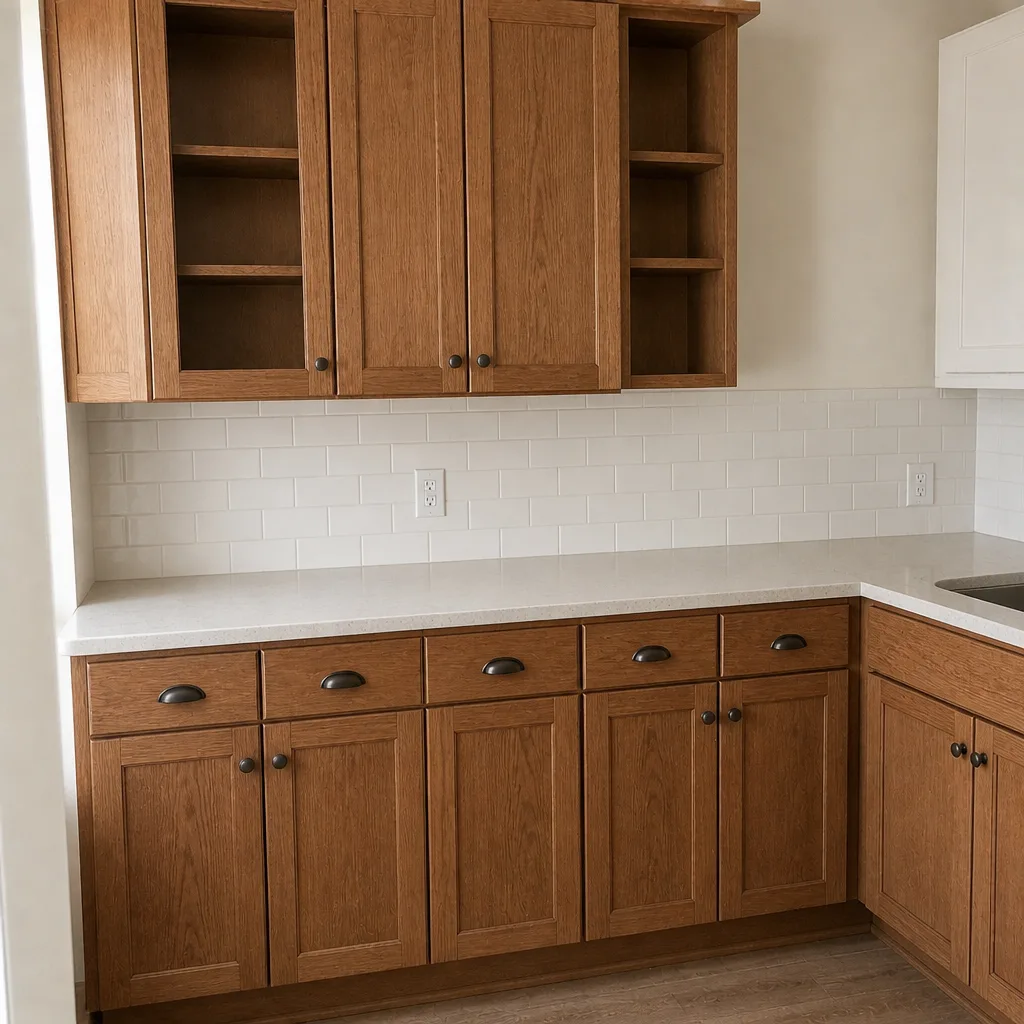
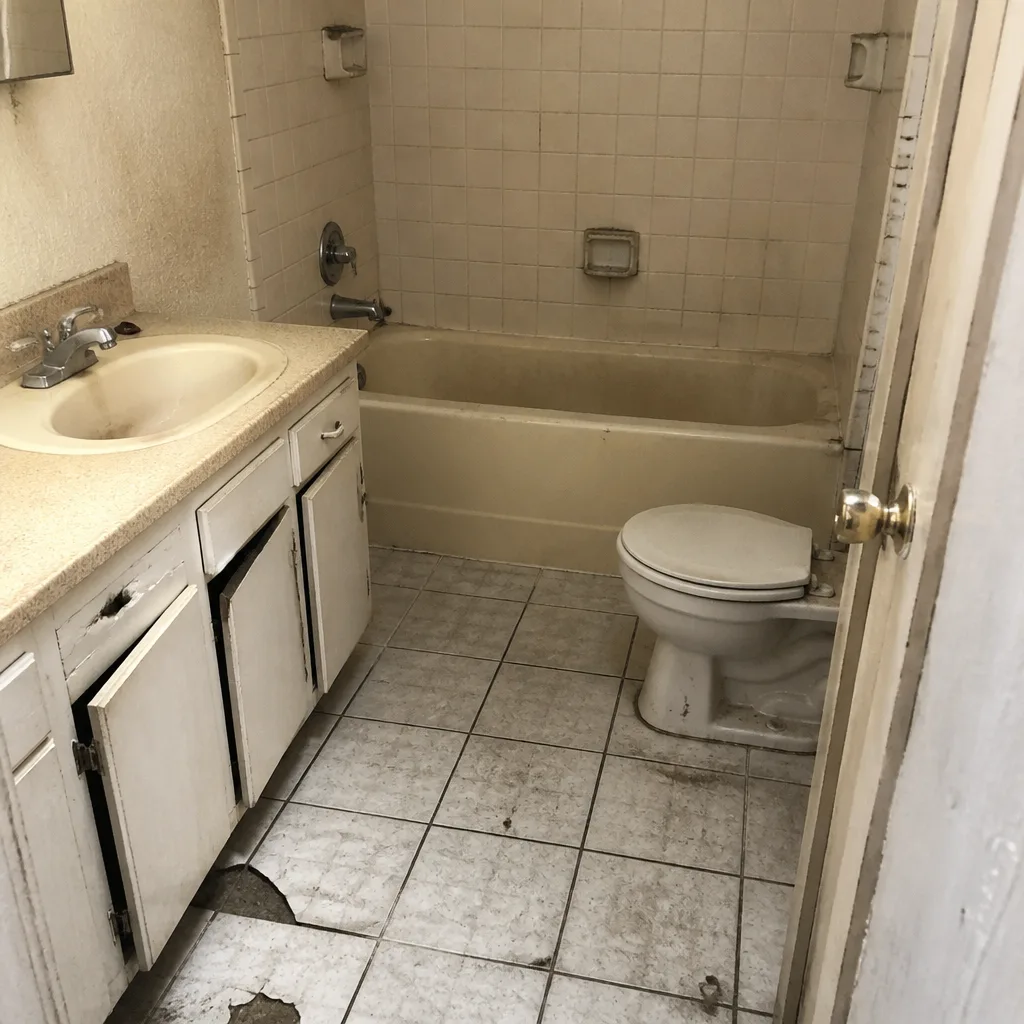
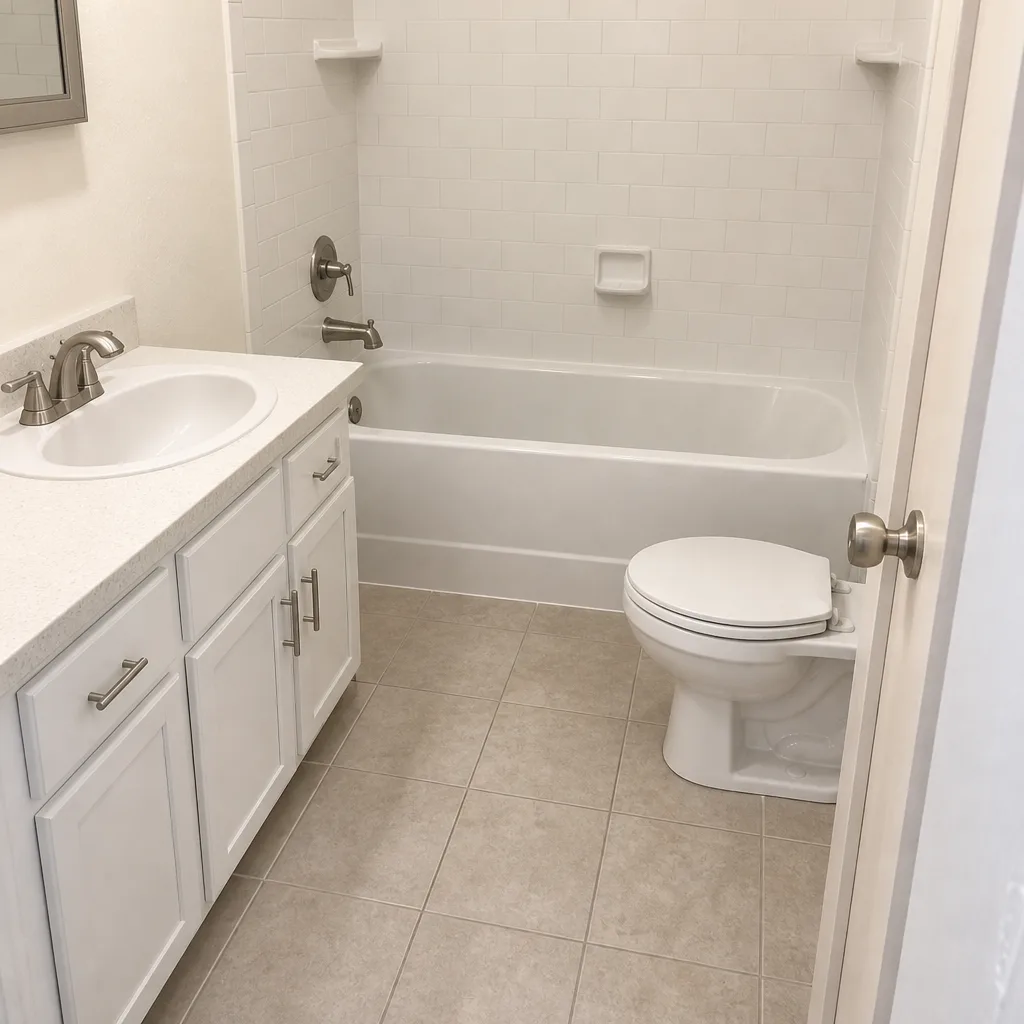
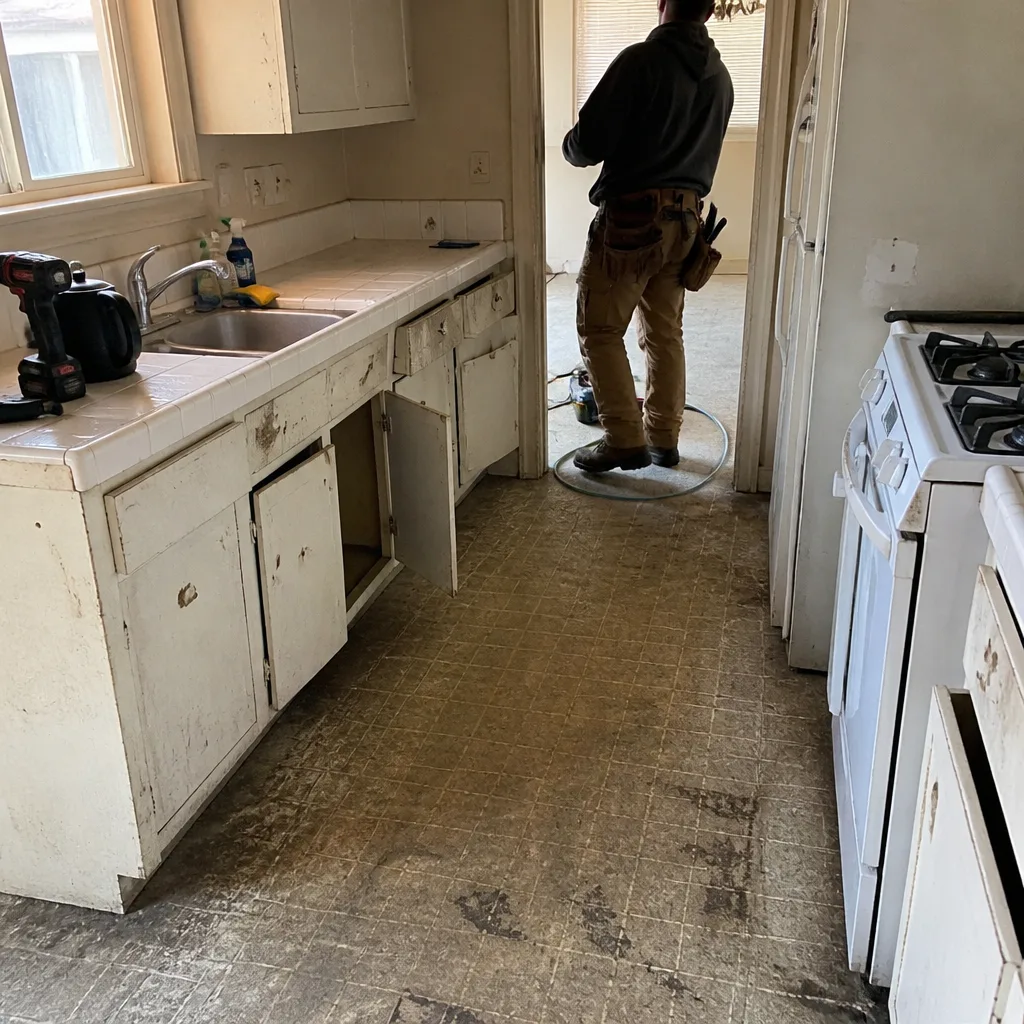
See the difference
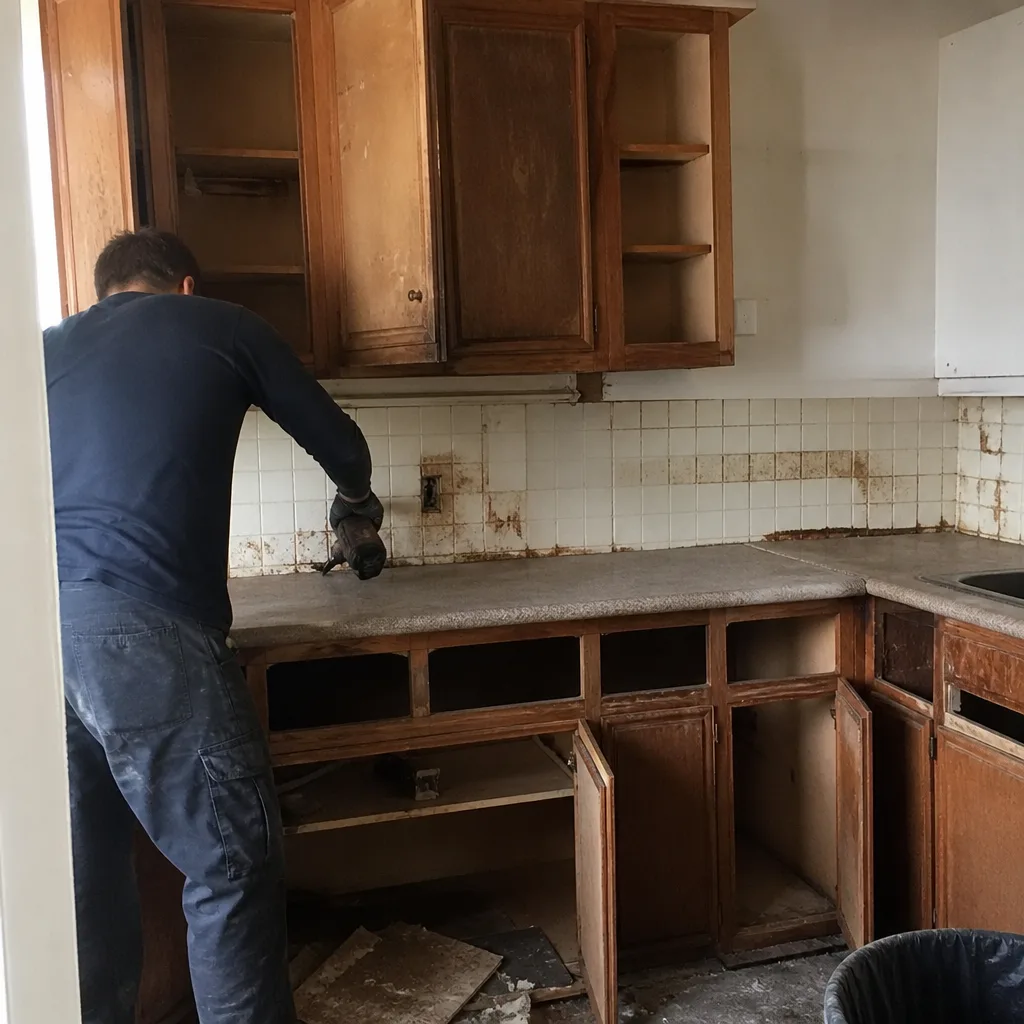 Before
 After
 Before
 After
 Before
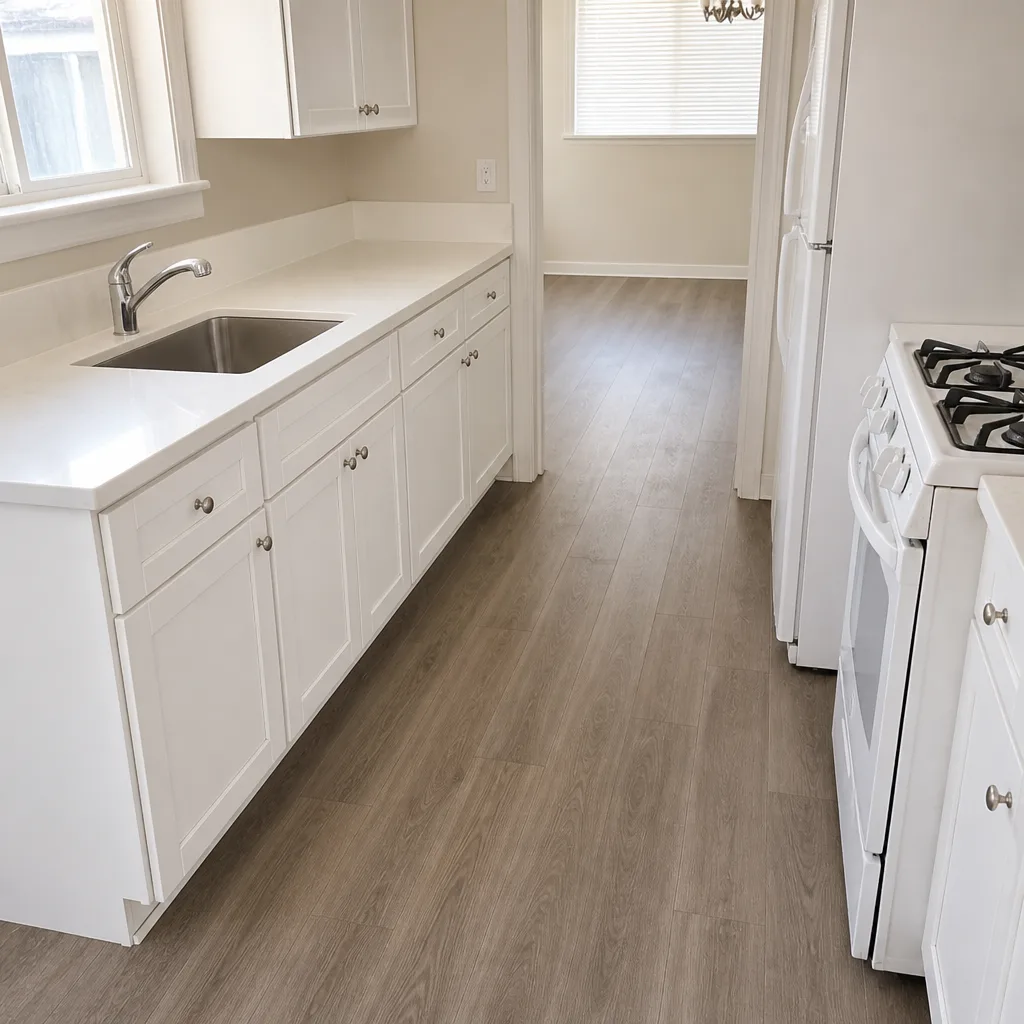 After
When to Call a Professional
Call a licensed professional whenever the damage involves anything structural, any gas or electrical component, any roof access, or any water you can’t see the source of. In Lancaster, that includes: a wind event that lifted shingles, a monsoon that pooled water against the foundation, a freeze that burst a garage supply line, and any crack or sag that wasn’t there last week. Stabilizing a home in the first hour is a job for someone who carries the training, the insurance, and the permits. Barrett & Sons Construction Lancaster offers free written estimates in Lancaster – call (888) 427-1810. We answer the phone with a live person, 24 hours a day, and a free second opinion on your first written estimate is one of the standing offers we keep for anyone in the Antelope Valley.
Frequently Asked Questions
Get everyone safe, tarp or seal the breach to prevent further water damage, photograph the damage before any cleanup, then call your insurer to open a claim the same day. A temporary tarp is a stabilization, not a repair, and it’s defensible as long as you document it. Call (888) 427-1810 for a free estimate on the actual repair once the adjuster has seen the damage.
No, with one exception. Permanent repairs completed before an adjuster inspects can void the portions of the claim that depended on seeing the damage in place. The exception is emergency stabilization of a home that isn’t safe to occupy, and that requires written authorization from your insurer. When in doubt, stabilize, document, and wait for the inspection.
Check the license number against the Contractors State License Board’s public database, then confirm the certificate of insurance and workers’ comp are current and not expired. A licensed contractor will hand you the number without hesitation and will insist on permits for any structural, electrical, plumbing, or roofing work of real scope. A contractor who won’t is not protecting your claim. Call (888) 427-1810 for a free estimate from a licensed, insured, permit-pulling contractor.
Photographs and a video walkthrough of the damage before cleanup, two line-item written estimates from licensed contractors, receipts for every temporary expense (tarps, fans, dehumidifiers, hotel), and the permit history on the home. Keep all of it in a physical folder and a scanned digital copy. A thin file is a short payout. A thick file is a straightforward claim.
Coverage depends on your specific policy and on whether the freeze was a sudden event or a long-standing condition. Most policies cover sudden and accidental water damage, but many exclude damage caused by “neglect” or “lack of maintenance.” Insulating exposed garage and crawlspace pipes now is the surest way to never answer that question. Call (888) 427-1810 for a free estimate on frost-free bibs or garage-wall pipe insulation.
An emergency tarp in Lancaster typically runs $250 to $650, while a shingle repair on a partial slope runs $400 to $1,400, and a full slope replacement with matching material runs $1,800 to $4,500 depending on size and pitch. The visible damage is usually smaller than what’s underneath, so a written line-item estimate is the only number worth trusting. Call (888) 427-1810 for a free written estimate – no surprise invoices, no change orders without your signature.
The Bottom Line
A construction emergency in Lancaster is a decision problem as much as a repair problem. The first 24 hours are where a straightforward claim becomes a contest, and the homeowner who wins that contest is the one who stabilized the damage, documented it before cleanup, opened the claim the same day, and hired a licensed contractor with permits, written scope, and written change orders. Prepare before you need to: know your shutoffs, photograph your home, insulate exposed plumbing, inspect the roof on a dry day, and keep a local contractor’s license number filed. If you have any doubt about the scope, get a free second opinion. Call (888) 427-1810 for a free estimate – we answer with a live person, day or night, and we stand behind every job with the written 90-Day Done Right Promise. If you’d like to see the full range of what we do across every trade, start at the Barrett & Sons Construction Lancaster home page.
Written by the team at Barrett & Sons Construction Lancaster.